 跳至内容
跳至内容 
Water is the lifeblood of greenhouse production — and water quality directly determines crop health, yield, and profitability. This guide covers everything from source selection to treatment and recycling. FangCheng Greenhouse integrates complete climate and irrigation systems into commercial greenhouse projects.
Why Water Quality Matters
Plants absorb nutrients dissolved in water; if the water itself carries problems — pathogens, salts, or pH imbalance — those problems spread to every plant. Water quality science defines the parameters that matter: pH, electrical conductivity (EC), alkalinity, and biological contamination. Poor water quality causes nutrient lockout, root disease, and stunted growth — all preventable with proper treatment.

Water Sources Compared
| Source | Pros | Cons | Treatment Needed |
|---|---|---|---|
| Municipal tap | Consistent, treated | Chlorine, cost | Dechlorination, filtration |
| Well water | Low cost, abundant | May have iron, hardness, pathogens | Filtration, disinfection, pH adjust |
| Rainwater | Free, soft, pure | Storage needed, variable supply | Storage, minimal filtration |
| Surface water | Abundant | Contamination risk | Full treatment required |
pH Management
Optimal pH range for most greenhouse crops: 5.5-6.5. pH controls nutrient availability — outside this range, nutrients become locked out and plants show deficiency symptoms despite adequate fertilizer. High alkalinity water (common in well sources) requires acid injection to lower pH. Monitor pH at the source and at the emitter. The pH scale and buffering fundamentals apply directly to irrigation management.
EC and Nutrient Management
Electrical conductivity (EC) measures dissolved salts — a proxy for nutrient concentration. Each crop has an optimal EC range: tomatoes 2.0-3.5 mS/cm, leafy greens 1.5-2.5 mS/cm. High source-water EC (hard water) reduces your ability to add nutrients without overshooting. Low EC water requires more careful fertilization. EC monitoring guides fertigation dosing and prevents both deficiency and salt toxicity.
Filtration Systems
- Sand/media filters — remove sediment, algae, and large particles from surface or well water
- Disc filters — efficient for greenhouse scale, low maintenance
- Screen filters — simple, for clean water sources
- Carbon filters — remove chlorine and organic compounds from municipal water
- Reverse osmosis — removes nearly all dissolved solids; used for high-hardness water or recirculation systems
Disinfection Methods
Waterborne pathogens (Pythium, Phytophthora, Fusarium) can devastate greenhouse crops. Disinfection options include UV treatment (most common, chemical-free), ozone (powerful oxidizer, effective on organics), hydrogen peroxide (safe residual), and chlorination (effective but leaves residues). UV disinfection is the industry standard for recirculating systems. EPA water treatment guidelines provide context on disinfection efficacy.
Fertigation Systems
Fertigation injects precise fertilizer doses into the irrigation water. Modern systems use proportional injectors or computer-controlled dosing stations that adjust nutrient concentrations based on EC/pH feedback. Benefits include uniform nutrient delivery, labor savings, and reduced waste. A properly designed fertigation system is central to commercial greenhouse infrastructure.
Water Recycling
Recirculating irrigation systems capture runoff, disinfect it, and return it to the crop — reducing water use by 30-50% and fertilizer by 20-40%. Recycling requires filtration plus disinfection plus EC/pH adjustment. The investment in recycling equipment is typically recovered within 2-4 years through water and nutrient savings, plus reduced discharge compliance burden.
Monitoring and Testing
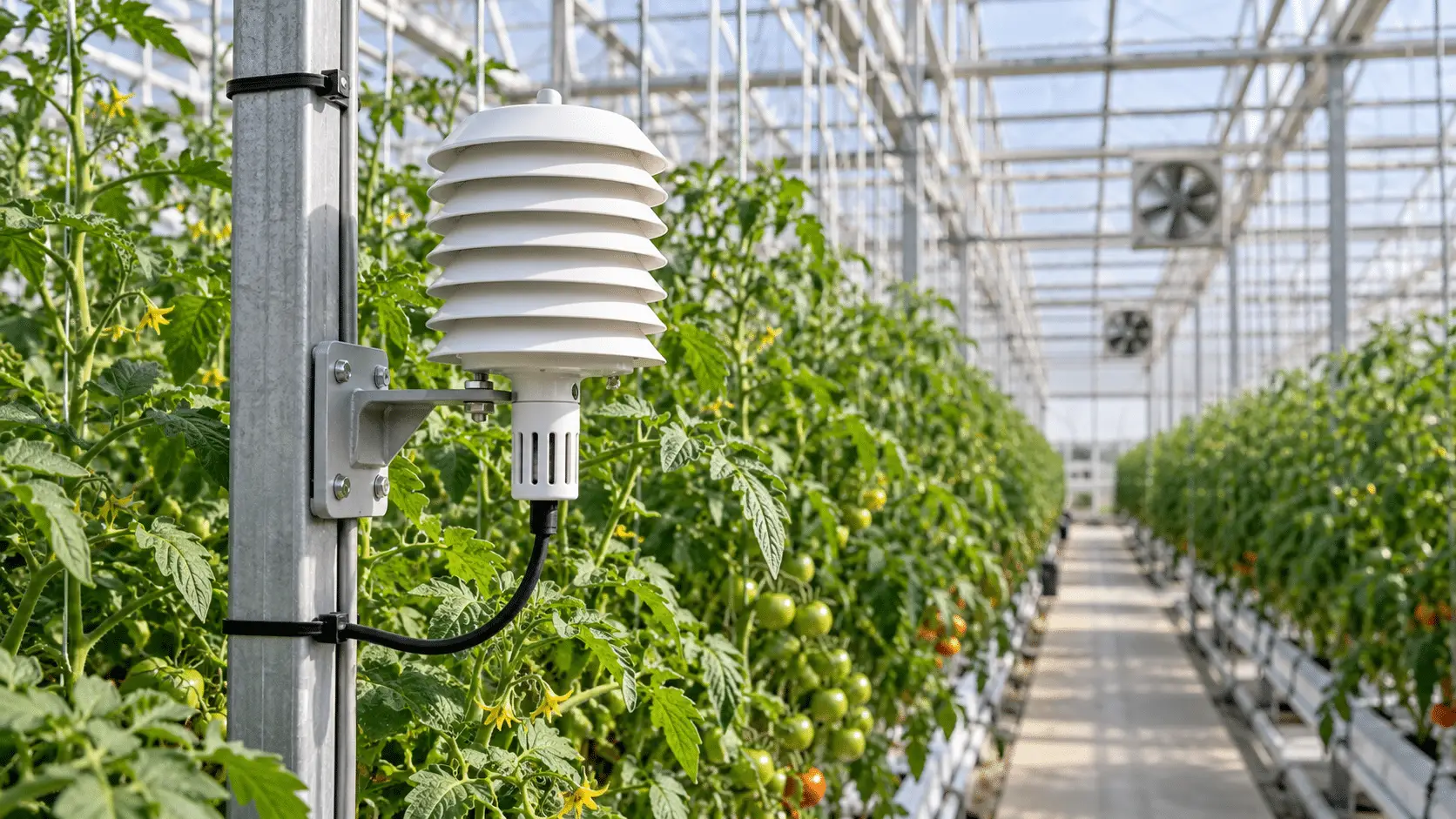
Test irrigation water monthly for pH, EC, alkalinity, and pathogen indicators. Send samples to a lab annually for full mineral analysis (iron, manganese, calcium, magnesium, sodium, chlorides). Install inline sensors for continuous pH/EC monitoring on larger operations. Keep records to spot trends before they become problems. FangCheng provides crop-specific system design including water treatment integration.
FAQ
What is the ideal pH for greenhouse irrigation water?
5.5-6.5 for most crops. Outside this range, nutrient availability drops and deficiency symptoms appear despite adequate fertilization.
Do I need reverse osmosis for my greenhouse?
Only if your source water has high hardness, sodium, or chlorides that limit nutrient dosing. Most growers manage with filtration and acid injection.
How often should I test greenhouse water?
pH and EC monthly, full mineral analysis annually. More frequent testing during system changes or when problems appear.
Is water recycling worth the investment?
Yes for operations above a few thousand square feet — recycling cuts water use 30-50% and fertilizer 20-40%, typically paying back in 2-4 years.
Complete Water Systems for Your Greenhouse
FangCheng Greenhouse integrates water treatment, fertigation, and recycling into every project. From source analysis to system design, our engineers deliver water solutions that protect your crops. Explore our systems or contact us for a water quality assessment.
 Blog
Blog Blog
Blog Blog
Blog