Greenhouse Structures Built For Performance

Greenhouse Cooling Systems

Greenhouse cooling is mostly evaporative: water evaporates, takes heat from the air and lowers the temperature. FANGCHENG supplies evaporative cooling pads, exhaust fans and fogging systems, and chooses between them for your climate.

Evaporative cooling

How evaporative cooling works

When water evaporates it takes heat from the air around it. Greenhouse cooling uses this effect: air passes over wet pads or through a fine mist, picks up moisture and leaves cooler. The drier the outside air, the more it can cool. That is why the method works best in dry climates and less well in humid ones, and why humidity inside the house rises as the air is cooled.
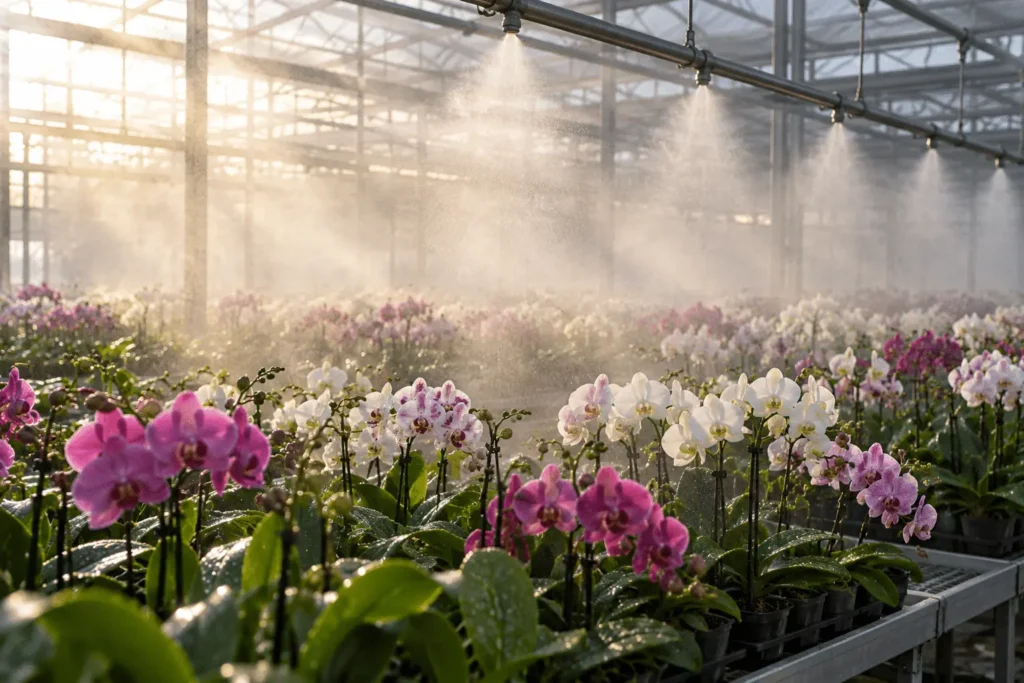
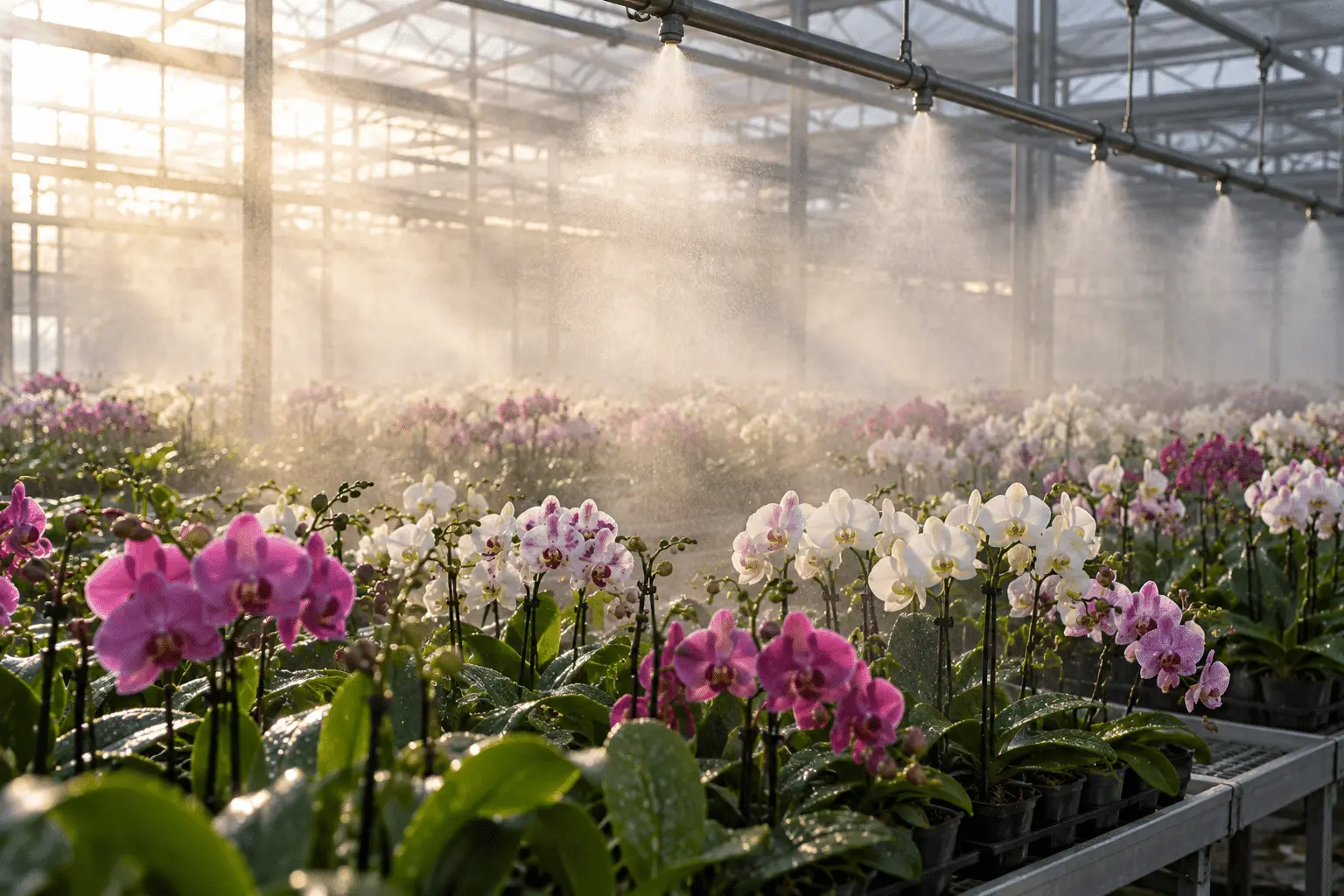
Fine mist from a fogging system above benches in a greenhouseWater takes the heat
Two ways to cool

Fan-and-pad or fogging?

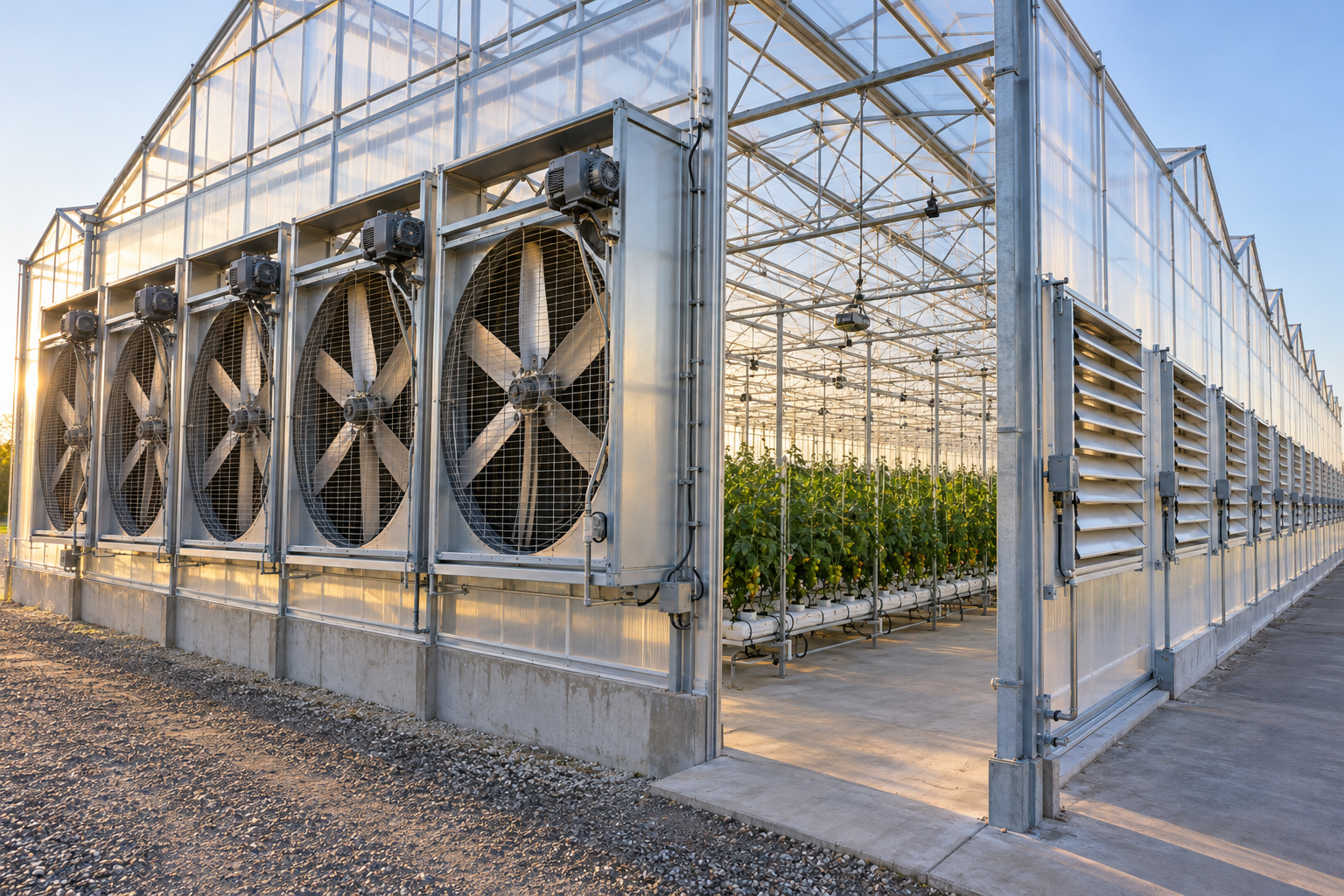
Evaporative cooling pad wall inside a greenhouse
Fine fog above crop benches
Fan-and-pad
How it works

Air is pulled through wet pads by exhaust fans.

Fine nozzles spread mist through the house.

How evenly it cools

Temperature can rise from the pad wall to the fan wall.

Cools more evenly.

What it needs

Usually the cheaper system to install, with more parts to maintain.

Clean, filtered water and a pump.

Where it fits

Suits houses built around it.

Suits retrofits and even cooling. Easier to add to an existing house.

Tap a side, or the photo, to compare.

Works best where outside air is dry

In humid climates, shading and ventilation carry more of the load. Both systems cool by evaporating water. They differ in how evenly they cool, what they need to run and how they are installed.

Ask about your climate
Last step, not the first

Cool the load first

Cooling is the last step, not the first. Shading blocks part of the sun before it turns into heat, and ventilation removes warm air. Both reduce the work the cooling system has to do, which means smaller equipment and lower running cost.

01

Shade the house in the hottest months

02

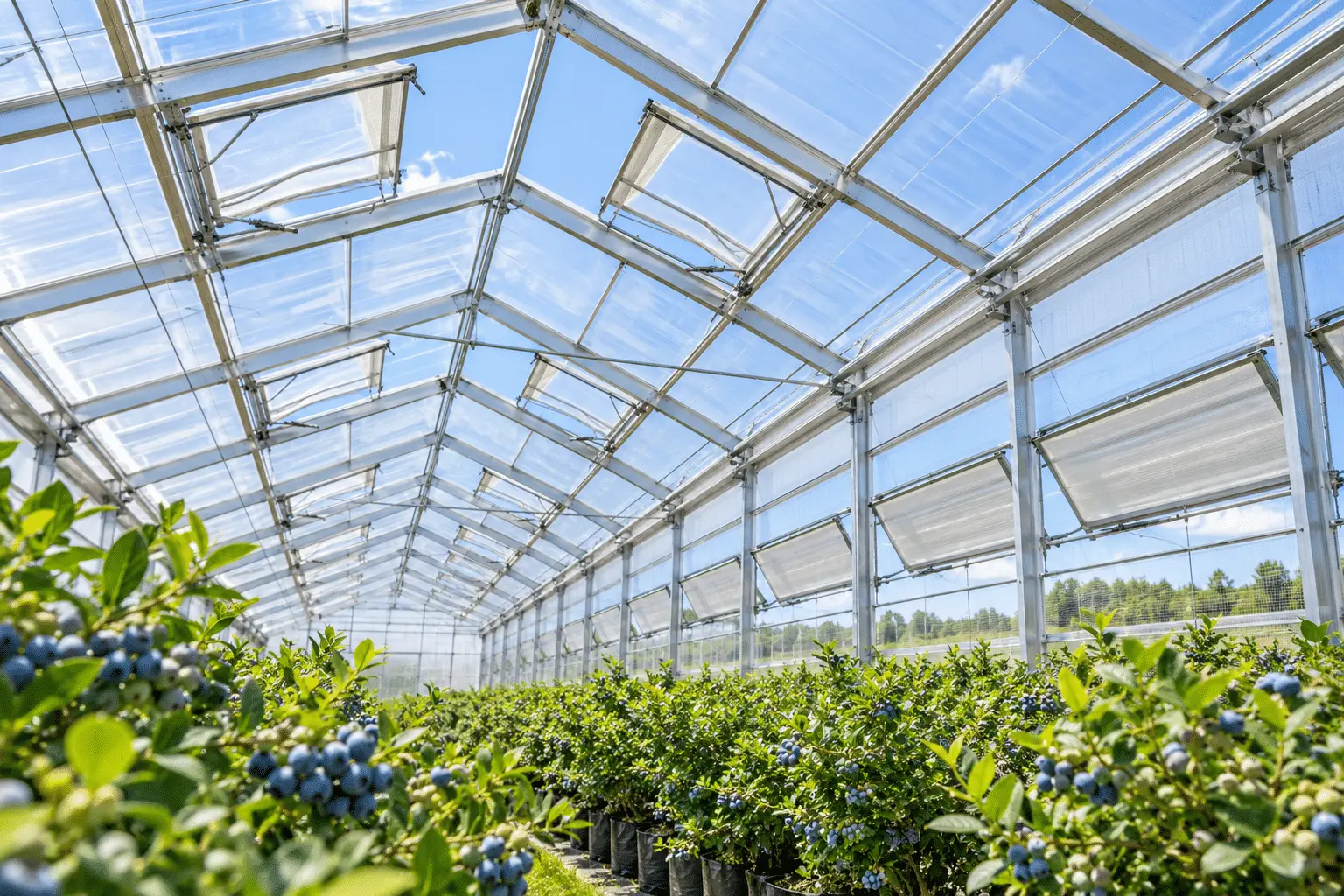
Get the vents and fans right

03

Add evaporative cooling for the remaining heat

Scope

What we supply and what decides the design

What we supply

  • Cooling pads and pad frames
  • Water circulation and pumps
  • High-volume exhaust fans
  • Fogging lines and nozzles
  • Controls that link cooling to temperature and humidity

What decides the design

  1. 01Local temperature and humidity in the hottest season
  2. 02Greenhouse size, height and layout
  3. 03Water supply and water quality
  4. 04Crop tolerance to humidity
  5. 05How much cooling shading and ventilation can already provide
Get a cooling plan for your houseSend your location, greenhouse size and crop. We reply within 24 hours.
Get a Free Quote
Layout

How a fan-and-pad house is laid out
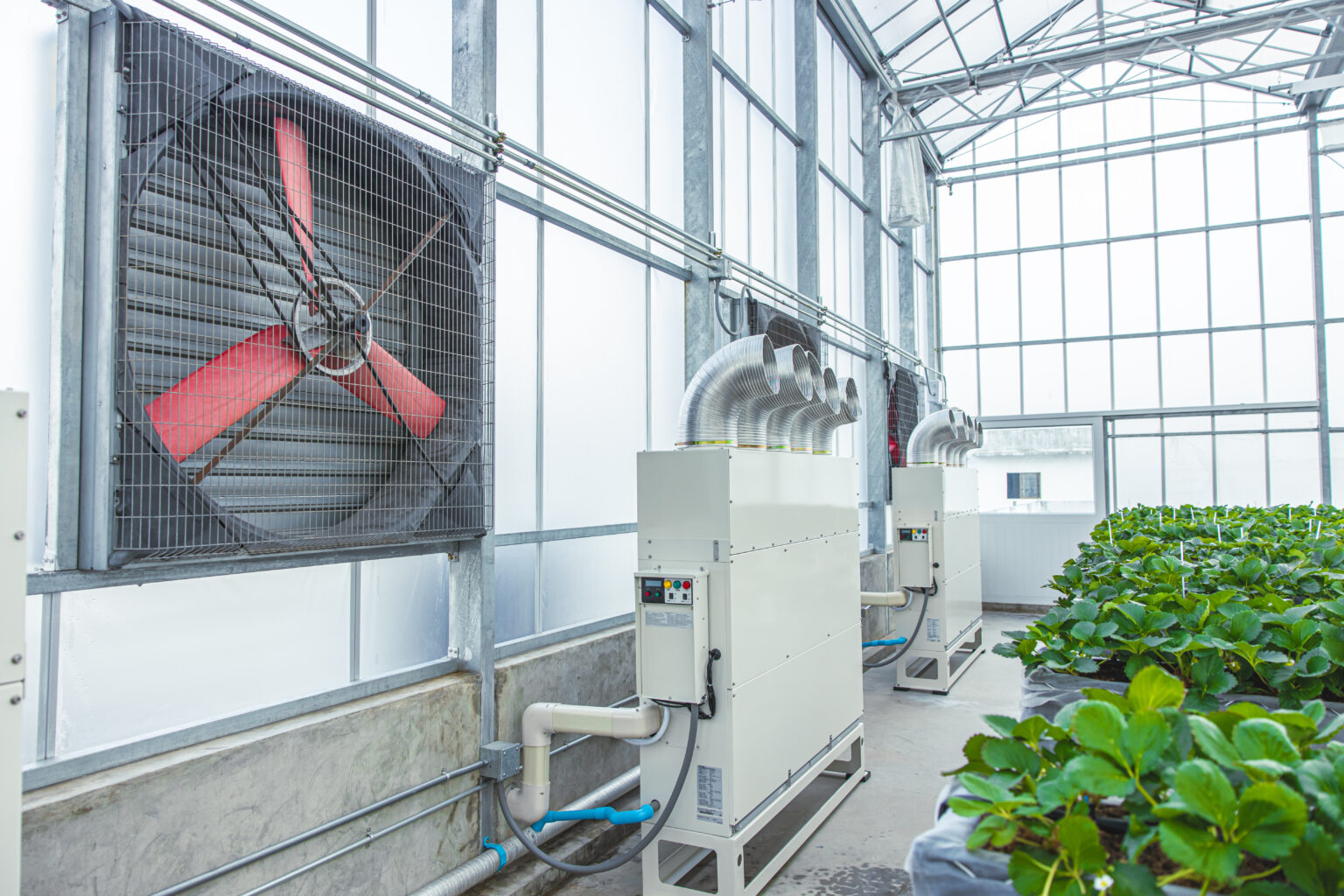
Pads sit on one end wall or side wall
Exhaust fans sit on the opposite wall
Air is drawn through the pads and travels across the whole house
Other openings stay closed while the fans run, or air takes a shortcut
In a long house the air warms as it travels, so the end near the fans is warmer
01/ 05Pad wall
Water

Water, quality and fog

Water

Water use and water quality

Evaporative systems use water, so supply matters in dry regions. Hard water leaves mineral scale on pads, and fog nozzles need clean, filtered water or they block. Plan water treatment and drainage from the start.

Humidity

Fog for humidity as well as cooling

Fog can be used to raise humidity as well as to cool, which is useful for crops and propagation areas that like humid air. The same nozzles and water-quality needs apply, and it must be controlled so leaves do not stay wet.

The order

Cooling in the order that works

01

Shade.

Cut the sun load before it becomes heat.

02

Ventilate.

Let natural vents and fans remove warm air.

03

Cool.

Use pads or fog for the heat that remains.

04

Control.

Stage the equipment from temperature and humidity readings.

By crop

Cooling by crop

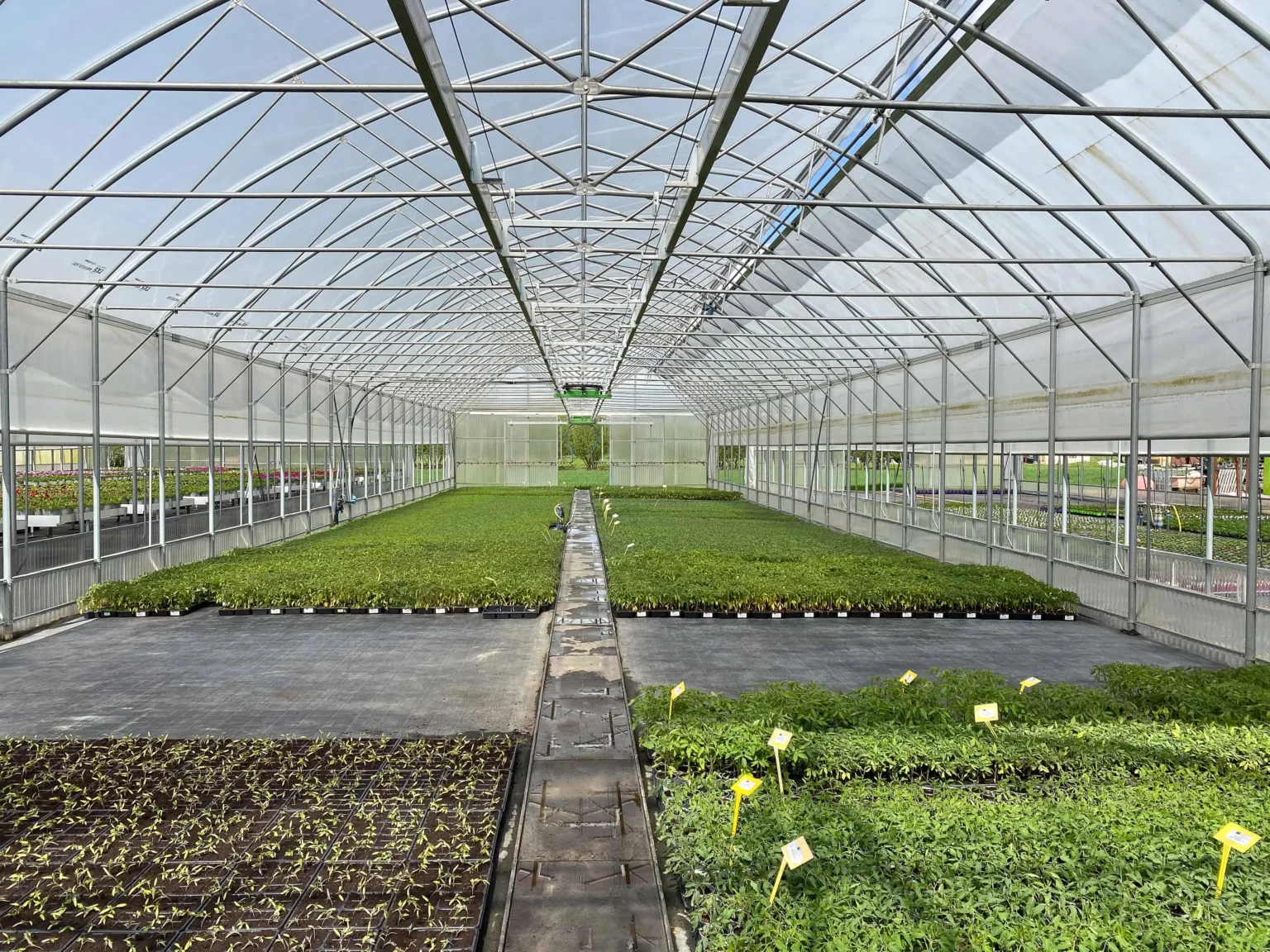
Seedlings and young plants.
01 / 03

Seedlings and young plants.

Sensitive to heat and to swings, so cooling should be gentle and steady.
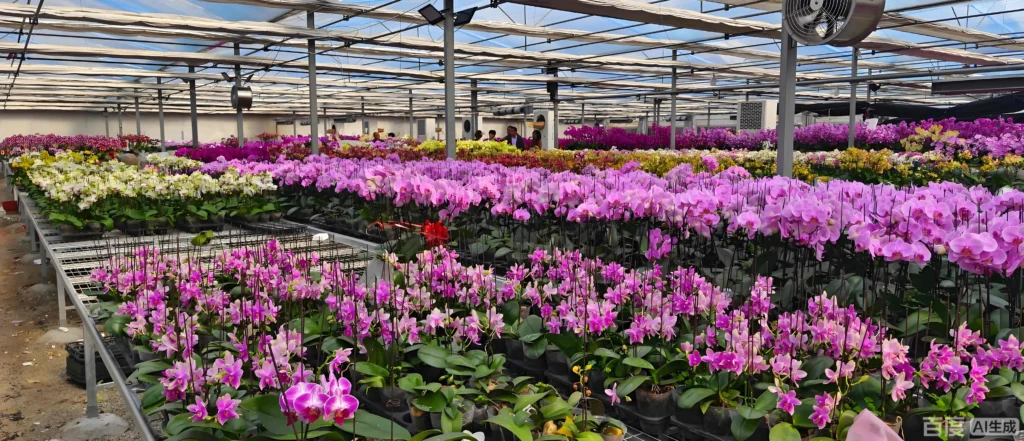
Flowers and ornamentals.
02 / 03

Flowers and ornamentals.

Need steady temperature and controlled humidity.
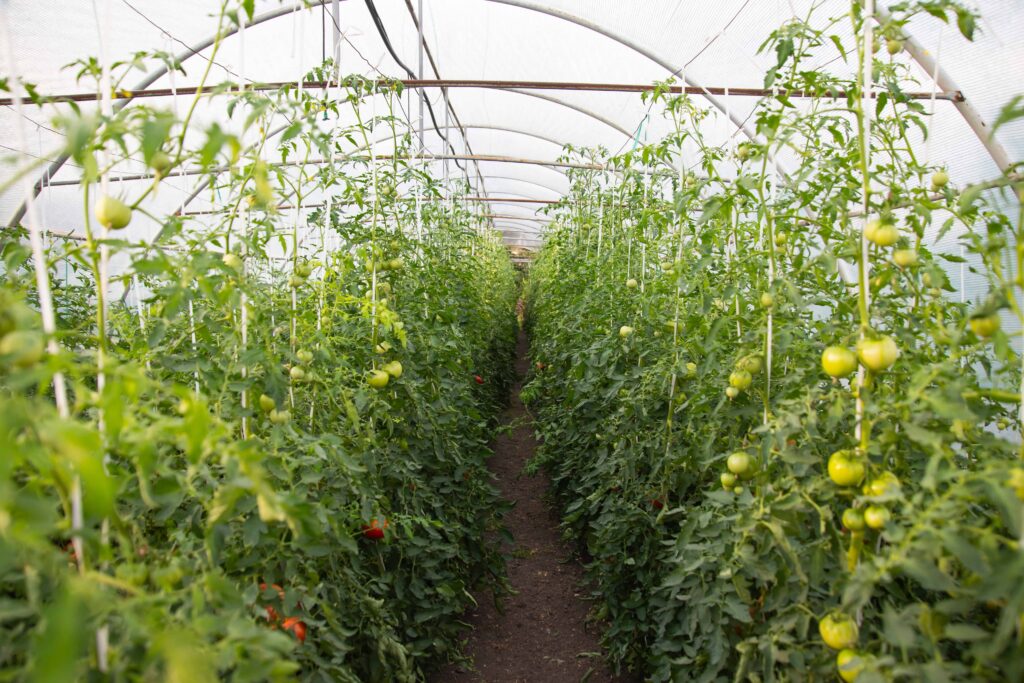
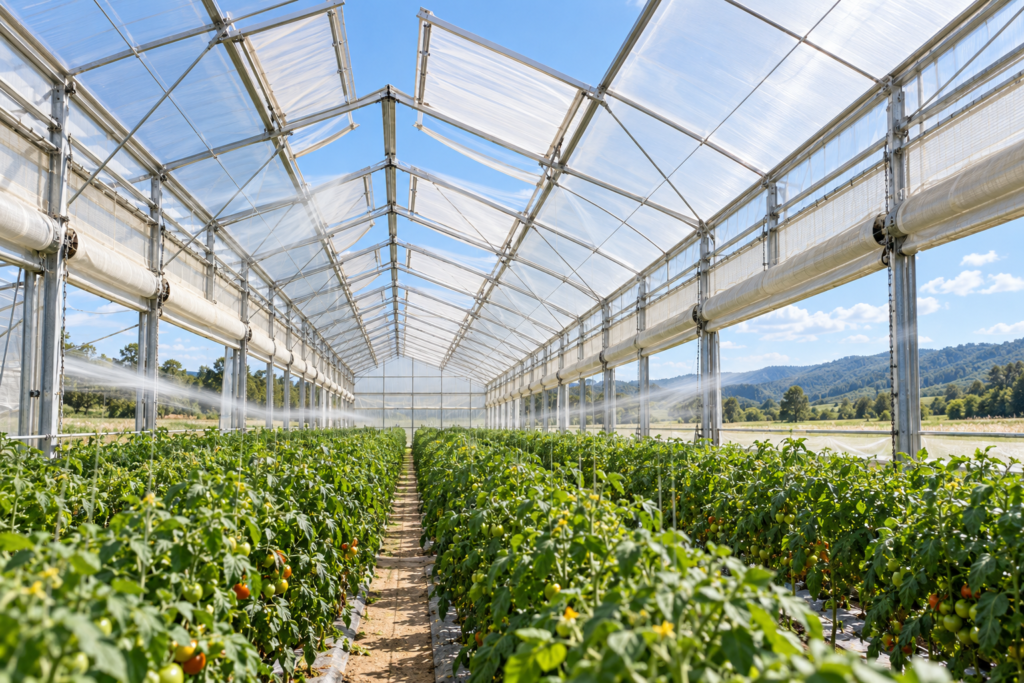
Fruiting vegetables.
03 / 03

Fruiting vegetables.

Tall, dense crops that generate humidity, so cooling and ventilation must work together.
Maintenance

Keeping it working

Routine checks

  • Prevent mineral build-up on pads
  • Filter water for fog nozzles
  • Keep fans and housings clean
  • Check pumps and water lines before the hot season

A simple maintenance calendar

  1. 01Before the hot season. Check pumps, water lines, pads, fans and controls.
  2. 02During the season. Watch for scale, algae, clogged nozzles and fan noise.
  3. 03After the season. Drain, clean and cover or protect the pads and lines.
Avoid

Common cooling mistakes

!

Fans that are too small for the house

!

Openings that leak, so air bypasses the pads

!

Vents left open while fans run

!

Pads clogged with scale or dirt

!

Fog without filtration

!

Cooling used to fix a house that needed shading

FAQ

Common questions

Straight answers. If yours is not here, ask us.

Neither always wins. Fan-and-pad suits houses built around it, fogging suits retrofits and even cooling. We compare both for your site.

Less well. In humid regions we rely more on shading and ventilation. Tell us your climate and we recommend a mix.

Usually yes. Blocking part of the sun reduces the cooling load.

Use natural ventilation with roof and side vents, and shade the house. Without power, these two do most of the work, but they depend on wind and on how hot it is.

Yes. Evaporative cooling adds moisture to the air, so ventilation and humidity control matter.

Seedlings are sensitive to heat. Tell us your crop and season and we plan the right level.

They are sized together from house area, climate and the air exchange you need. We do the calculation for your project.

It depends on your water. Hard or dirty water needs treatment, and fog needs filtration.

Get started

Plan your cooling system

Send your location, crop and greenhouse size. We reply within 24 hours.

Consultation and project proposals are free.

What to include

  • Location
  • Crop
  • Greenhouse size
Scroll to Top
Two people choosing plants inside a greenhouse
Greenhouse manufacturer in Guangzhou
  • We reply within 24 hours
  • Free consultation and project proposals
  • Free sample and quote
Contact us

Leave us your info

We are always happy to help you with any commercial greenhouse questions or requests you may have.

We use your details only to answer your inquiry.