 Skip to content

 High tunnel
What is a high tunnel?
FANGCHENG makes custom galvanized high tunnels with round or Gothic arch profiles, for farms, distributors and project bidders.
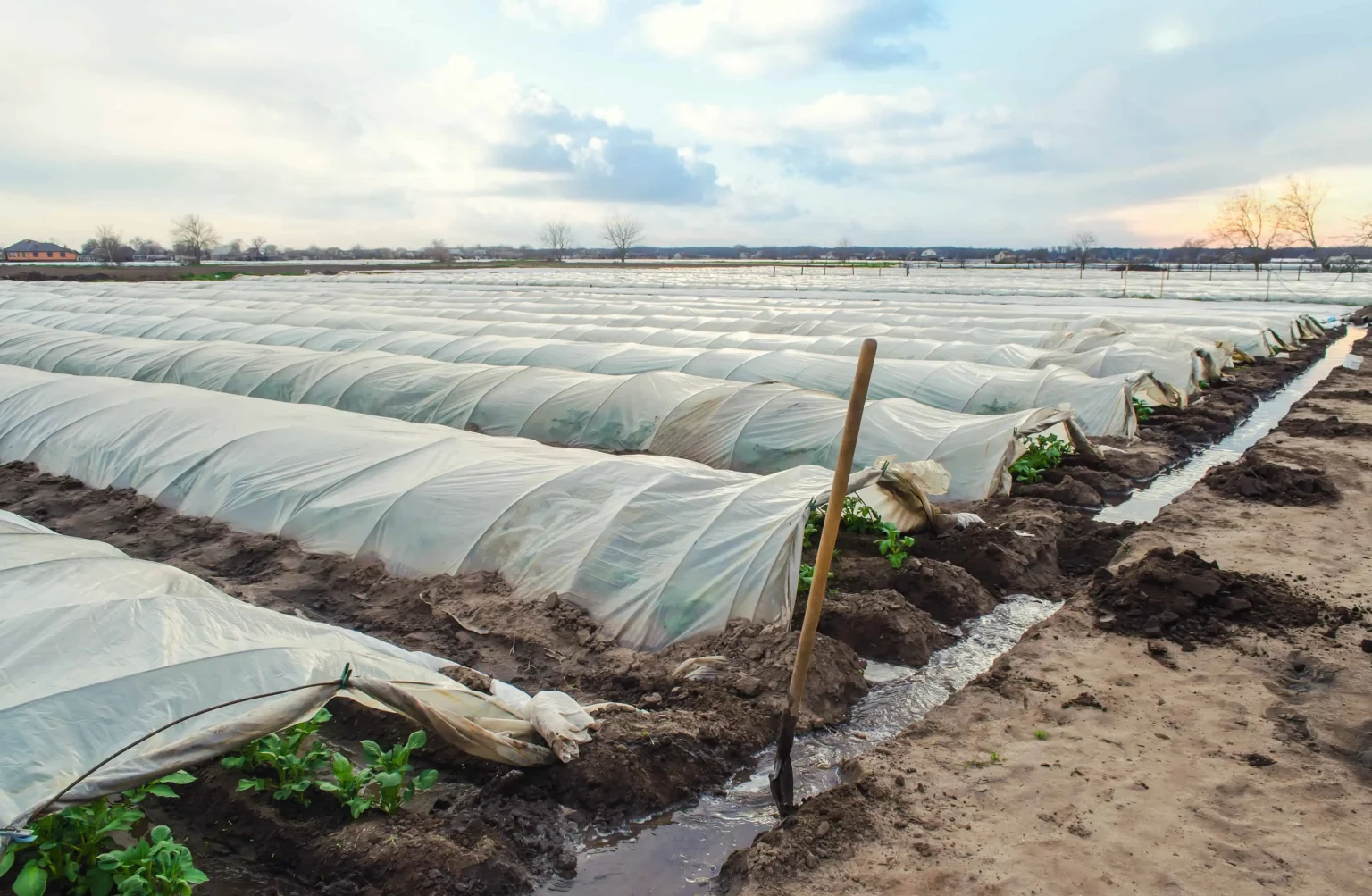
A high tunnel is a field-built structure that gives intermediate environmental control. Compared with a greenhouse it is unheated, provides less climate control and costs less. It is tall enough to walk through, which separates it from a low tunnel, and tall crops can be staked and trained inside it. In cooler climates it raises temperatures by a few degrees each day, which speeds growth and extends the season at both ends.
The difference shows in how the space is used. A high tunnel is usually planted in the soil, managed by hand, and opened and closed with the weather. That simple approach explains both its low cost and its main limit.
High tunnel or greenhouse?

A high tunnel is normally unheated.
A greenhouse has heating and more control.
A high tunnel is built to extend the season and is often semi-permanent.
A greenhouse is a fixed structure.
A high tunnel is covered with plastic film.
A greenhouse is often covered with rigid sheet or glass.
High tunnels are mostly used for crops in the ground.
Greenhouses are often used for pots, containers and hydroponics.
A high tunnel costs less to build and run.
—
Tap a side to compare.
If you need year-round production with tight temperature control, a greenhouse is the better fit. If you want to start earlier, finish later and protect crops from rain and wind at low cost, a high tunnel is the better fit.
Round arch or Gothic arch?


A round (quonset) profile is the simplest and cheapest.
A Gothic profile has a pointed top, more usable side height, and sheds snow better.
On a round profile the space near the sides is low, which limits tall crops and people in the outer rows.
A Gothic profile keeps more height there, so more of the floor is easy to use.
Tap a side to compare.
One organic-farming extension source puts the extra growing space of a Gothic tunnel at about 15% compared with a quonset, and notes that the quonset shape has trouble with snow. If you have snow, choose Gothic.
What we customize
Dimensions.
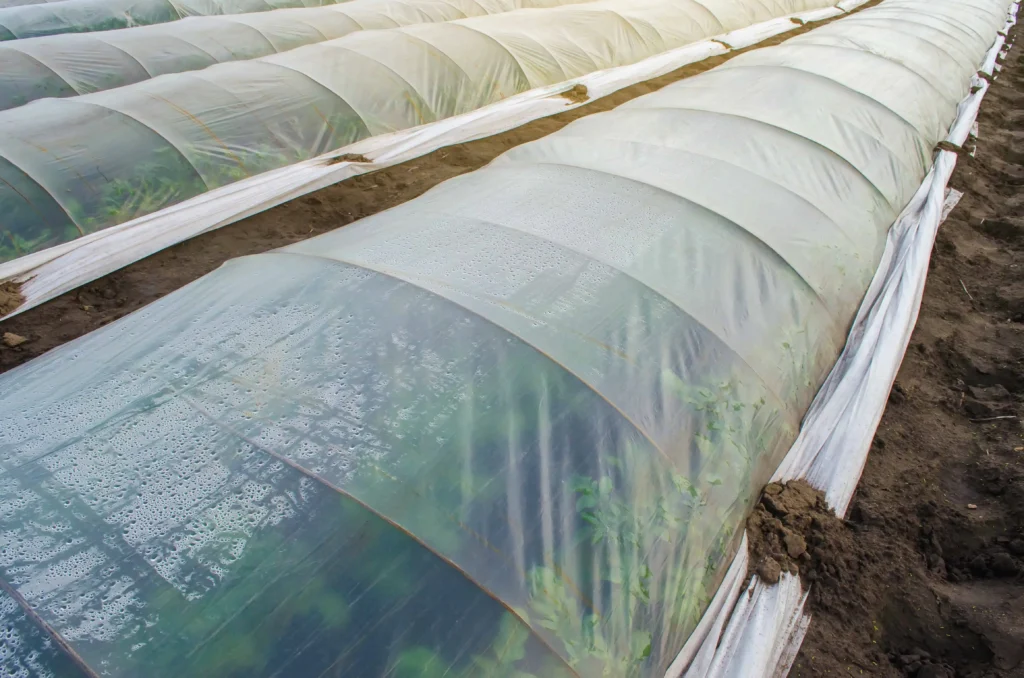
Flexible widths, custom lengths and tailored heights for different crops and projects.

Structure and tubes.
Round or Gothic arch profiles, with customizable spacing and tube thickness.
Ventilation and airflow.
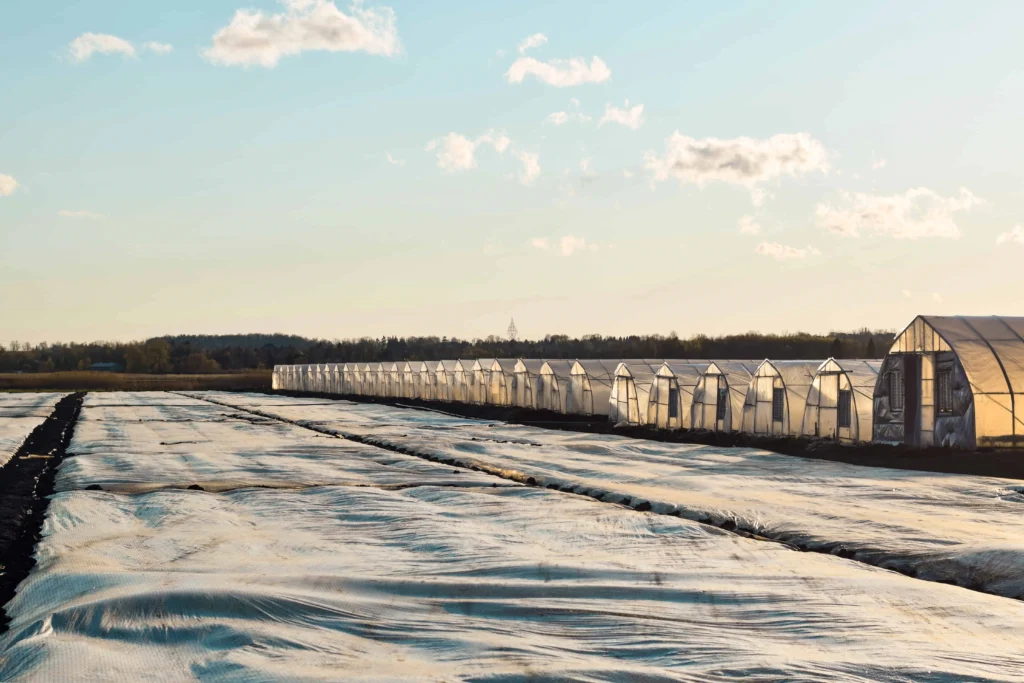
Manual or automated vents, roll-up sides, doors and insect mesh.

Covering.
Single or double layer film, fabrics or polycarbonate panels, for insulation and durability.
 Roll-up sides and end doors
Ventilation is the make-or-break detail
A poorly ventilated tunnel can overheat badly on a sunny day, far above the outside air temperature. Roll-up sides, end doors and roof or end vents are what protect the crop. Plan the ventilation before you choose the covering, and add insect mesh where pests are a problem.
Roll-up sides do most of the work, and their height matters. Taller roll-ups move more air but let in more weather. End doors and gable vents add cross-flow along the length, which is most useful in long tunnels.
Managing heat and humidity inside a tunnel
A closed tunnel gets hot quickly in sun and humid at night, which raises disease risk. Open the sides and ends early in the day, use end doors and vents for cross-flow, and consider insect mesh on openings. Good airflow does more for the crop than any other single habit.
Crops under a high tunnelCrops that suit a high tunnel
Tomatoes, peppers, cucumbers, berries, leafy greens, herbs, cut flowers and other vegetables and small fruits. High tunnels are strongest for crops that earn a premium from earlier or later harvests.
The value comes from timing and quality. A tomato crop that starts earlier, or salad greens picked into late autumn, can earn more per square meter than the same crop in the open field. Crops that split, rot or mark in rain benefit as well.
Choosing your partnership model

Commercial farms.
Factory-direct supply for a single project.
Agricultural distributors.
OEM and white-label production and wholesale supply, shipped in containers.

Project bidders.
Structural drawings and tender documentation.
For distributors
Distributors need a product that is consistent from container to container and easy to explain to their customers. We supply OEM and white-label high tunnels with labeled parts and assembly guidance.
For project bidders
Bidders need documents. We prepare structural drawings and tender documentation, so the tunnel can be specified in a public or institutional bid.


