...

Greenhouse Structures Built For Performance

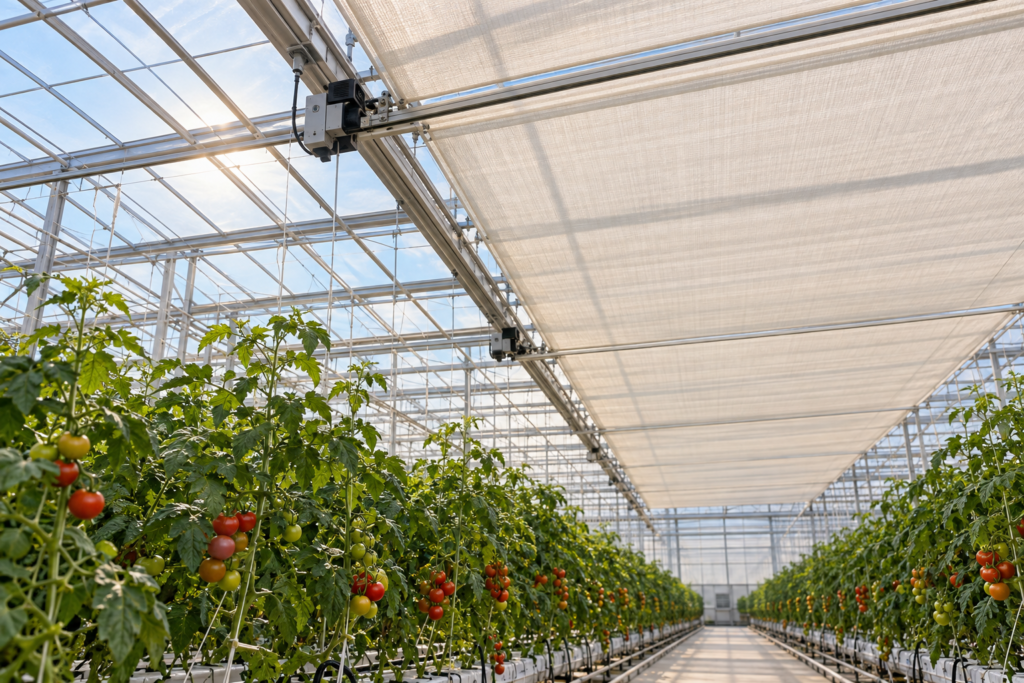
Greenhouse Thermal Screens and Energy Curtains

A thermal screen is a movable layer that holds heat in at night and cuts heating demand. FANGCHENG supplies thermal screens and insulation as part of the greenhouse, and plans them with the heating and ventilation systems.

At night

Where greenhouse heat goes at night

After sunset the house loses heat through the cover and through leaks, and it radiates heat to the cold night sky.

Greenhouse structure at dusk
No screen
Through the cover

Heat escapes through the cover and through leaks.

The screen adds a layer.

Distance

The roof is far from the crop.

It sits closer to the crop than the roof.

To the night sky

The house radiates heat to the cold night sky.

A reflective screen sends heat back down.

Tap a side, or the photo, to compare.

Why it works

How thermal screens save energy

01

They shrink the surface that loses heat, because the screen sits under the roof

02

They trap still air above the crop, which acts as an extra insulating layer

03

They can reduce condensation dripping onto plants

04

They are drawn back in the daytime so the crop gets light

Three types

Types

Thermal curtain.

A fabric screen that holds heat in at night.

Aluminized screen.

Reflective strips send heat back toward the crop at night and can reflect sun in summer.

Combined shading and thermal screen.

One screen for both jobs, where the crop and climate allow.

Day to day

Using the screen day to day

Repeats every day
Close it at dusk
01 / 04

Close it at dusk

So heat is kept in.

Open it at dawn
02 / 04

Open it at dawn

So the crop gets light.
On humid nights
03 / 04

On humid nights

Leave a small gap so moist air can escape.

In winter
04 / 04

In winter

Run it with heating, so the system is not heating the whole volume of the house.

Humidity

Screens and humidity

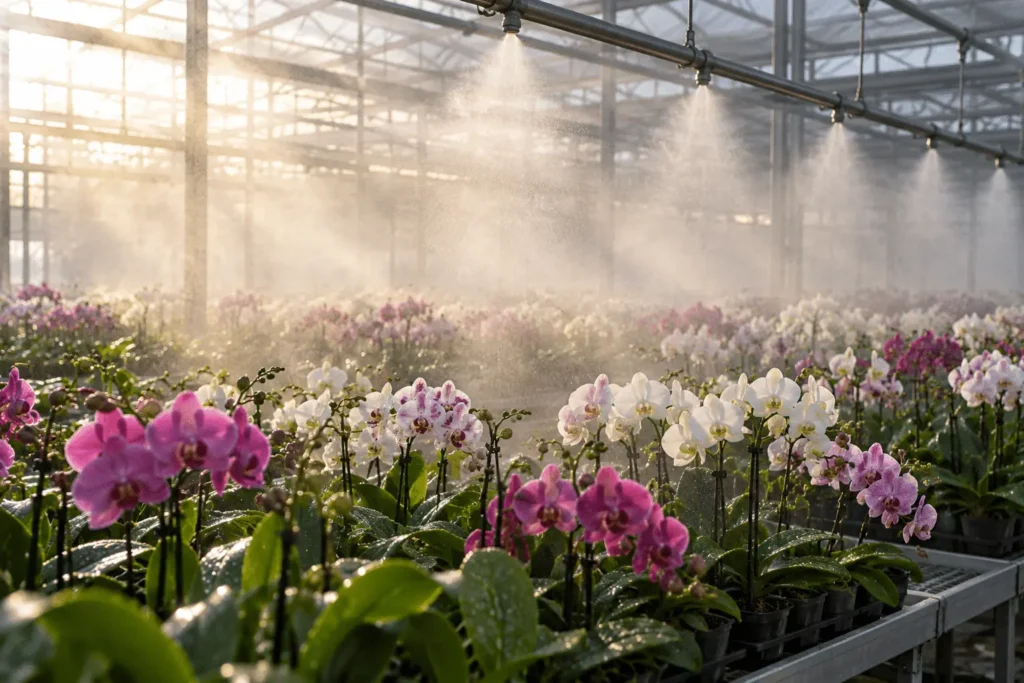
A closed screen can trap moist air under it. That is why screen control should be linked to humidity, and why ventilation has to be planned. A screen that is closed all night on a humid night can cause condensation problems.

Greenhouse interior with screens and insulated coverLink screens to humidity
The rest of the envelope

Insulation beyond the screen

  • Choose a cover with better insulation: polycarbonate, glass or double-layer film
  • Seal the edges of the screen so warm air does not leak past it
  • Close gaps at gables and sidewalls
Compare

Insulation options compared

01 / 04

Double-layer film.

An air gap between two layers cuts heat loss compared with a single layer. Lower cost.

02 / 04

Polycarbonate.

Hollow-wall sheet holds air inside it, so it insulates better than single glass or film.

03 / 04

Glass.

High light and long life. Insulation depends on the glass type, and a screen adds a lot.

04 / 04

Sealing.

Sealing gaps at doors, vents and gables stops leaks, which costs very little compared with extra heating.

Before you buy

What to check before you buy

01

Light loss: a screen that is drawn back should not block the crop

02

Humidity: closed screens can trap moisture, so ventilation must be planned

03

Drive and tracks: the screen moves every day

04

Payback: it depends on climate, fuel price and house type

Will a screen pay back on your site?Send your location, greenhouse type and heating fuel. We estimate it for you.
Get a Free Quote
Fabrics

Screen fabrics in plain terms

Clear or white fabric.

Lets light through while holding heat in, for use in light-hungry crops.

Aluminized strips.

Reflect heat and, in summer, sunlight. Can also be used for shading.

Dense or blackout fabric.

Blocks light as well as heat, and is used where light must be cut.

Trade-offs

Light, retrofit and installation

Light

The light trade-off

Every screen costs some light when closed. In low-light months the right fabric and a good control strategy matter, because a heavy screen that is closed too long can slow growth.

Retrofit

Retrofit or new build

Screens are easiest to plan into a new structure, because the frame is sized for the load and the tracks. They can often be added to an existing greenhouse if the structure can carry the weight.

Installation

Installation points

  1. 01

    Tracks and drives that are strong enough for daily use

  2. 02

    Tight edges and overlaps so air does not leak

  3. 03

    Gables and sidewalls sealed as well as the roof

  4. 04

    Access for maintenance above the crop

Avoid

Common mistakes

!

Leaving gaps at the edges so warm air leaks past

!

Closing a screen on a humid night with no ventilation plan

!

Choosing the wrong fabric for the climate

!

Slow, weak drives

!

Judging a screen only by its energy rating and not by its light loss

FAQ

Common questions

Straight answers. If yours is not here, ask us.

It varies with climate, greenhouse type and screen material. We do not quote a single figure. We estimate for your site.

Only when closed. Drawn back, they leave the crop in full light.

Often yes. Tell us the structure and we check.

They do different jobs and work together. A double cover reduces heat loss all day. A screen adds a layer at night and can be opened for light.

It depends on how many cold nights you have. In a mild climate it may not pay back. We help you decide.

Some can. Aluminized screens, for example, reflect heat out in summer and in at night.

Night temperatures hold better and heating runs less. Climate control can log this.

Screens sit inside the cover and do not carry snow. A heated, well-insulated cover still needs snow-load design. See our assessment service.

Get started

Plan your insulation

Send your location, crop and greenhouse type. We reply within 24 hours.

Consultation and project proposals are free.

What to include

  • Location
  • Crop
  • Greenhouse size
滚动至顶部
Two people choosing plants inside a greenhouse
Greenhouse manufacturer in Guangzhou
  • We reply within 24 hours
  • Free consultation and project proposals
  • Free sample and quote
Contact us

Leave us your info

We are always happy to help you with any commercial greenhouse questions or requests you may have.

We use your details only to answer your inquiry.