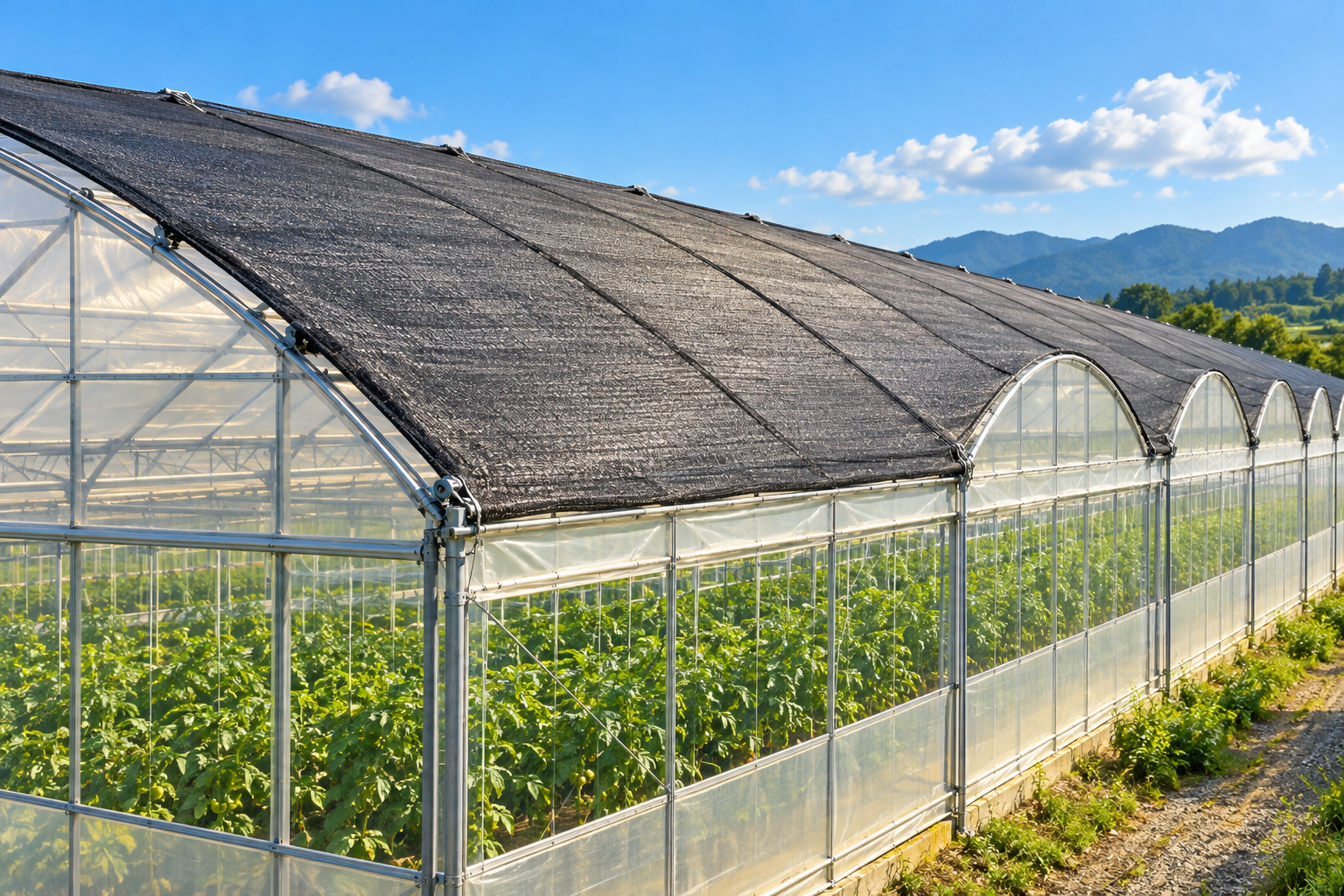
Greenhouse Insect Net: The Complete Guide
Insect net keeps pests out of the greenhouse while letting air in. It is fitted over vents, side openings and doors. The right mesh stops the pests you have, but a finer mesh also slows airflow, so the net and the vents have to be planned together.
Net at the openingsIn this guide
This guide explains what insect net does and does not do, how mesh and opening size relate to pests, how to handle the airflow trade-off, where to fit it, and how to buy it at volume.
FANGCHENG supplies insect net as part of its covering range, with the vents and fixings.
What insect net does, and what it does not
Netting works best as one layer in a plan that also includes hygiene, scouting and other controls.
What insect net does
- Blocks pests such as whitefly, thrips and aphids from entering
- Reduces the need for chemical control
- Lets air in, so the greenhouse can still ventilate
- Protects the crop at every opening
What insect net does not do
- Pests also come in on people, plants and crates
- Gaps at doors, roll-up edges and fan housings let pests through
- Pests already inside are not removed by netting
- Weeds and plant waste outside the house can hold pests close by
Know the pest first
Different pests are different sizes. Whitefly, thrips and aphids are small, while larger pests such as moths and leafminers need a much less fine net. The pest you actually have, or expect, decides the net. Buying the finest net available is not always the best answer.
Mesh and opening size
Nets are often sold by mesh number, meaning the count of threads per length. What actually stops an insect is the size of the opening between threads. The same mesh number can give different openings depending on thread thickness, so ask for the opening size in millimeters. Match it to the smallest pest you want to exclude.
The airflow trade-off
A finer net has smaller openings, so it blocks smaller pests, but it also resists air more.
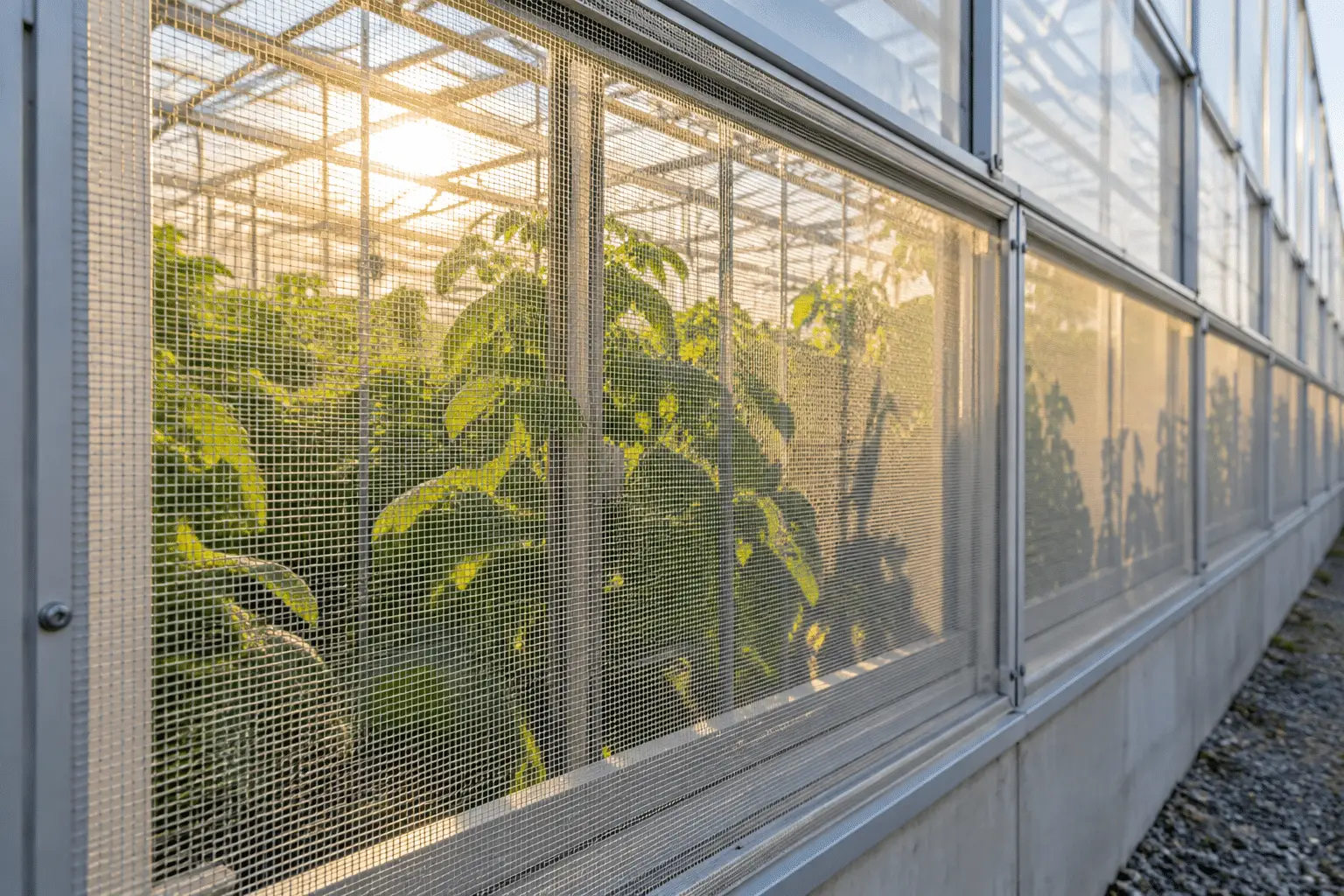
Netting and fans
Where fans pull air through the net, the net must be large enough and clean enough that the fans do not strain. A blocked net makes fans work harder and can reduce air exchange. Plan the area of net with the fans in mind.
Where to fit it
Seal the edges, because insects use any gap.
Edges and joinsTears, gaps and edges
- Seal edges against frames and between pieces
- Repair small tears quickly
- Use clips or channels that grip evenly
- Check around doors after each season
Maintenance
Dust and dirt clog the net and cut airflow. Clean it regularly, check for tears and re-seal gaps before the pest season.
Choosing a net: five questions
- 01
Which pests are the problem?
- 02
How much ventilation does the greenhouse need?
- 03
Is the net fixed or fitted to roll-up sides?
- 04
How exposed is the site to wind and dust?
- 05
How often will it be cleaned or replaced?
Common myths about insect net
Finer is always better. Finer blocks smaller pests but cuts airflow. Match the net to the pest.
Mesh number tells the whole story. The real measure is the opening size.
Once the net is up, the pests are solved. Netting reduces entry. Hygiene and scouting still matter.
Buying insect net at volume
Common questions
Straight answers. If yours is not here, ask us.
It depends on the pest. Tell us what you are trying to exclude and we recommend an opening size.
It can, because it slows airflow. Larger openings, fans or a mix of mesh sizes offset this.
Over every opening where air enters, with sealed edges.
Yes. Insect net is part of our covering range and can be supplied with the vents and fixings.
No. It reduces the number that enter, but hygiene, scouting and other controls still matter.
Yes, if the fixings suit the net and the frame. We provide matched fixings and guidance.
No. Shade net cuts sunlight. Insect net is chosen to keep pests out while letting air through.
Plan your insect net
Send your pests, crop and greenhouse type. We reply within 24 hours.
Consultation and project proposals are free.
What to include
- Your pests
- Your crop
- Greenhouse type
- Reply within 24 hours