
ETFE Greenhouses: A Premium Alternative to Glass
An ETFE greenhouse is covered with ETFE, a fluoropolymer film that is far lighter than glass, very clear and very durable. It is a premium covering, and it suits projects that want the light of glass without its weight, or a long life without the re-covering that polyethylene film needs.
ETFE greenhouseWhat is ETFE?
FANGCHENG designs and manufactures ETFE greenhouse structures, from the steel frame to the multi-layer film and its inflation system.
ETFE stands for ethylene tetrafluoroethylene. It is a fluoropolymer film first used in agriculture and later in landmark buildings and botanical domes. In a greenhouse, it is stretched over a frame in single layers or in air-filled cushions.
What sets it apart from ordinary greenhouse film is its chemistry. The fluorine in ETFE makes the surface resistant to UV, chemicals and dirt, which is why it lasts far longer than polyethylene and stays clear.
ETFE greenhouse film: what it does well

Light.
Very high light transmission, including UV, and more than polyethylene film, polycarbonate or acrylic.

Weight.
Much lighter than glass, so the supporting frame can be lighter.

Durability.
It does not become brittle and crack in the way conventional greenhouse film does, and it holds up against heat, cold, hail and UV.

Self-cleaning.
The surface is non-stick, so rain washes it clean.

Hail.
The elastic film resists hail that can break glass.
Things to know before you choose it
ETFE costs more to buy than polyethylene film
A single layer insulates less than polycarbonate, so cold climates use air-filled multi-layer cushions
Cushions need an inflation system, with fans and controls
Punctures can happen and need repair with tape or patches
Installation needs a specialist crew
These points do not rule ETFE out, but they shape the project. A cushion roof needs power and a simple routine of checks, and the build needs a crew that has done it before. Plan for both from the start.
ETFE cushion roofHow an ETFE cushion is built
Two or three layers of ETFE film are welded or clamped into frames and inflated with a small, steady flow of air. The cushion forms a pillow with air trapped between its layers. The air insulates, and because the pressure can be adjusted, the cushion can respond to changes in weather.
Single layer or air cushions


A single ETFE layer is the lightest and the clearest.
In colder climates, two or three layers are inflated with air to form a cushion.
Tap a side to compare.
The air trapped between the layers insulates, and the cushion can be adjusted so the greenhouse stays warmer in winter and cooler in summer. The inflation system keeps the cushion at pressure.
The inflation system: what it involves
Light under ETFEWhy growers care about ETFE light and UV
ETFE transmits more light than many coverings, and also passes UV light. Some crops respond well to that fuller spectrum. If you want to control UV, ask us about the film grade, since some films are made to filter it.
ETFE, glass or polyethylene film?
ETFE is lighter, safer and more impact-resistant, and it gives similar or higher light transmission. Glass has a long track record and is scratch-resistant.
ETFE lasts far longer, but costs much more to buy.
ETFE gives more light. Polycarbonate gives easier insulation at lower cost.
The choice often comes down to weight and life. Where a light, long-lived roof allows a lighter frame, or where breakage risk rules out glass, ETFE becomes attractive despite its price.
See the glass greenhouse.
See the polycarbonate greenhouse.
See the film greenhouse.
Fruit crops under ETFECrops that suit an ETFE greenhouse
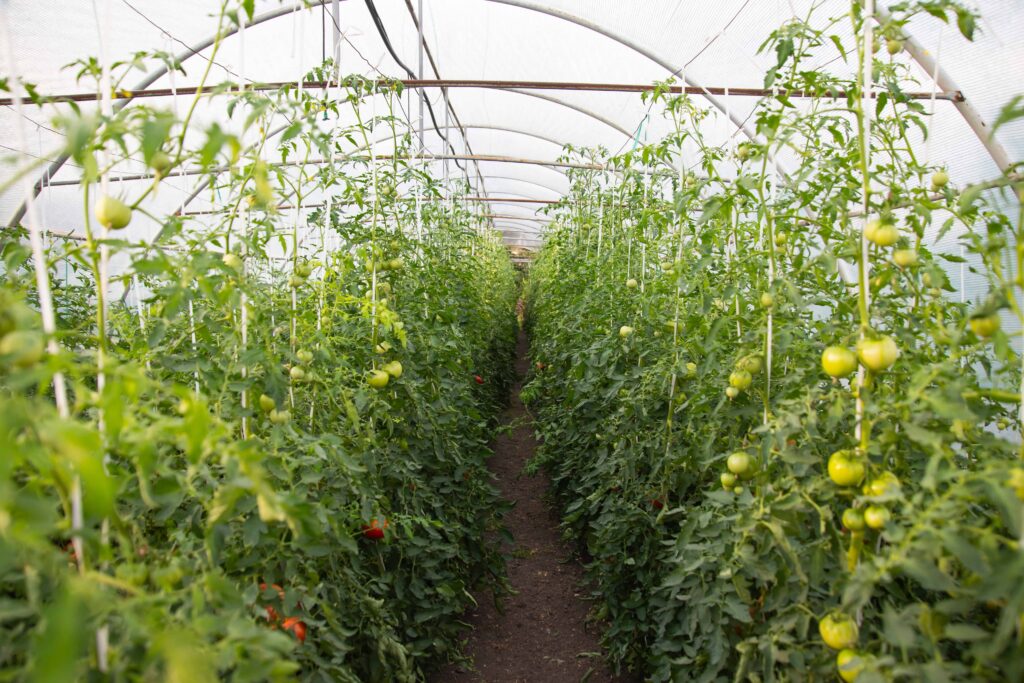
Crops that want strong light, such as tomatoes, peppers, cucumbers and other fruit crops, do well. Plants that prefer softer light, such as leafy greens, herbs and seedlings, adapt easily. Temperature-sensitive plants such as orchids and tropical species also benefit. The range is wider than most other coverings.
Botanical domePublic and landmark uses
ETFE is also used for botanical gardens, eco-domes and other landmarks where a column-free, light space is wanted. We build for these projects as well as for commercial growers.
These projects often combine growing with visitors, so safety, light and appearance count as much as yield. The low weight of ETFE allows wide spans with fewer columns, which keeps the views open.
Maintenance
Thinking about ETFE cost
ETFE costs more upfront than polyethylene film, and needs a stronger specialist build than film. Over a long service life it can compare well, because it is not replaced every few years and the frame can be lighter than a glass frame. We help you compare for your project.
When not to choose ETFE
Budget is the main driver and the crop is robust. The project is small, and the specialist build is not justified. You need very high insulation with a simple build, where polycarbonate may suit better.
Questions to ask about an ETFE greenhouse
Common questions
Straight answers. If yours is not here, ask us.
ETFE is a long-life covering that does not yellow or crack easily under UV. Ask us for the rating of the specific film we propose.
It is lighter and more impact-resistant, with high light transmission. Glass has a longer track record. The right choice depends on your project.
No. It is largely self-cleaning in rain and needs occasional rinsing and inspection.
It costs more than polyethylene film to buy, but it does not need replacing as often.
Yes. Small punctures can be patched with repair tape.
It can be, especially where high light and a long-life covering matter. For many vegetable projects film or glass costs less, so we compare the options for your site.
Ask about an ETFE greenhouse
Send your location, crop and area. We reply within 24 hours.
Consultation and project proposals are free.
What to include
- Location
- Your crop
- Planned area
- Reply within 24 hours
-1024x461.webp)


