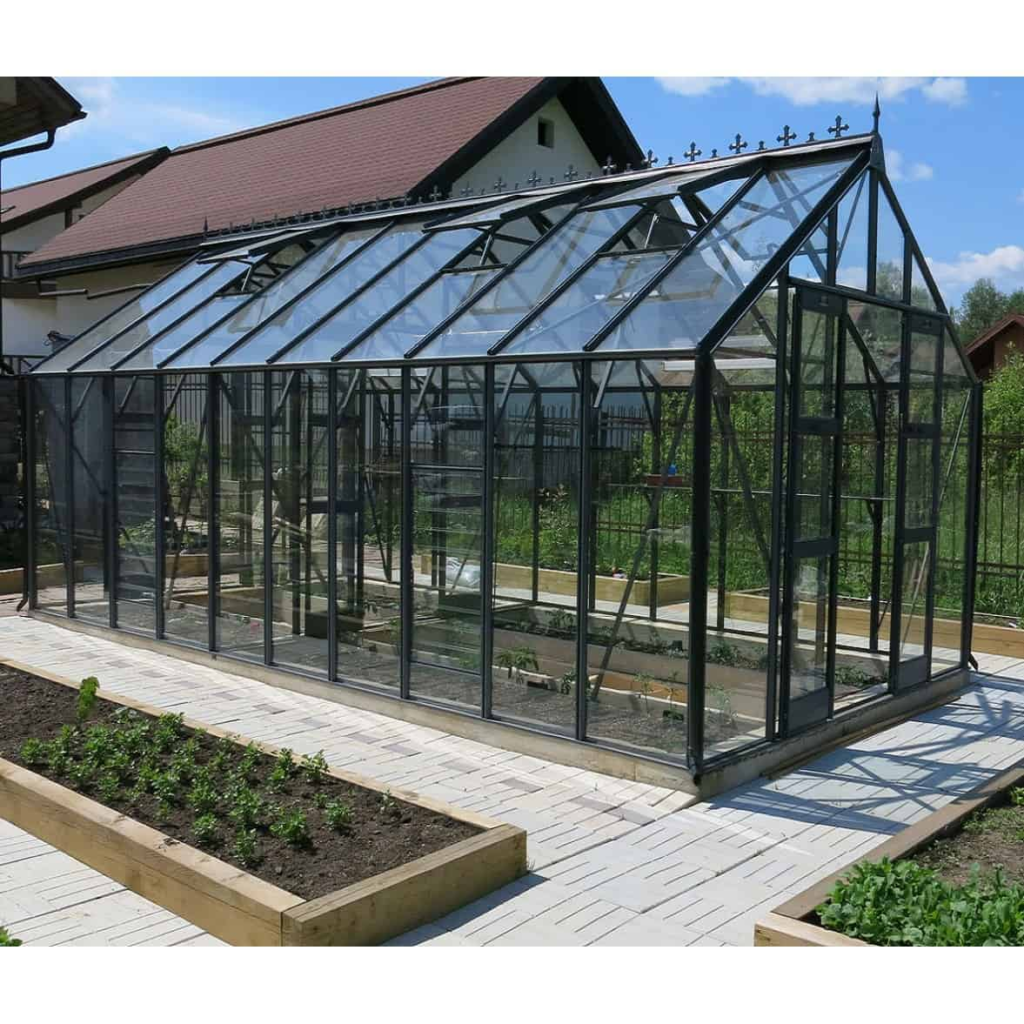
Commercial Glass Greenhouses
A glass greenhouse gives the most light and the longest service life of any covering, and it is the choice for high-technology production. The price is a heavier structure and a higher build cost. This page explains which glass to choose, how the structure carries it and where a glass greenhouse pays back.
Glass greenhouseGlass, built for your site
FANGCHENG designs and builds commercial glass greenhouses on hot-dip galvanized steel frames, tailored to your climate and crop.
When a glass greenhouse is the right choice
- The crop needs strong, even light all year, such as tomatoes, peppers, cucumbers and flowers
- You plan to run climate control, screens and supplementary lighting
- You want a long-term structure that will not need re-covering
- The project has the capital for a heavier build
If only one or two of these points apply, compare glass with polycarbonate before you decide. Glass pays back best when all of them line up: a light-hungry crop, a long horizon and the will to run a controlled climate.
What glass offers
Glass has the highest light transmission of the common greenhouse coverings.
Glass does not age in the sun and keeps its clarity for decades.
It suits screens, heating and cooling, and automation.
You clean it, but you do not replace it on a cycle.
What glass costs you
A heavier covering needs a stronger frame and foundations
Higher purchase and build cost
Single glass loses heat faster than polycarbonate, so cold climates need double glazing or screens
Glass can break under impact such as hail
None of these makes glass a poor choice, but each has to be planned. The heavier frame is a design task, heat loss is answered with screens and double glazing, and hail risk is a site question that can point toward polycarbonate.
Choosing between clear and diffuse glass


Clear glass gives the most light, which suits crops that want maximum sun in low-light climates.
Diffuse glass scatters light, so it reaches lower leaves and avoids hot spots.
Tap a side to compare.
In bright climates, or with crops that scorch easily, diffuse glass is often the better choice. Tell us your crop and your latitude, and we advise.
Types of glass we use
-1024x461.webp)
Ultra-clear float or tempered glass.
Maximum light for crops that want it.

Diffuse glass.
Scatters light so it reaches deeper into the canopy and avoids hotspots and burning.

Double-glazed insulated glass.
Reduces heat loss in cold climates.
Roof and wall glassRoof glass and wall glass
The roof and the walls do different jobs, so they do not always use the same glass. The roof lets in most of the light, so it usually carries the clearest or best-diffusing glass. The walls lose heat to cold air and wind, so in cold regions they are often double-glazed while the roof stays single, with a thermal screen beneath.
This split keeps light high where it counts and heat loss low where it is easiest to stop.
Three glass greenhouse configurations
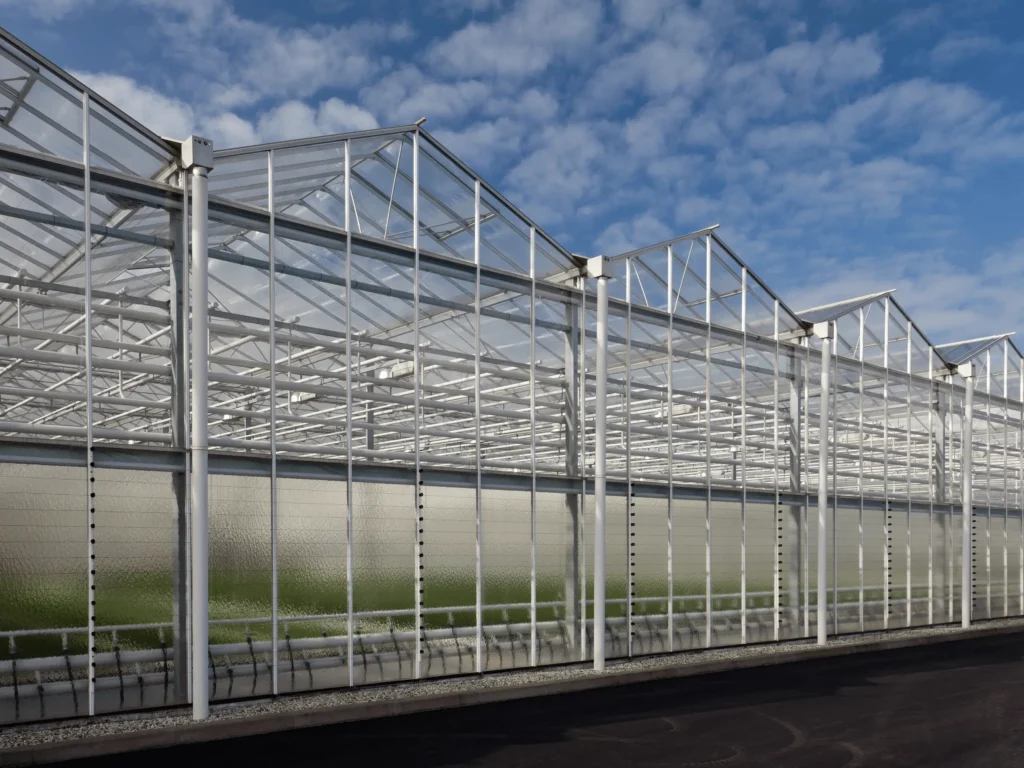
Venlo high-tech glass greenhouse.
The global standard for commercial horticulture, with a pitched multi-peak roof and aluminum gutters. For tomatoes, peppers, cucumbers and flowers.

Diffuse glass greenhouse.
Uniform light and fewer hotspots. For high-density vines, sensitive crops and potted plants.

Semi-closed precision greenhouse.
Tight climate control with thermal screens, for extreme climates and high-value crops.
All three sit on a hot-dip galvanized structure, and differ in how far they go with control. Most commercial projects start from the Venlo configuration and adjust the glass and screens for their climate.
See the Venlo layout in detail.
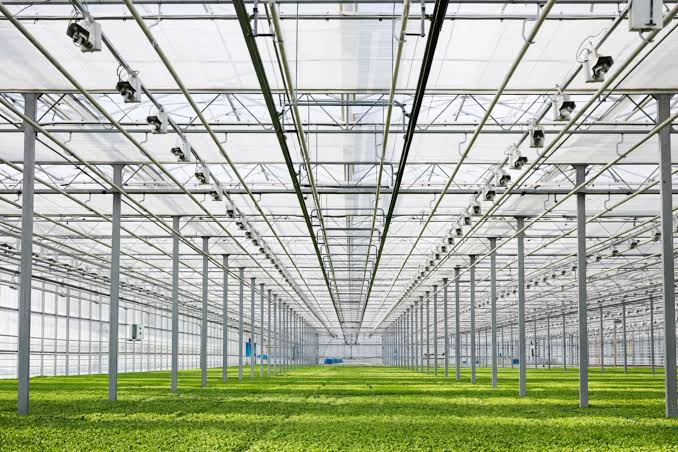
Glazing bars, seals and gutters, and the structure behind the glass
Glazing bars, seals and gutters
A glass roof is only as tight as its bars and seals. The profile has to hold the glass, let water drain and allow for movement. Gutters, which are often aluminum, sit between roofs and carry heavy rain. We design bars, seals and gutters together.
The structure behind the glass
The frame is hot-dip galvanized steel, designed for the wind and snow loads of your site. Bay widths, column heights and frame gauges are engineered per project. Gutter height, span width and bay size are all customized, so the structure carries the glass safely and suits the growing system inside.
Ventilation, screens and climate integration
A glass house gains heat quickly on a bright day, so vents and screens are what keep it in range. The more closed the house is kept, the more it relies on cooling and controls instead of open vents.
Keeping heat in and drainage on a glass roof
Keeping heat in
Single glass loses heat fast at night. Cold-climate glass houses use thermal screens, double glazing on the walls and efficient heating. Screens also save energy in summer by cutting heat gain. The semi-closed configuration takes this further for extreme climates.
Drainage on a glass roof
A large glass roof sheds a lot of water to the gutters in a short time. Gutter size, slope and downpipes have to be sized for the heaviest rain at your site, and the water has to be led away from the foundations. Rainwater can be collected and reused.
Glass or polycarbonate?
Glass
Glass gives more light and lasts longer. For high-light, year-round, high-control production, choose glass.
Polycarbonate
Polycarbonate insulates better, resists impact better and is lighter. For cold or hail-prone sites and for tighter budgets, choose polycarbonate.
See the polycarbonate greenhouse.
Maintenance
Safety and hail
Tempered glass breaks into small pieces and is safer than ordinary glass, but heavy hail can still break panes. If your site is hail-prone, discuss glass thickness and the choice of polycarbonate with us.
Cleaning and replacing glass
Dirt on the roof cuts light, so glass is washed on a schedule. Individual panes can be replaced when broken. The covering does not age the way film does, so there is no scheduled re-cover.
How to compare glass greenhouse offers
Common questions
Straight answers. If yours is not here, ask us.
Glass has the highest light transmission of the common coverings. The exact figure depends on the glass type and treatment.
They can with proper insulation and heating. Single-pane glass loses heat quickly, so cold climates often need double glazing or thermal screens.
Glass gives more light. Polycarbonate gives better insulation and impact resistance. The right choice depends on your climate and crop.
Yes. Tell us the design loads for your area.
Yes. We supply vents, screens, cooling, heating and controls with the structure.
It is when the crop needs strong light all year and you plan to run a controlled climate for many seasons. For shorter horizons or harsher weather, polycarbonate often gives better value.
Get a glass greenhouse plan for your site
Send your location, crop and area. We reply within 24 hours.
Consultation and project proposals are free.
What to include
- Location
- Your crop
- Planned area
- Reply within 24 hours