...

Greenhouse Structures Built For Performance

Hydroponic Systems for Greenhouses

A hydroponic system grows plants in nutrient solution instead of soil. The system type should be matched to the crop, because each one suits different root space and plant size. FANGCHENG supplies hydroponic systems with the greenhouse and its climate controls.

The method

What hydroponics is

Hydroponics grows plants without soil. The roots sit in a nutrient solution or in an inert medium that is fed with it. It is a growing method, not a type of building. It still needs a greenhouse to hold the climate steady.
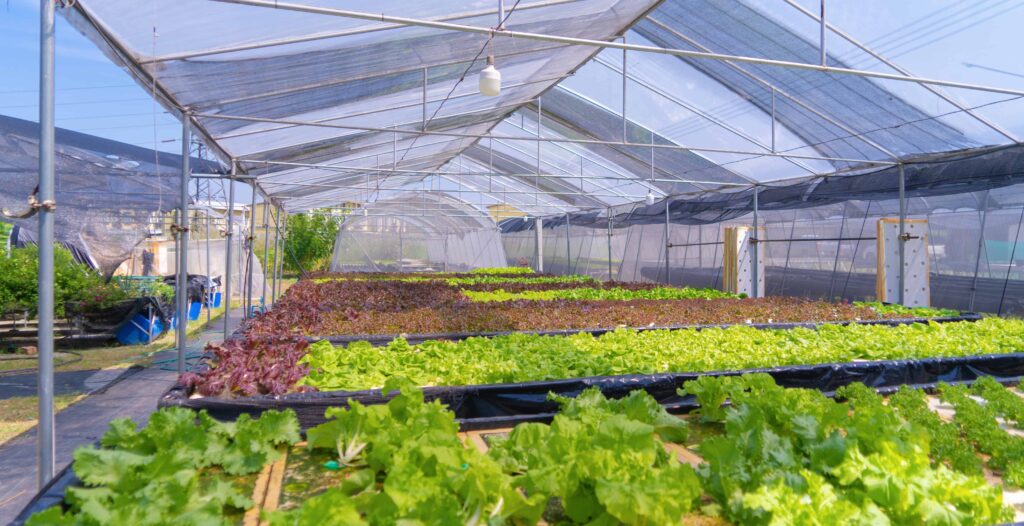
Soil-free crop beds in a greenhouseA growing method, not a building
Four systems

Which system suits which crop?

NFT.
01 / 04

NFT.

A shallow film of nutrient solution flows along channels. Suits leafy greens and herbs.
Deep water culture (floating raft).
02 / 04

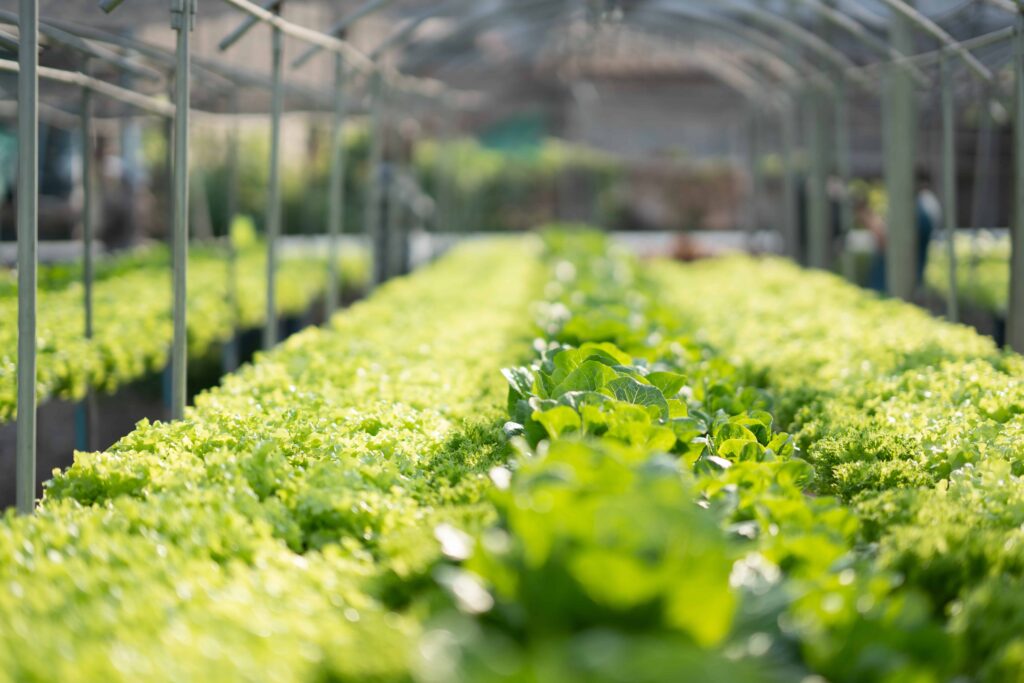
Deep water culture (floating raft).

Plants sit on rafts over an aerated reservoir. Suits leafy vegetables and some herbs.
Ebb and flow.
03 / 04

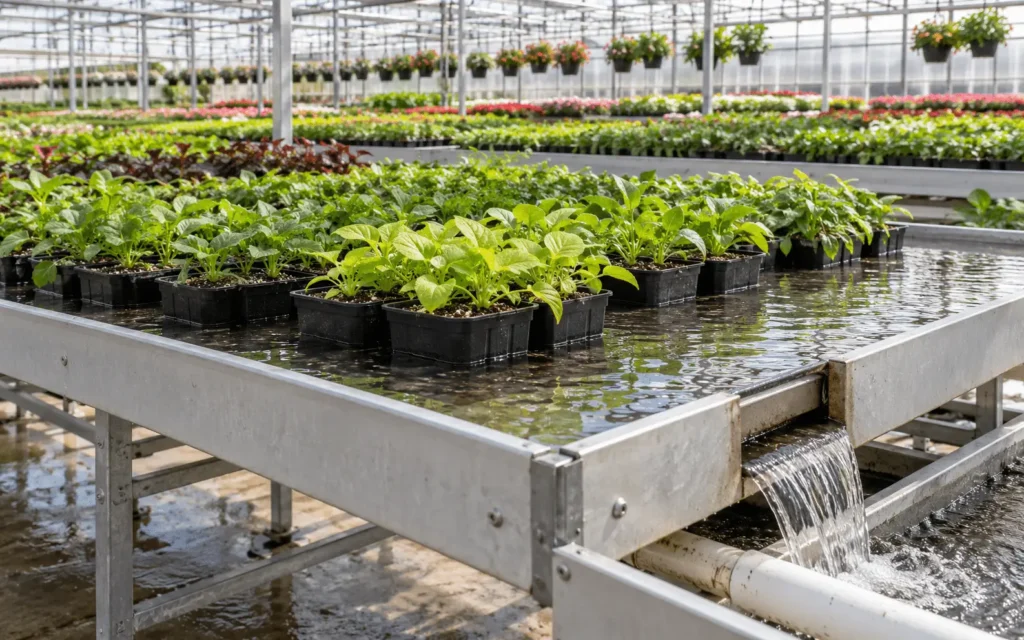
Ebb and flow.

Trays or beds are flooded and drained on a cycle. Suits some vegetables and ornamentals.

Drip or top-feed.
04 / 04

Drip or top-feed.

Solution drips over the roots and drains back to a reservoir. Suits fruiting, containerized and taller crops.

Tell us your cropWe compare hydroponic systems for it and reply within 24 hours.
Get a Free Quote
Trade-offs

Pros and limits of each system, in plain terms

NFT.

Low water volume and a simple layout for leafy crops. Roots dry out fast if the flow stops.

Deep water culture.

A large water volume buffers changes, which is forgiving. It needs aeration.

Ebb and flow.

Flexible for trays and pots. It relies on pumps and timers.

Drip or top-feed.

Works for tall and fruiting crops in a medium. Needs filtration and a return for run-off.

Parts

What the system includes

Reservoirs, pumps and plumbing
Aeration, such as air stones or oxygen injection
Filters and UV or ozone sanitation
Dosing pumps
pH, EC, temperature and dissolved-oxygen sensors
The solution

Nutrient solution basics

  1. 01

    EC shows how strong the solution is

  2. 02

    pH decides whether nutrients are available to the roots

  3. 03

    Temperature matters, because warm solution holds less oxygen

  4. 04

    Oxygen has to reach the roots

  5. 05

    Clean water keeps filters and emitters clear

Design points

What to design carefully

  • Level channels or beds and correctly sized pumps
  • Return and overflow design, so flow is even
  • Clean water and a stable nutrient solution
  • A stable climate, since solution temperature and plant health follow the air
Climate and roots

The greenhouse and the root zone

The air above the crop and the solution below it influence each other.
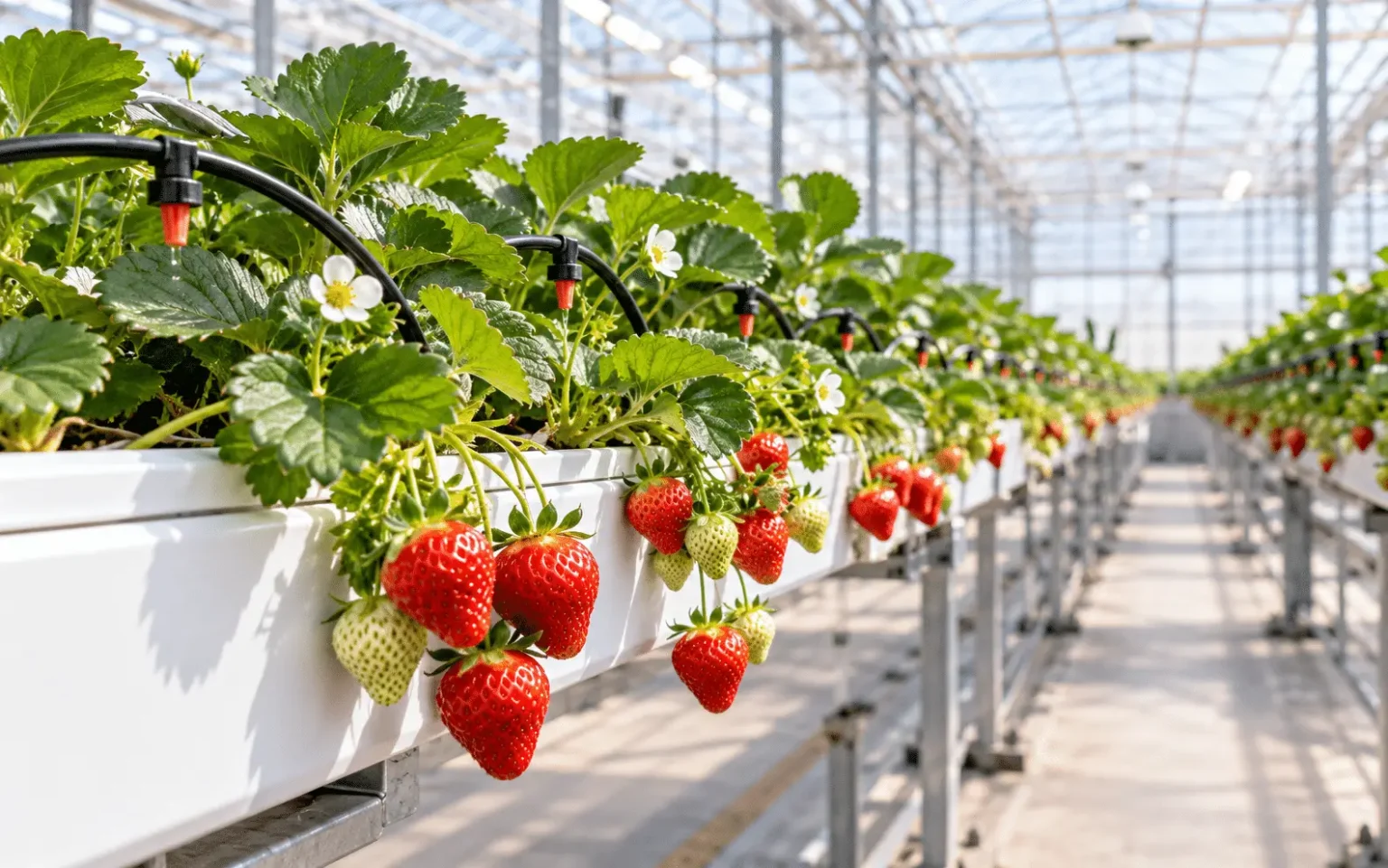
Hydroponic gutters in a greenhouse
Greenhouse air
ColdStableHot

An illustration of the idea. Warm solution holds less oxygen.
Solution volume

Water volume and temperature

A large solution volume changes temperature slowly, so it is forgiving. A thin film in an NFT channel changes quickly, which suits small, fast cycles but is less tolerant of faults. Keeping the solution within a healthy temperature range is a design task, and it ties to the greenhouse climate.

Care

Hygiene and risks

Hygiene

Hygiene between crops

Because the solution is shared, any disease can move through the whole system. Plan for cleaning and sanitizing between crops, and for filtration and sanitation of recirculated solution.

Risks

Risks to plan for

Solution is shared, so disease can spread quickly. A pump failure or power cut can cause serious root damage. We plan monitoring, alarms and backup so a single fault does not end the crop.

Before you choose

Questions to answer before you choose

01

Which crop and variety?

02

How much labor will you have?

03

What water do you have, and how clean is it?

04

Is power reliable?

05

How much do you plan to scale up?

06

What does your market pay for the crop?

Routine

A routine to keep the system healthy

  1. 01

    Check pH and EC daily or automatically

  2. 02

    Check solution level and temperature

  3. 03

    Inspect pumps, pipes and drains

  4. 04

    Clean filters and flush lines

  5. 05

    Sanitize between crops

Scaling

From a pilot to a full greenhouse

Many growers start with a small pilot to learn the system and the crop, then scale. Plan the water, power and climate for the final size, even if you build in stages.

Small pilot greenhouse with plants on a benchPlan for the final size
To plan your system

What we need from you

  • Crop and target volume
  • Water source and quality
  • Power supply and backup
  • Greenhouse type and area
  • Your experience with hydroponics, so we plan the right level of automation
Avoid

Common hydroponic mistakes

!

Choosing a system before choosing the crop

!

Uneven or poorly leveled channels

!

No aeration or oxygenation

!

No backup for pumps or power

!

Letting pH and EC drift without monitoring

!

Ignoring the greenhouse climate

FAQ

Common questions

Straight answers. If yours is not here, ask us.

It depends on the crop, labor and budget. Tell us your crop and we compare options.

They are different things. A greenhouse controls climate. Hydroponics is a growing method that replaces soil, and the two work together.

Tell us the system you want and we confirm what we supply for it.

Yes, with clean water, proper nutrients and good hygiene.

Set-up is usually higher than soil because of pumps, tanks and monitoring. It saves water and can make crops more uniform.

Yes. Drip or top-feed systems with a substrate suit tall, fruiting crops such as tomatoes and cucumbers.

Leafy greens and herbs suit NFT and deep water culture. Tall fruiting crops usually use drip or top-feed in a medium. Ornamentals often suit ebb and flow.

It is wise. A pump failure or a power cut can damage roots, so plan alarms and backup.

Get started

Plan your hydroponic system

Send your crop and area. We reply within 24 hours.

Consultation and project proposals are free.

What to include

  • Location
  • Crop
  • Greenhouse size
Scroll to Top
Two people choosing plants inside a greenhouse
Greenhouse manufacturer in Guangzhou
  • We reply within 24 hours
  • Free consultation and project proposals
  • Free sample and quote
Contact us

Leave us your info

We are always happy to help you with any commercial greenhouse questions or requests you may have.

We use your details only to answer your inquiry.