Greenhouse Shading Systems
A shading system cuts strong sunlight and the heat it brings, protects crops from leaf scorch and wilting, and lowers the cooling load. FANGCHENG supplies external, internal and automatic shading, with the shading level chosen by crop and climate.
Why crops need shade
Plants use light, but strong summer sun adds more heat and light than most crops can use. The result can be leaf scorch, wilting and a house that is too hot to cool. Shading removes part of the sun so the crop receives enough light without the extra heat.
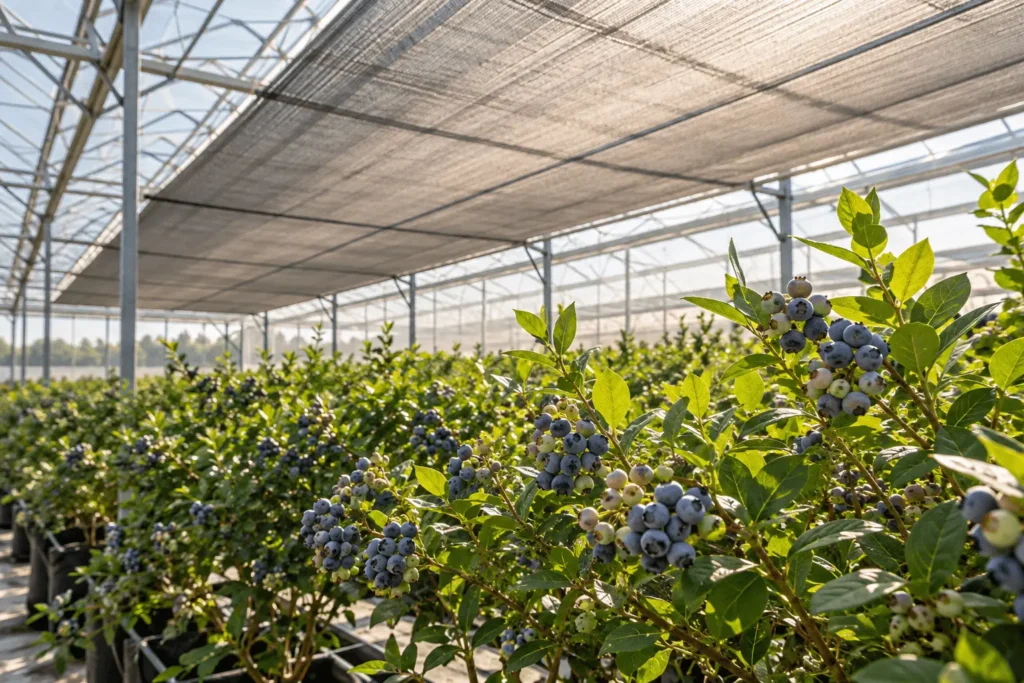
Shade removes the excessInternal or external shading?


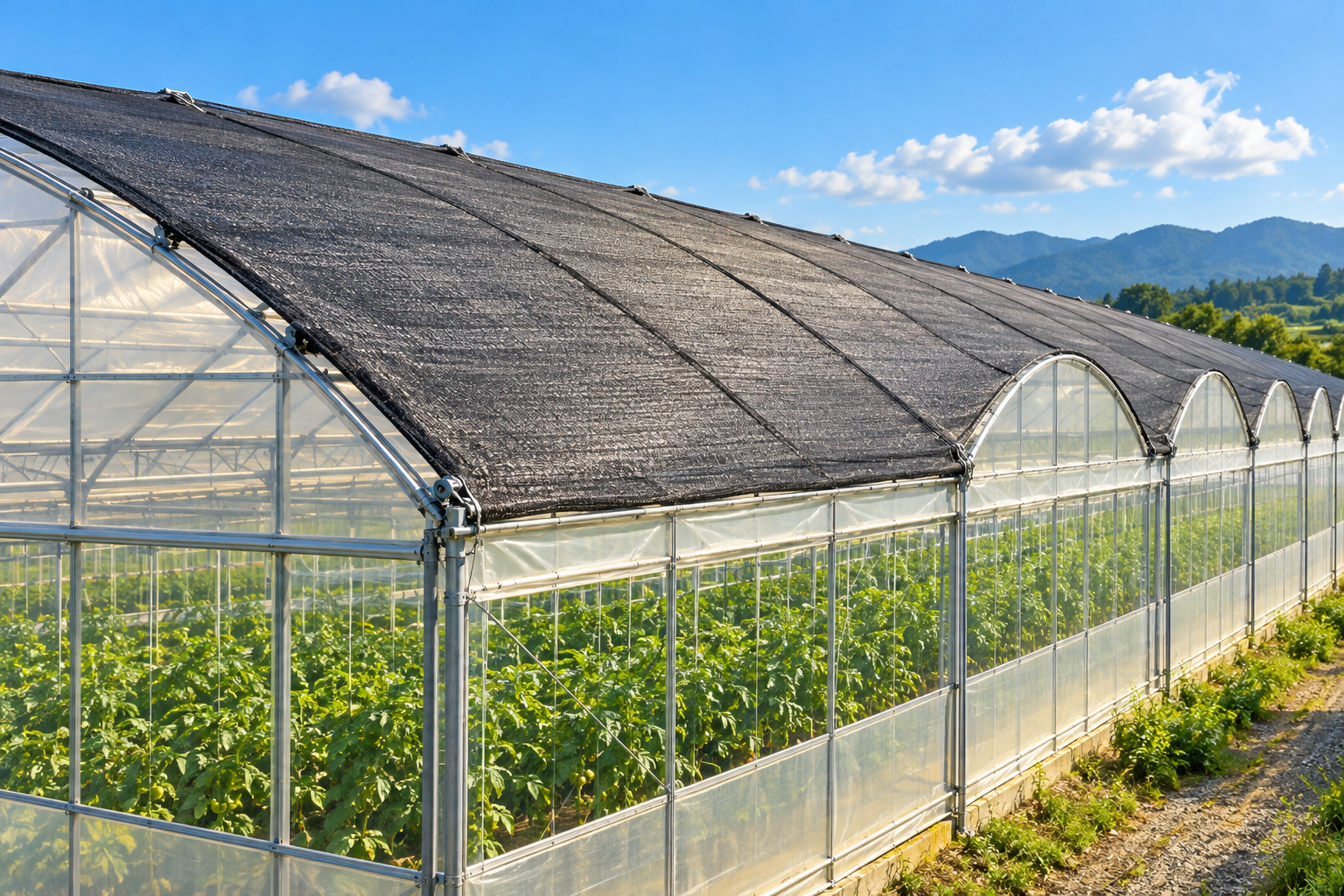
Outside the cover.
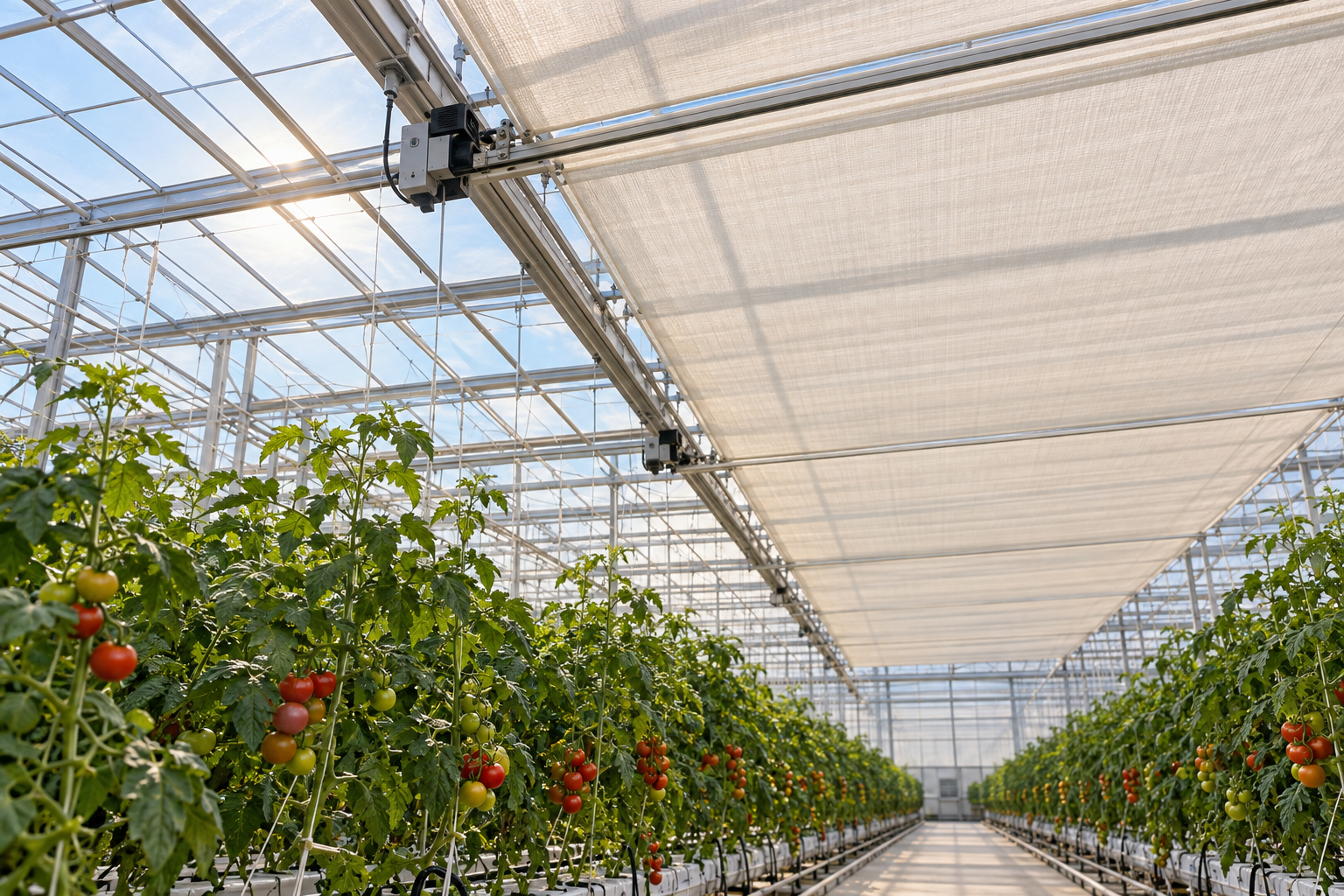
Inside, under the cover.
Stops sunlight before it heats the house.
Is protected from weather and can double as a thermal screen.
Wind loads on the structure and drive.
Some heat remains, because sun is stopped after it has entered.
Tap a side, or the photo, to compare.
Automatic systems
Gear motors and controls open and close the screen without manual work.
Reflect or absorb
Shade materials either reflect sunlight or absorb it.
Reflective materials
Reflective materials, such as aluminum strips, send heat back out.
Dark materials
Dark materials absorb sunlight and warm the air around them, which can add heat to the house.
Placement counts too
Where the screen sits and what it is made of both matter.
Materials
- Needle-punched shading fabric
- Knitted shade net
- Aluminum shading screen
- UV-stabilized shade cloth
- Thermal insulation screen
Choosing in practice

External shade.
Blocks heat before it enters the house. Exposed to wind, so structure and drive must be strong.
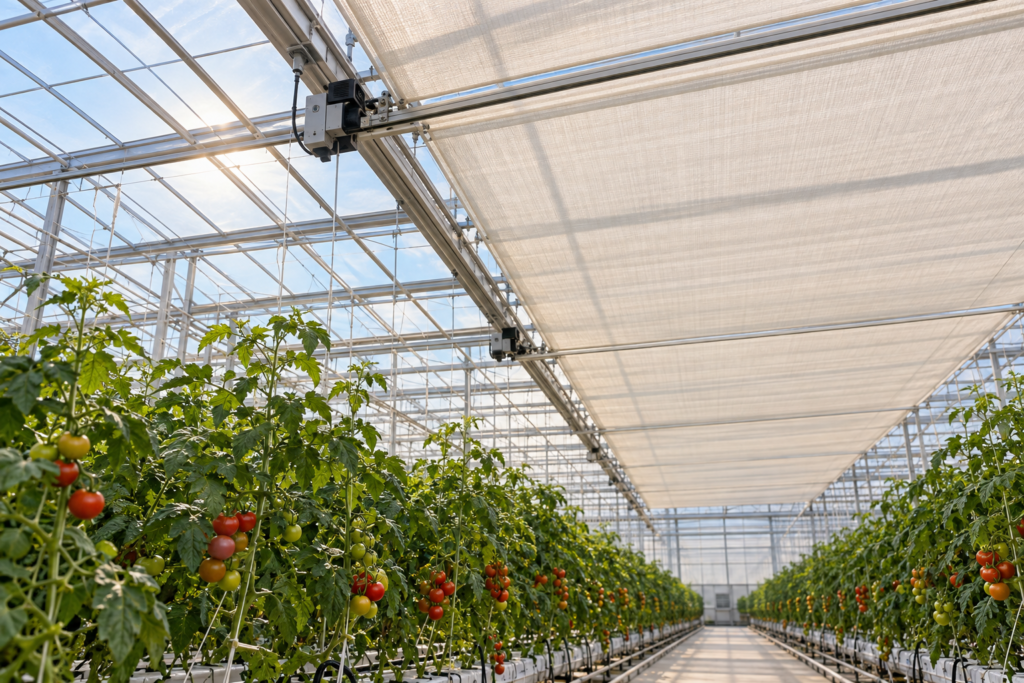
Internal shade.
Easier to mount and protected from weather, and can double as a thermal screen. It stops sun after it has entered the house, so some heat remains.

Fixed cloth.
Simple and low-cost. Always on, so it also shades on dull days.

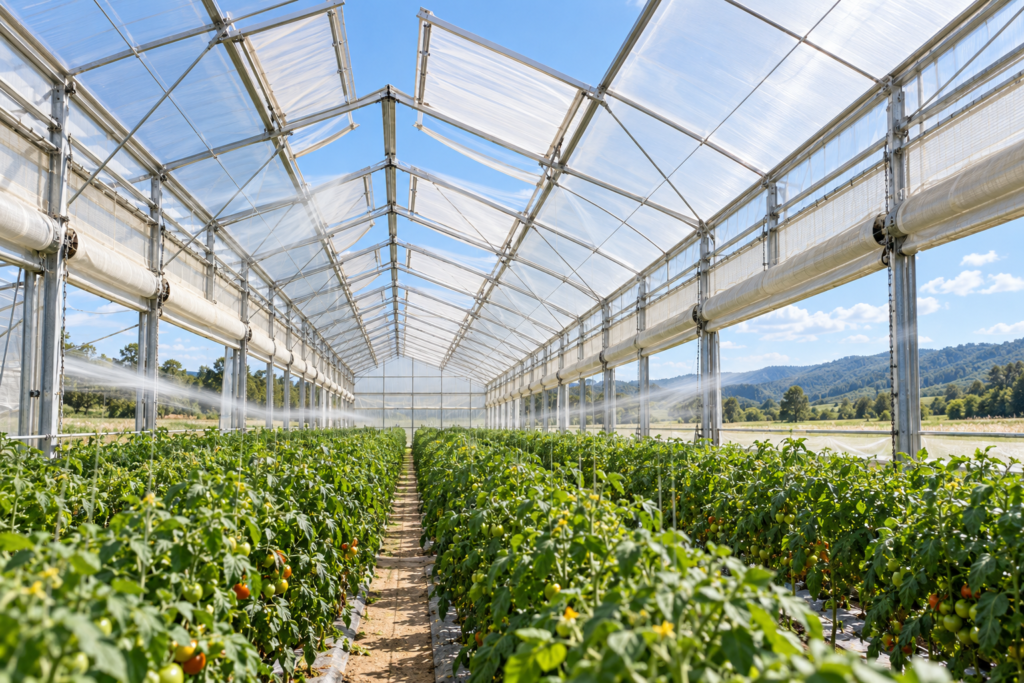
Retractable screen.
Open on dull days and in mornings and evenings, closed in strong sun.
Drives and control
Gear motors, drive shafts and support wires
Rack-and-pinion drive components
Control boxes and sensors
Operation by light intensity, by timer or by hand
Choosing the shading level
Most crops want only partial shading, while low-light crops such as orchids need more. The level depends on crop, local sunlight, season and house type. We recommend it after we know them.

Shading without losing light
Light-hungry crops need as much light as possible when the sun is not strong. A retractable screen controlled by light intensity closes only when needed and opens again when the sun weakens.
Fixed shade cloth or a retractable system?
Fixed cloth is simpler. A retractable system lets you pull the screen back on cloudy days and in the morning and evening, which keeps light for the crop. Quality of the drive and cables matters, because the screen moves daily.
Fixed or retractableShade materials in plain terms
Needle-punched shading fabric.
A thick felt-like fabric used for dense shading.
Knitted shade net.
An open knit that gives a set shade level and lets air through.
Aluminum shading screen.
Strips of metallized material that reflect sunlight and can also hold heat in at night.
UV-stabilized shade cloth.
Treated so it lasts longer in strong sun.
Control strategies

By light intensity
So the screen closes only when the sun is strong.

By a timer
For simple installations.

By temperature
To protect the crop in heat.
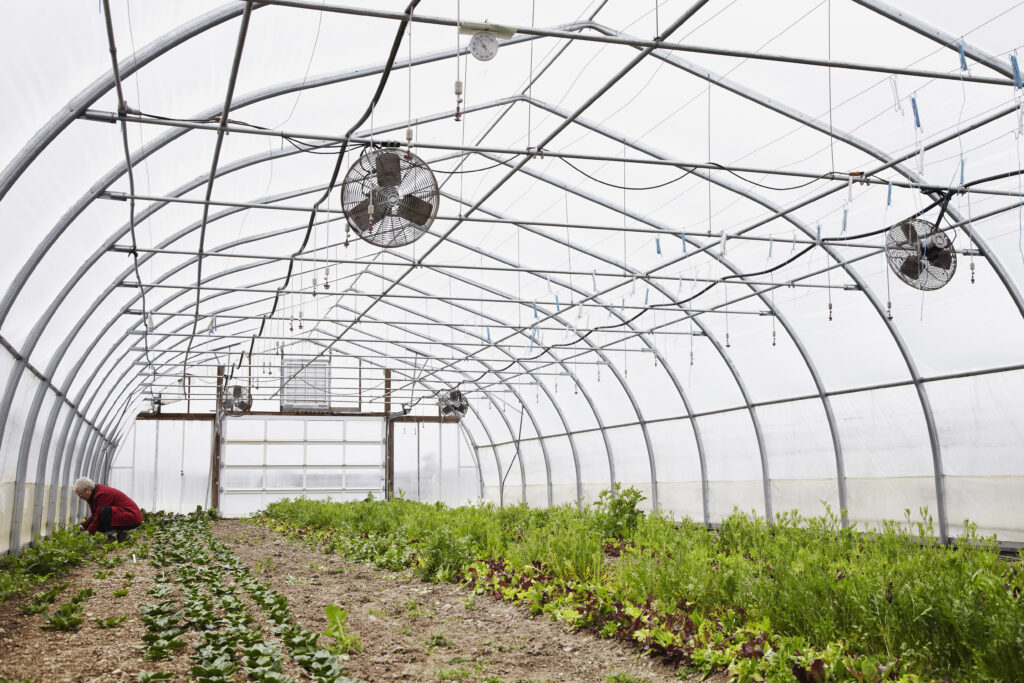
By hand
As a backup.
What affects how long a shading system lasts
- Sun exposure and UV
- Wind loads, especially on external screens
- How often it moves
- Quality of the motors, drive shafts and wires
- Correct tension and alignment
Seasonal shading coatings
Some growers paint a seasonal shading coating on the roof. It is cheap and simple, but it cannot be removed on dull days, so it suits crops and climates where steady shading is acceptable.
Cheap, simple, not removableWhat we need from you
- Crop and its light needs
- Location and the sunniest months
- Greenhouse type, width and height
- Whether you want internal, external or both
- Manual or automatic operation
Common shading mistakes
Shading too much, which cuts yield
Fixed cloth left on through the winter
Weak drives and cables that fail with daily use
Dark material inside the house adding heat
No control, so the screen depends on someone remembering
Common questions
Straight answers. If yours is not here, ask us.
It depends on the crop and the climate. Tell us both and we recommend a level.
Some screens do both. Aluminized screens, for example, can reflect heat away in summer and hold heat in at night.
Yes. Gear motors and controllers can work from light intensity or a schedule.
Too much shading does. The aim is to cut only the excess sun. Retractable screens controlled by light help.
Outside stops more heat. Inside is easier to fit and can double as a thermal screen. We recommend by your house and climate.
Often yes. Tell us the structure and we check.
Some screens do both. Others work better as separate layers. We decide with you.
Check drives, wires and fabric before the strong-sun season and again during it.
Explore other systems
Plan your shading
Send your crop, location and greenhouse type. We reply within 24 hours.
Consultation and project proposals are free.
What to include
- Location
- Crop
- Greenhouse size
-1024x461.webp)