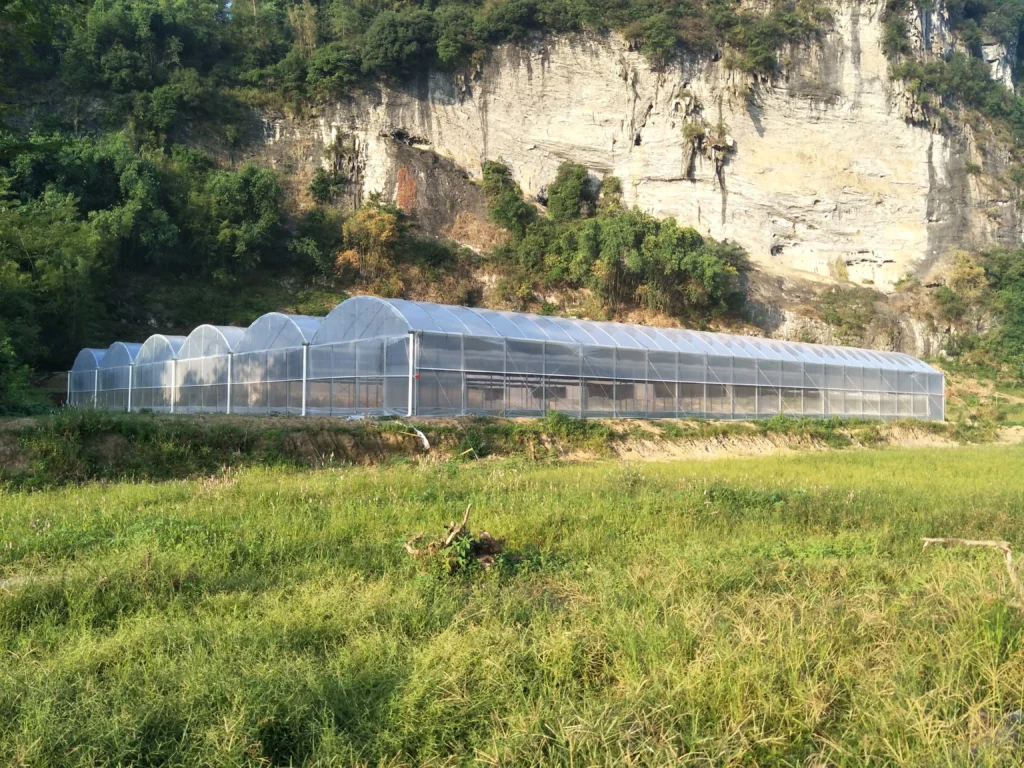
 Multi-wall polycarbonate
How a polycarbonate greenhouse works
FANGCHENG designs and builds polycarbonate greenhouses from fabrication to export and installation guidance. This page covers the whole greenhouse. For the sheet itself, see our polycarbonate sheet page.
Multi-wall polycarbonate sheet is made of thin skins joined by ribs, with air trapped in channels between them. That trapped air slows heat loss, so the greenhouse holds warmth at night and needs less heating. The skins still let most of the light through, and they spread it, so the crop has fewer hot spots.
The build of the sheet decides its behavior. More walls and deeper channels trap more air and insulate better, at some cost in light. That is why the one word, polycarbonate, covers sheets with quite different performance.
Why growers choose polycarbonate

Insulation.
Multi-wall sheet traps heat more effectively than single glass, which helps in winter and cuts heating cost.

Impact resistance.
The panels are shatter-resistant and built to stand hail and heavy snow.

Diffused light.
Even light across the crop, with fewer hot spots.

Lighter than glass.
A lighter covering needs a lighter frame.
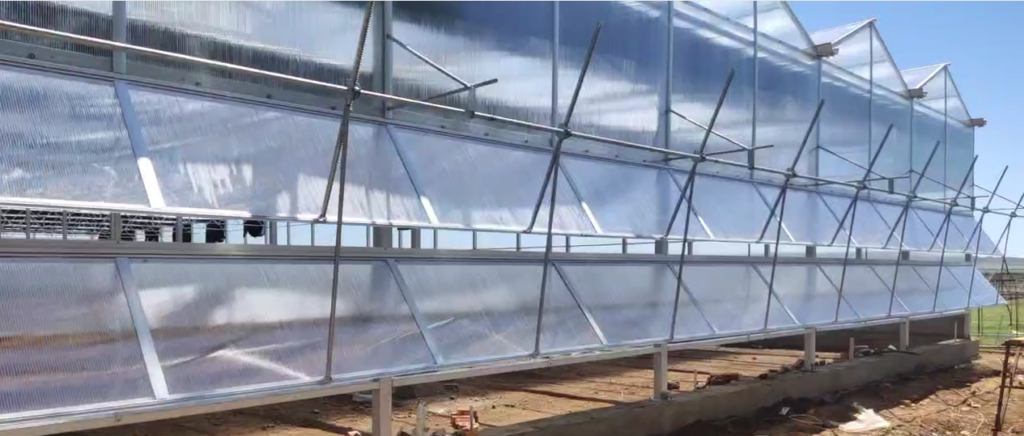
 Sheet on walls and gables
Polycarbonate on walls, roof or both
A polycarbonate greenhouse does not have to use sheet everywhere. Some projects use sheet on the walls and gables, where impact and heat loss are highest, and film or glass on the roof. Others use sheet all round for the best insulation.
The right mix depends on your winter, your hail risk and how much light the crop needs. We can price more than one option on the same frame.
6, 8 and 10 mm sheetChoosing sheet thickness
We customize panel thickness from 6 mm and 8 mm up to 10 mm and thicker, along with frame reinforcement and automated ventilation. A thicker sheet insulates more and spans farther, but costs more and lets through slightly less light. Cold climates and wide spans call for the thicker sheet. For the sheet details, see our polycarbonate sheet page.
Thickness is also a structural choice. A thicker sheet is stiffer, so it can span farther between purlins and carry more snow, which can change the frame layout. The best thickness balances light, insulation and the frame, rather than simply being the thickest.
Cold climates and hot climates

In cold regions the insulation of multi-wall sheet cuts heating cost. Choose a thicker sheet, seal the ends and the joints, add thermal screens, and make sure the frame can carry snow. A tight greenhouse also needs good ventilation, so plan the vents with care.
In hot regions the same insulation can trap heat. Full roof vents, side vents, shade and cooling keep the house comfortable. The full roof vent model is made for this case.
Tap a side to compare.
 Crops under polycarbonate
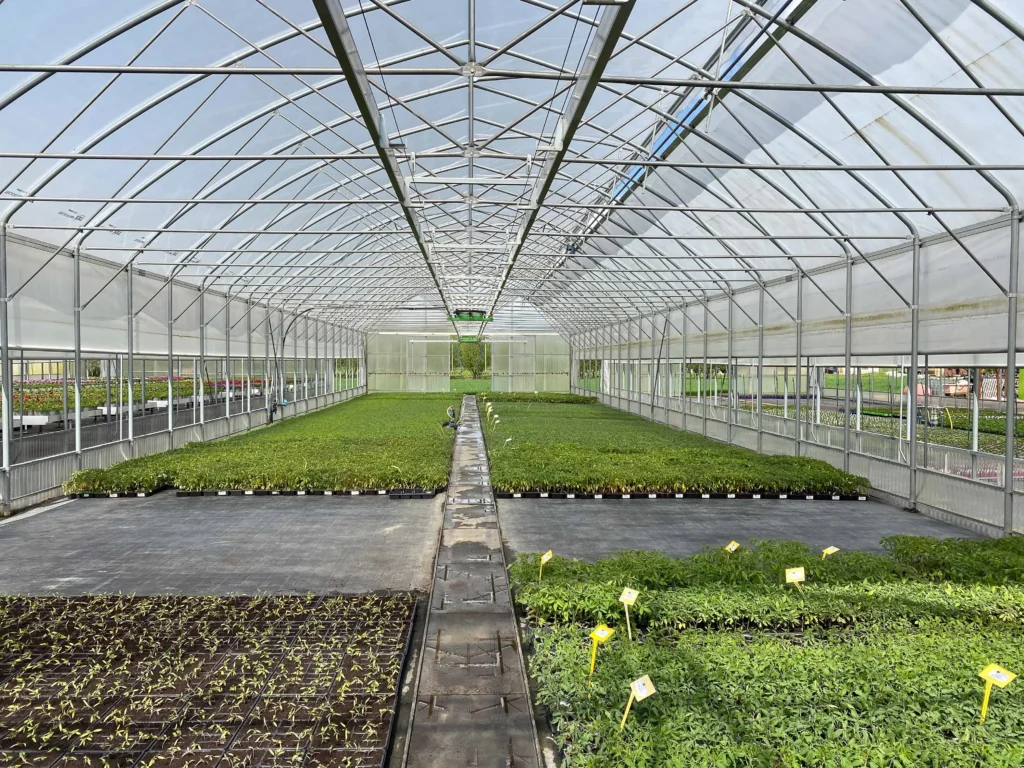
Crops that suit polycarbonate
Leafy greens, herbs, berries, cucumbers, tomatoes, seedlings and nurseries, mushrooms and hydroponic crops.
The common thread is a crop that values a steady climate and even light more than the last bit of light transmission. Seedlings and nursery plants fit especially well, because diffused light and stable temperature help young plants grow evenly.
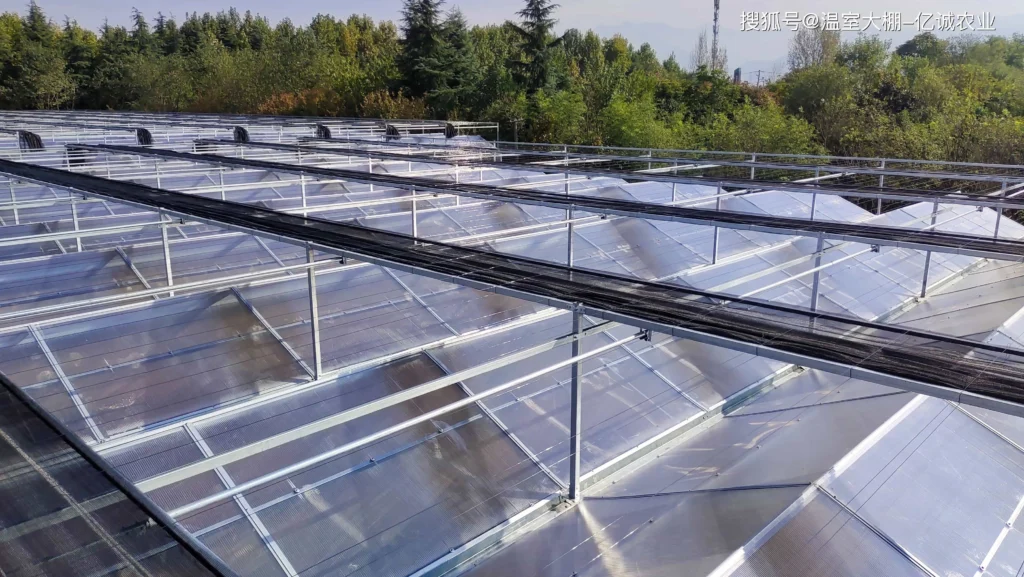
Roof and side ventsClimate control
A polycarbonate greenhouse can be fitted with roof and side vents, cooling pads and fans, heating, thermal and shade screens, and automation. Because the covering insulates, the heating load is lower than in a single-glass house.
Commercial polycarbonate greenhouseCommercial greenhouse or garden kit?
Many polycarbonate greenhouses sold online are small kits for gardens. A commercial greenhouse is a different building: the frame is designed for local snow and wind, the sheet thickness is chosen for the climate, and the layout leaves room for vents, screens and growing systems. When you compare prices, check that the offers describe the same kind of building.