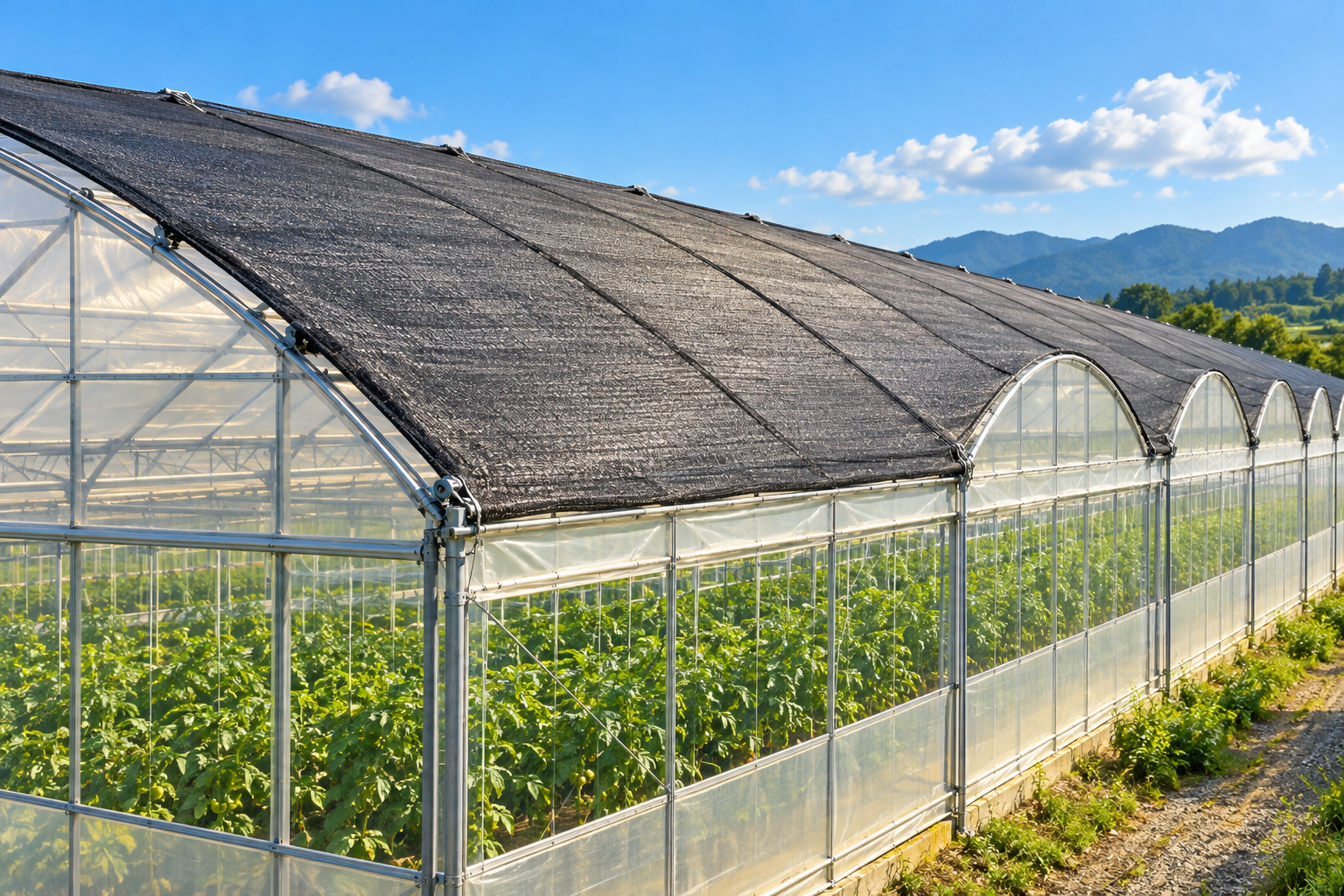
Greenhouse Covering Materials: The Complete Guide
The covering decides how much light reaches the crop, how well the house holds heat and how long it lasts before replacement. There is no single best material. Film suits large, cost-conscious farms, polycarbonate suits cold or impact-prone areas, and glass suits high-tech, long-term projects.
What each covering does
This guide compares the options on the points that matter to a buyer: light, heat, durability, cost over time, structure and labor. FANGCHENG supplies film, polycarbonate sheet, shade net and insect net, with the frames and fixings to carry them.

Greenhouse film
Cost-effective and flexible. Best for large commercial farms. It needs replacement after its service life.

Polycarbonate sheet
Better insulation and impact resistance. Best for cold or impact-prone areas. Higher cost than film.

Glass
High light transmission and long service life. Best for high-tech projects. It requires a stronger structure.

Shade net
Reduces sunlight and heat stress. Best for hot, high-light regions. Choose the shading rate by crop.
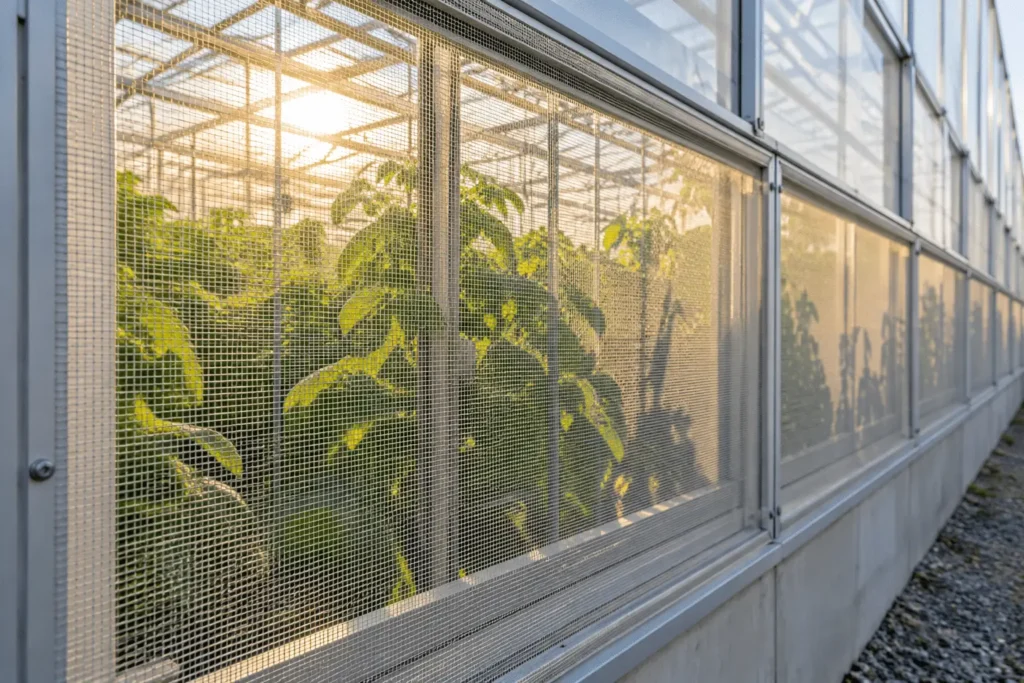
Insect net
Pest protection with airflow. Best for ventilation openings. Choose the mesh size by the pest to control.
Light, heat and durability in plain terms
Light transmission is how much sunlight passes through. Insulation is how well the covering holds heat in at night. Durability is how long it lasts under sun, wind and handling. Most coverings trade one against another. Glass gives high light and long life. Polycarbonate gives insulation and strength. Film gives low cost and flexibility.
Clear light or diffused light
Clear coverings give the most light but also hard shadows and hot spots. Diffused coverings scatter light so it reaches lower leaves and burns the top less. Many crops do well under diffused light, but the best choice depends on the crop.
How to choose: five questions
- 01
What is your climate? Cold, hot, windy, hail or heavy snow.
- 02
What is your crop? How much light it needs and how sensitive it is to heat.
- 03
What is your budget? Purchase cost against service life and replacement.
- 04
What is your structure? Heavier coverings need a stronger frame.
- 05
What labor do you have? Film is replaced more often than sheet or glass.
Matching the covering to your climate


Price, life, labor, downtimeCost over time, not just at purchase
A cheaper covering that is replaced often can cost more over several years, once labor and lost growing time are added. A more expensive one that lasts longer can cost less per year. Compare the purchase price, the expected life, the labor to fit and the cost of any downtime.
Cover and fixings are a system
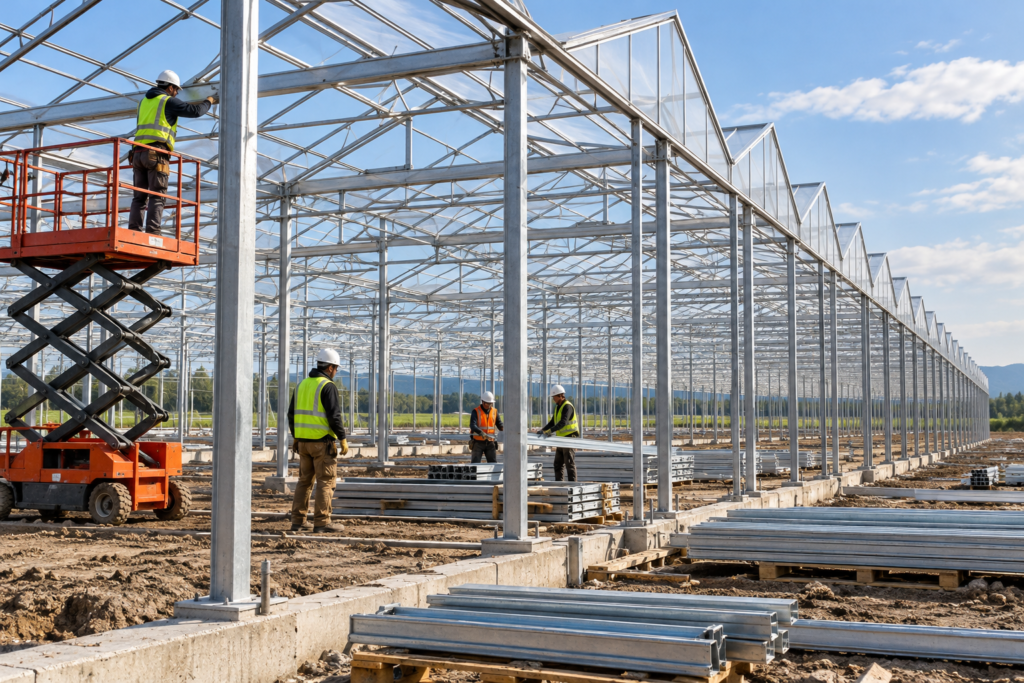
A good covering fails if it is fixed badly. Film needs channels and wire that hold it evenly. Sheets need profiles that allow movement. Glass needs glazing bars and seals. We supply matched fixing accessories with every covering.
Two layers
Film can be fitted in two layers with air between them for better insulation. Polycarbonate sheet is made in hollow layers for the same reason. Two layers lose less heat, but they also let in a little less light.
Planned at the design stageMixing coverings in one greenhouse
Many greenhouses use more than one covering. A common pattern is film on the roof and polycarbonate on the sidewalls, where impact is likely. Shade net and insect net are added at vents and over the roof. Mixing works when the fixings and the frame suit each material, so plan the combination at the design stage.
Planning for replacement
Common mistakes when choosing a covering
Choosing on purchase price alone
Choosing a covering the frame cannot carry
Using the same covering everywhere regardless of local weather
Buying the covering and the fixings from different sources
Ignoring labor and downtime at replacement
Buying coverings at volume
A covering order is large, and most of the quality is hard to see on the day it arrives. Before you order:
Explore each covering

Greenhouse Film
Clear, diffused, thermal, anti-drip and blackout film, rated one to five years.
Learn more
Polycarbonate Sheets
Twin-wall sheet in 6, 8 and 10 mm, with the profiles to fit it.
Learn more
Shade Cloth
UV-stabilized cloth, knitted or woven, in shading rates of 30 to 80%.
Learn more
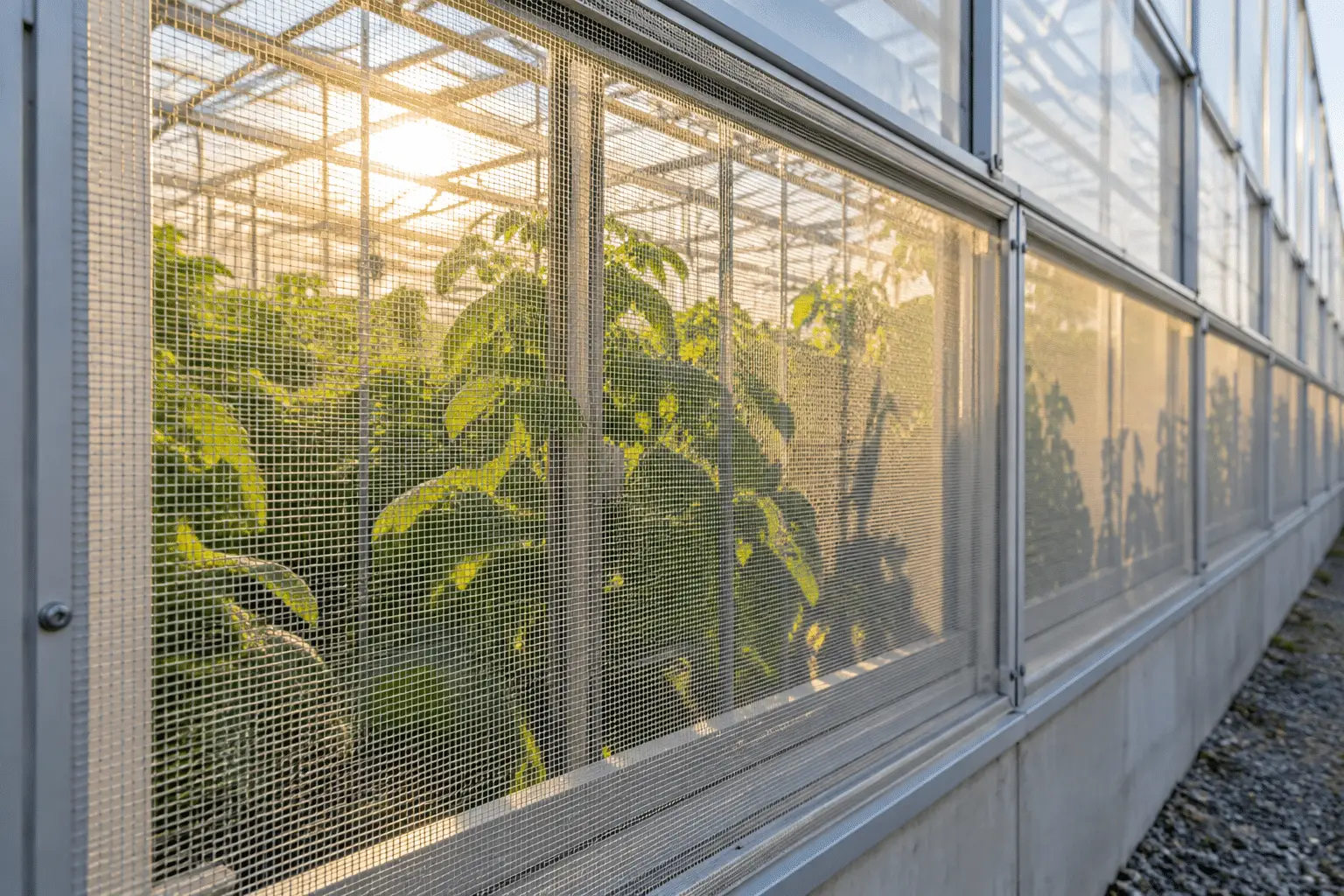
Insect Net
Mesh chosen by the pest, planned together with the vents.
Learn moreCommon questions
Straight answers. If yours is not here, ask us.
Film costs least to buy. Over a long period, sheet or glass can cost less per year because they last longer.
Polycarbonate or double-layer film, with a thermal screen. We recommend by your site.
Yes. Many greenhouses use film on the roof and polycarbonate on the sidewalls, for example. Tell us your plan.
Yes. We offer a free sample and quote. Tell us which covering you want to see.
Often yes, if the frame is strong enough and the fixings allow it. Tell us if you plan to change, and we design for it.
Yes. It changes the light and the temperature the crop sees, and so growth and quality.
Film suits large areas on a budget. Polycarbonate suits harsh weather and longer service life. Send us your climate and budget.
Choose your covering with us
Send your climate, crop and structure. We reply within 24 hours.
Consultation and project proposals are free.
What to include
- Your climate
- Your crop
- Your structure
- Reply within 24 hours


-1024x461.jpg)