跳至内容
跳至内容 
Building a commercial greenhouse is a major investment — often $500,000 to $2,000,000+ per acre. Yet many first-time growers make preventable mistakes that cost them tens of thousands of dollars in retrofits, lost production, and operational inefficiencies.
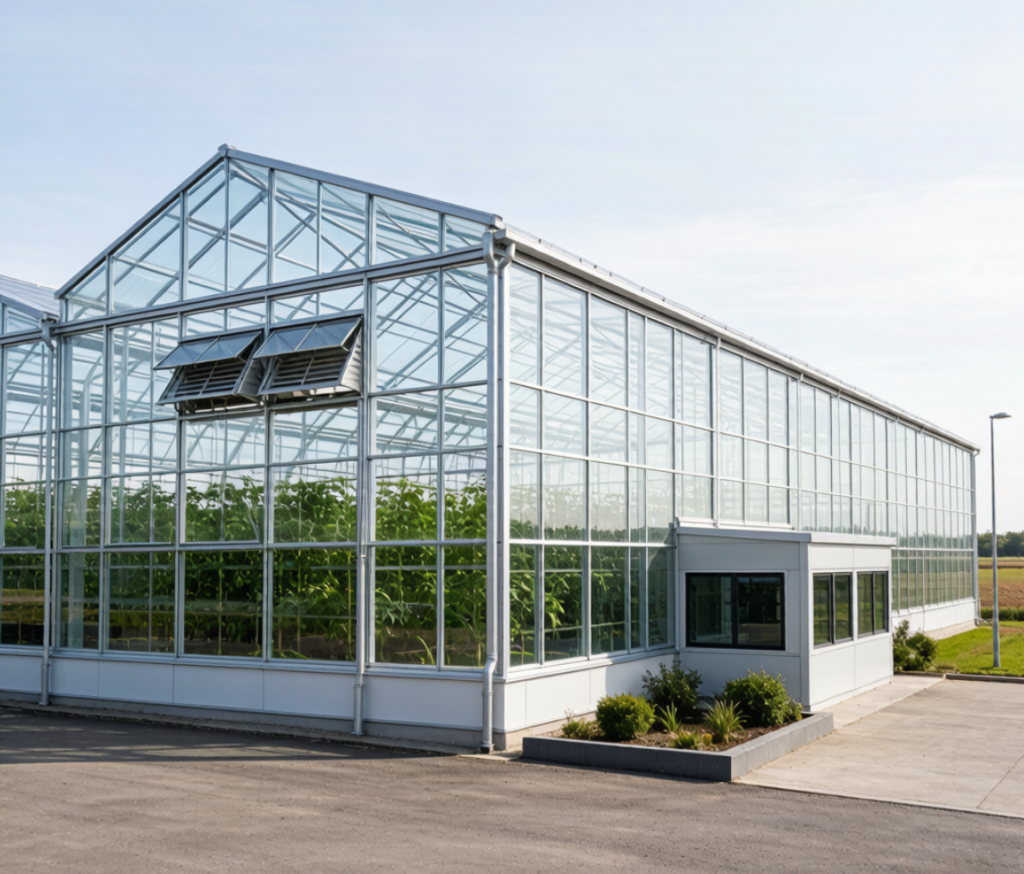
For an overview of proper greenhouse construction, see our commercial greenhouse structures.
Why Mistakes Happen
Most greenhouse construction mistakes stem from the same root cause — underestimating the complexity of the growing environment. A greenhouse is not just a metal frame with plastic. It is a precision environment where lighting, temperature, humidity, airflow, irrigation, and CO2 must all work in balance.
The ASABE EP406.4 standard provides design guidelines for commercial greenhouse environmental control systems.
Mistake 1: Poor Site Selection & Orientation
The cost: up to 30% lower light transmission and 20-40% higher heating costs. Many growers choose a site based on land price or convenience without considering solar access, drainage, or wind exposure. In the Northern Hemisphere, the greenhouse ridge must run east-west for maximum winter solar gain. South-facing glazing should be angled at latitude + 15 degrees. Avoid low-lying areas where cold air pools — a 5-10°F temperature difference on frost nights can make or break your winter production.
How to avoid: Hire a site survey professional. Measure solar exposure during winter months (December-January). Check for existing windbreaks and drainage patterns. Test soil for load-bearing capacity — some greenhouses require significant foundation strength. Ensure proximity to 3-phase power if using large pumps or fans.
Mistake 2: Undersized HVAC Systems
This is the most expensive mistake. A greenhouse that cannot maintain target temperatures during summer heat waves or winter cold snaps will destroy crops. New growers often budget only $3-6/sq ft for heating, when the actual cost for properly sized systems is $5-12/sq ft.
Heating: Calculate based on the coldest expected temperature, not the average. A 20,000 sq ft greenhouse in USDA Zone 5 (minimum -10°F) needs approximately 1.5-2.5 million BTU/hour. Most new growers undersize by 30-50%.
Cooling: Fan and pad systems must provide 8-10 air exchanges per minute. Undersized cooling is the #1 cause of summer crop failure in first-time operations.
Rule of thumb: Always size HVAC systems for the 98th percentile weather event, not the average. The additional 10-20% upfront cost for properly sized equipment is trivial compared to the cost of losing a $100,000+ crop in one heat wave.
Mistake 3: Wrong Glazing Choice
| Glazing Type | Light Transmission | R-Value | Lifespan | Best For |
|---|---|---|---|---|
| Single glass | 85-90% | R-1 | 20+ years | Cold climates with high light demand |
| Double-wall polycarbonate | 75-85% | R-2 to R-4 | 10-15 years | Best overall for commercial |
| Polyethylene film (single) | 85-90% | R-1 | 1-4 years | Budget / temporary operations |
| Polyethylene film (double) | 75-82% | R-1.5 to R-2 | 1-4 years | Low-cost winter production |
How to avoid: Choose double-wall polycarbonate for most commercial operations. It provides the best balance of insulation, light diffusion, and longevity. Do not choose glazing based solely on upfront cost — the energy savings from better-insulated glazing typically pay for the cost difference within 2-3 heating seasons.
Mistake 4: Ignoring Air Circulation
Stagnant air creates microclimates — some plants overheat while others stay too cold. Humidity pockets form where disease thrives. CO2 gradients develop where photosynthesis slows. Horizontal air flow (HAF) fans should move air at 50-100 ft/min throughout the entire growing area — year-round, not just in summer.
How to avoid: Install HAF fans at 40-50 ft spacing, angled slightly downward (10-15 degrees). Use fan jet systems for larger spans. Ensure air moves across the entire crop canopy, not just along aisles. Budget $0.50-1.00/sq ft for proper air circulation equipment.
Mistake 5: Inadequate Irrigation Planning
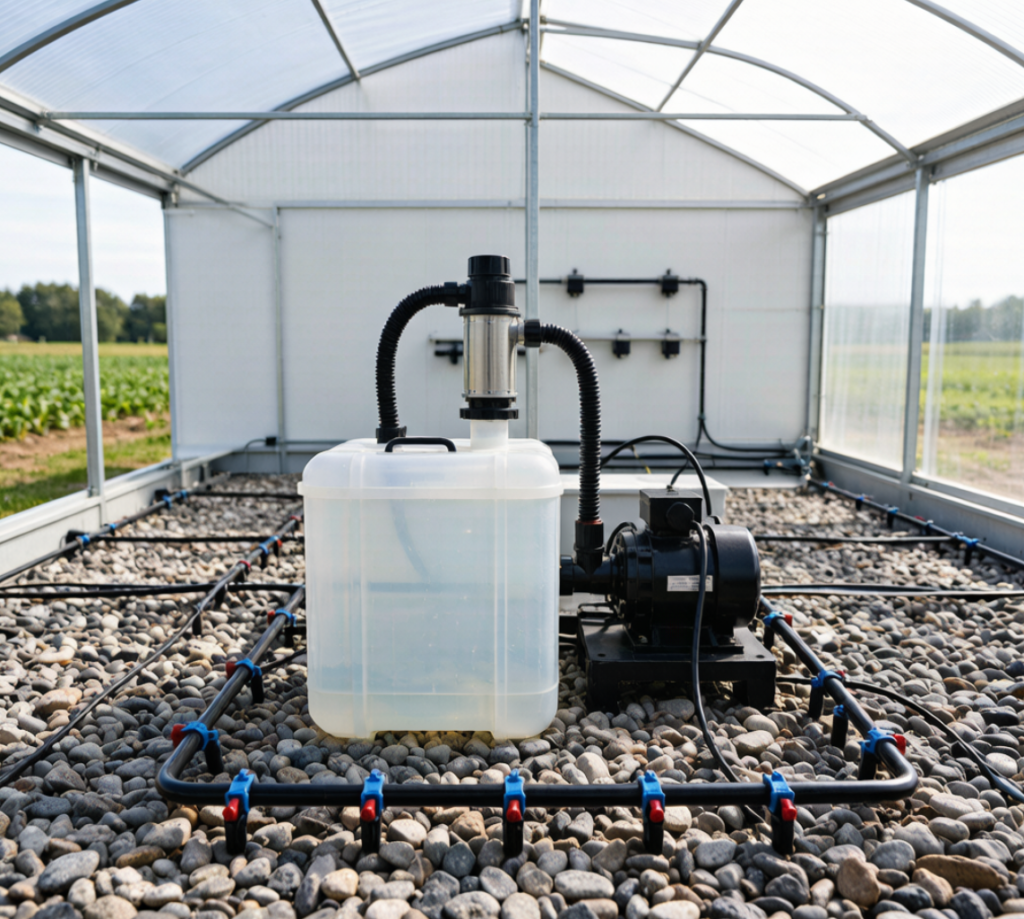
Many new growers install a basic drip system without considering water quality, filtration, backup systems, or fertigation. Water quality issues (hard water, high iron, bacterial contamination) can clog emitters and damage crops.
How to avoid: Test your water source before designing the irrigation system. Install dual filtration (100 mesh + 200 mesh). Include a backup water supply and backup pump. Plan for fertigation from day one — adding it later requires significant retrofitting of plumbing and controls.
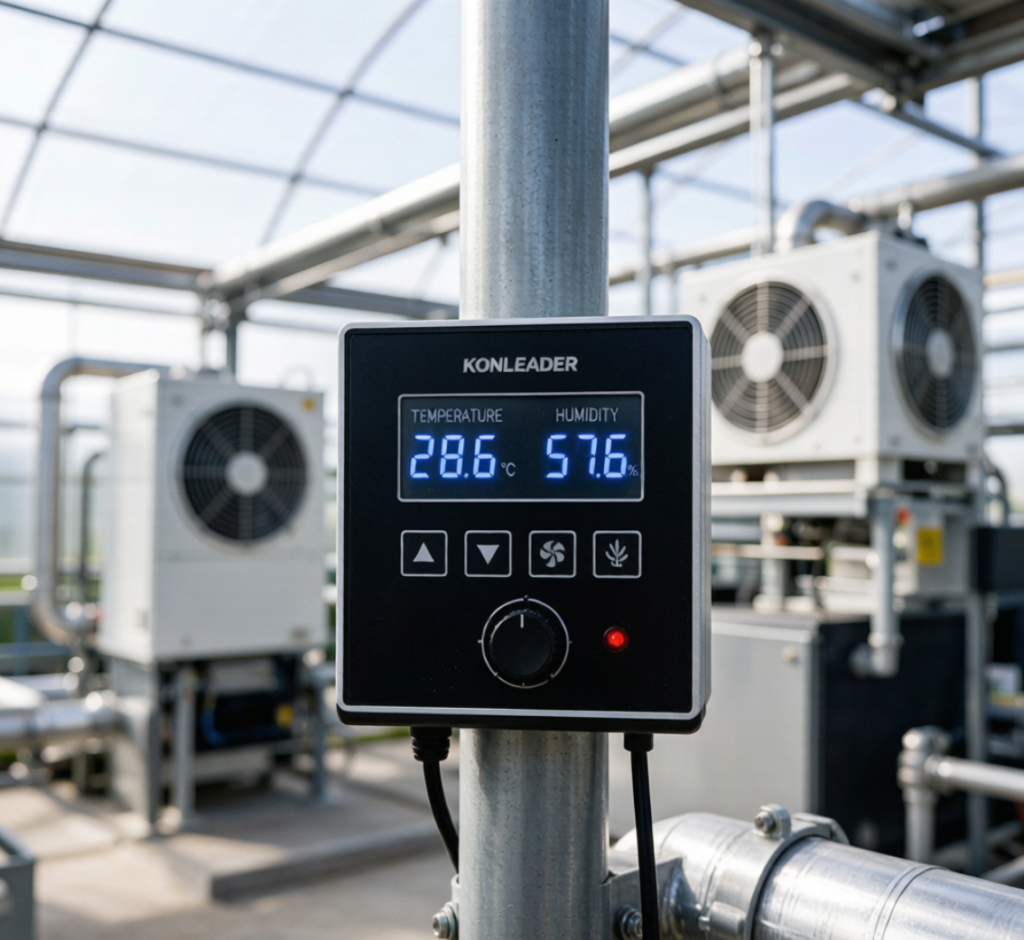
Mistake 6: Skipping Automation
Retrofitting automation costs 2-3x more than including it during initial construction. Many first-time growers think they will save money by manually controlling vents, fans, and irrigation. In reality, manual operation leads to inconsistent conditions, higher labor costs, and reduced yields — often negating any upfront savings within a single growing season.
How to avoid: Install at minimum a step controller for temperature and ventilation control ($2,000-5,000). For operations over 10,000 sq ft, invest in a full climate controller ($5,000-15,000) with remote monitoring capability. This single investment will pay for itself in the first year through reduced labor and improved crop quality.
Mistake 7: Underestimating Ongoing Costs
New growers often focus on construction costs and neglect operating expenses. A commercial greenhouse typically has annual operating costs of 15-25% of the initial construction value. For a $1,000,000 greenhouse, expect $150,000-250,000/year in operating costs.
| Expense Category | % of Annual Operating Cost |
|---|---|
| Heating / cooling energy | 30-40% |
| Labor | 25-35% |
| Seeds, plants, growing media | 10-15% |
| Fertilizer, chemicals, supplies | 5-10% |
| Maintenance & repairs | 5-8% |
| Water & utilities | 3-5% |
Mistake 8: Overbuilding or Underbuilding
Both extremes are common. Overbuilding: Designing a greenhouse with unnecessarily high-end automation, exotic glazing, or oversized infrastructure that significantly exceeds the operation’s needs. Underbuilding: Choosing the cheapest structure and equipment, resulting in poor climate control, high energy costs, and costly retrofits within 2-3 years.
How to avoid: Work with an experienced greenhouse contractor who can match the facility design to your crop type, climate, and budget. A well-designed mid-range greenhouse nearly always outperforms both a budget build and a luxury build in terms of ROI.
Mistake 9: Neglecting Quarantine & Sanitation
Diseases and pests can destroy a greenhouse crop within days. New growers often fail to include basic biosecurity measures in their facility design.
How to avoid: Design a dedicated receiving and quarantine area for incoming plants. Include foot baths at all entry points. Plan for sanitation between crop cycles (the ability to steam-sterilize benches or containers). Install insect screening over all ventilation openings. Budget for an integrated pest management (IPM) program from day one.
Mistake 10: No Expansion Plan
Success often leads to the desire to expand — but a greenhouse designed without expansion in mind makes growth unnecessarily expensive. Central utilities placed at one end of the building force expensive extensions. Benching layouts that cannot be replicated waste design work.
How to avoid: Design the initial greenhouse as Phase 1 of a master plan. Place the head house, boiler, and electrical room where they can serve future phases without relocation. Standardize bay sizes so additional bays can be added without re-engineering. Choose modular irrigation and control systems that scale easily.
Quick Reference Summary
| # | Mistake | Impact | Prevention |
|---|---|---|---|
| 1 | Poor site selection | 30% lower light, 40% higher heat | Professional site survey, east-west orientation |
| 2 | Undersized HVAC | Crop loss in extreme weather | Size for 98th percentile weather event |
| 3 | Wrong glazing | High energy bills for 15+ years | Double-wall polycarbonate for best balance |
| 4 | No air circulation | Disease, uneven growth | HAF fans at 40-50 ft spacing |
| 5 | Inadequate irrigation | Clogged emitters, crop stress | Test water, dual filtration, fertigation-ready |
| 6 | Skipping automation | High labor, inconsistent conditions | Climate controller from day one |
| 7 | Missing ongoing costs | Cash flow problems | Budget 15-25% of build cost annually |
| 8 | Over/under-building | Wasted money or poor performance | Match facility to crop + climate + budget |
| 9 | No quarantine area | Disease outbreak | Dedicated receiving zone + foot baths |
| 10 | No expansion plan | Costly retrofits later | Design Phase 1 as part of master plan |
Build It Right with FangCheng
Don’t make costly mistakes on your commercial greenhouse.FangCheng brings 20+ years of greenhouse engineering experience to every project. We design and build greenhouses that are properly oriented, correctly sized, and built to last — with the right HVAC, glazing, automation, and irrigation for your specific crop and climate. Let our experience save you from the top 10 mistakes.
Explore FangCheng Commercial Greenhouses → | Schedule a Design Consultation
FAQ
What is the biggest greenhouse construction mistake?
Undersized HVAC systems — leads to crop loss during extreme weather and is expensive to retrofit. Size for the 98th percentile weather event.
How much should a commercial greenhouse cost?
$25-60/sq ft complete (structure + climate control + irrigation + benches). Environmental control alone is 30-50% of total cost.
Best glazing for commercial?
Double-wall polycarbonate — best balance of insulation (R-2 to R-4), light transmission (75-85%), and durability (10-15+ years).
Is orientation really that important?
Yes — east-west orientation optimizes winter light capture. Poor orientation can reduce light by 20-30% and increase heating costs significantly.
Should I automate from the start?
Yes — retrofitting automation later costs 2-3x more than including it during construction. A climate controller pays for itself in one season.
Conclusion
The 10 mistakes covered in this guide are the most common and most costly errors made by first-time commercial greenhouse builders. The pattern is clear: most mistakes stem from inadequate planning — specifically, underestimating the complexity of the growing environment and the importance of getting the fundamentals right. Work with experienced greenhouse engineers, invest in proper design, and build for the long term. The upfront cost of doing it right is always less than the cost of fixing it later.