Greenhouse Irrigation and Fertigation Systems
Drip irrigation is the most widely used method in commercial greenhouses because it puts water at the root zone. The right system still depends on your crop and your water. FANGCHENG supplies drip, misting and sub-irrigation with filtration, dosing and control.
How water and nutrients reach the plant
In a greenhouse the crop is fed through its root zone, so the irrigation system decides how evenly each plant gets water and nutrients. Two numbers are watched closely. EC measures how much dissolved nutrient is in the solution, and pH measures how acidic it is. Both affect how well roots take up nutrients.
Fed through the root zoneChoosing the irrigation method

Drip.
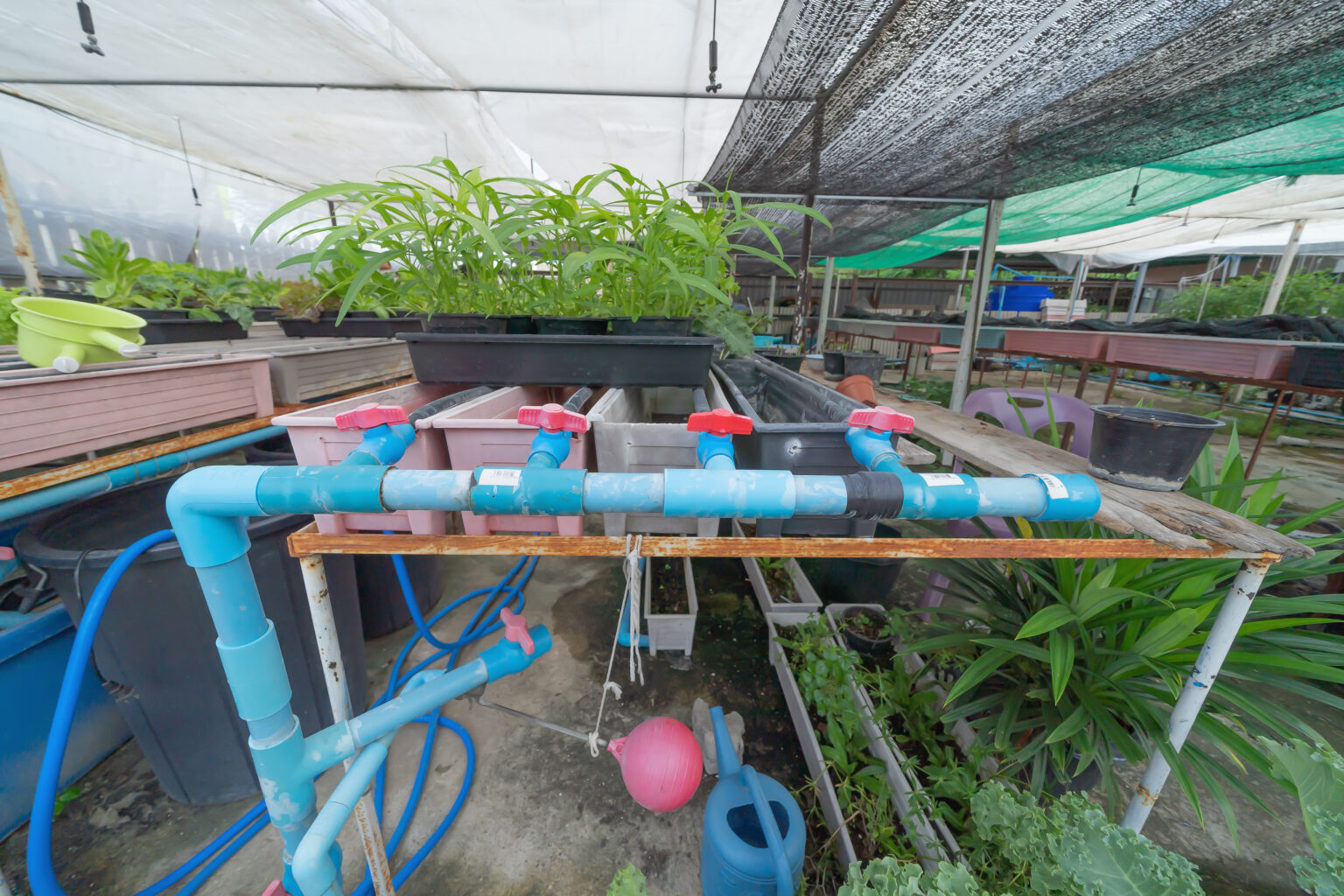
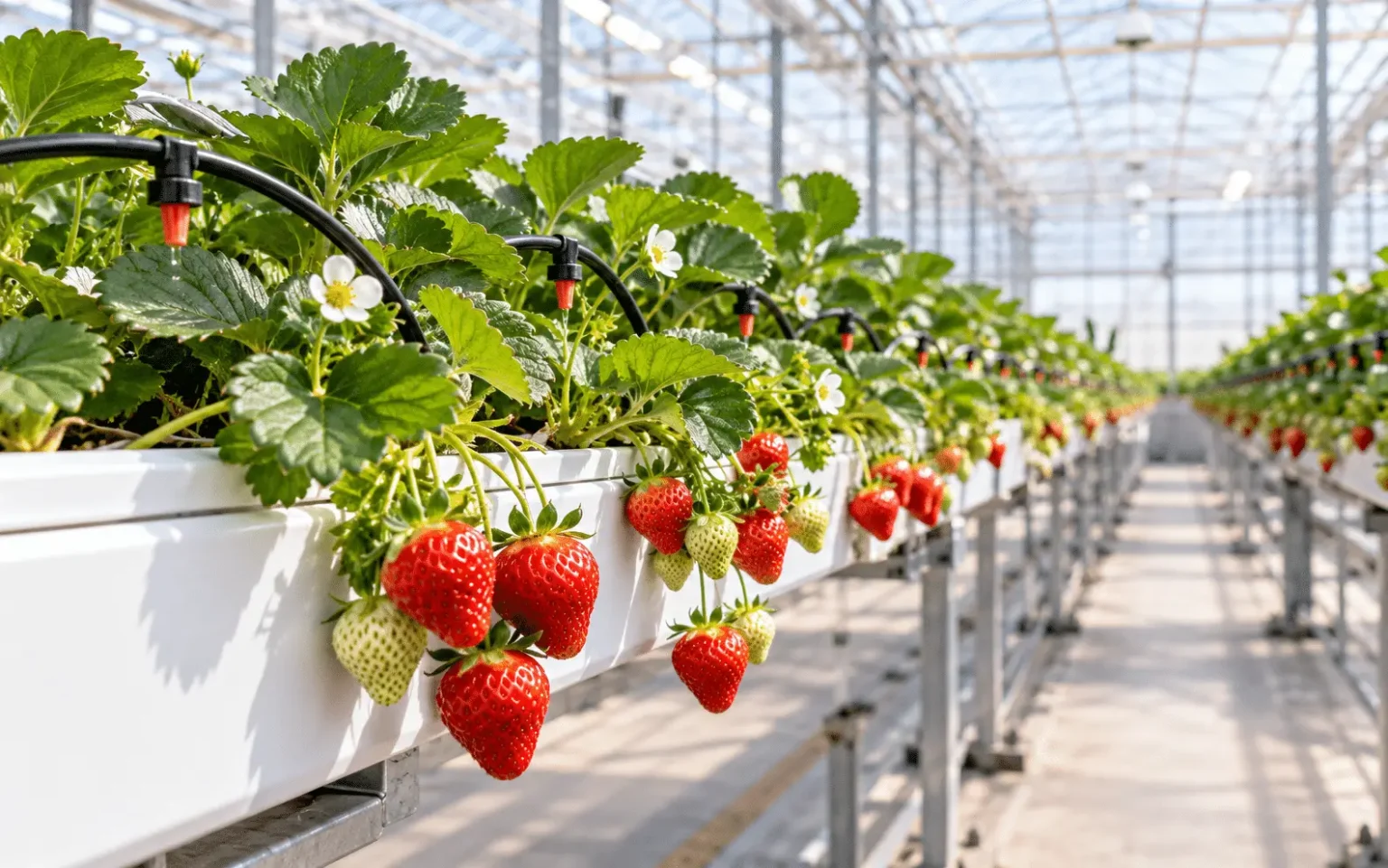
Drip lines, emitters or tape deliver water to the roots. Preferred for vegetables, fruiting crops, flowers and container plants. It needs good filtration and correct pressure.
Overhead sprinklers and misting.
Suit seedlings, propagation, nurseries and crops that need humidity. Wet leaves raise disease risk if ventilation is poor.
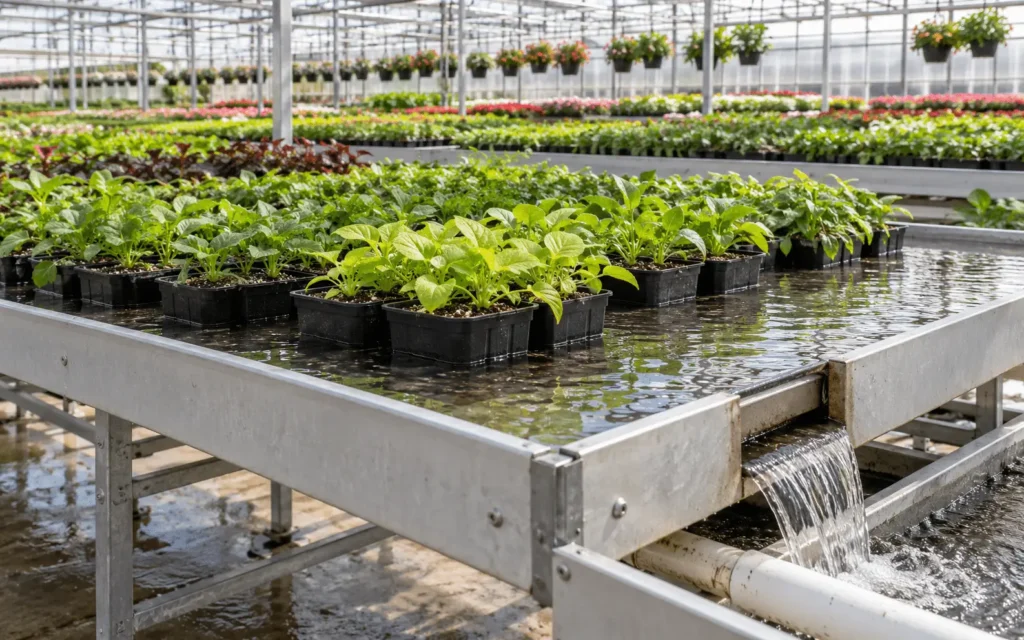
Sub-irrigation.
Water rises from below through ebb-and-flow benches or capillary beds, keeping leaves and surface dry. Common for potted and ornamental crops.
What is in a drip system
From the source to the plant.

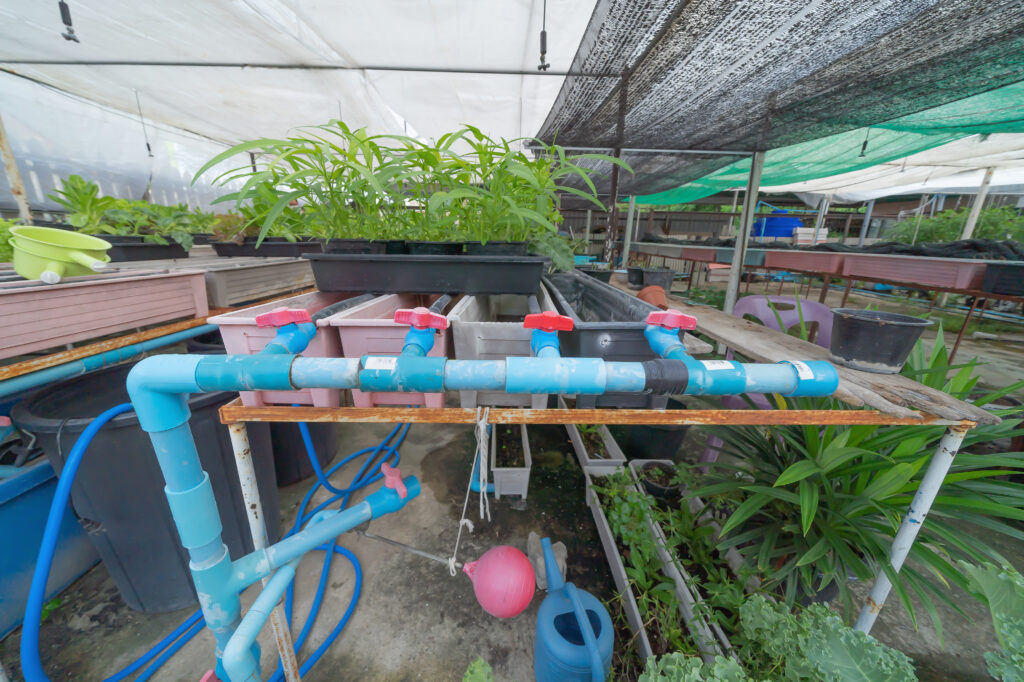
Water source and pump

Filtration, to protect the emitters
Fertilizer injector or dosing unit
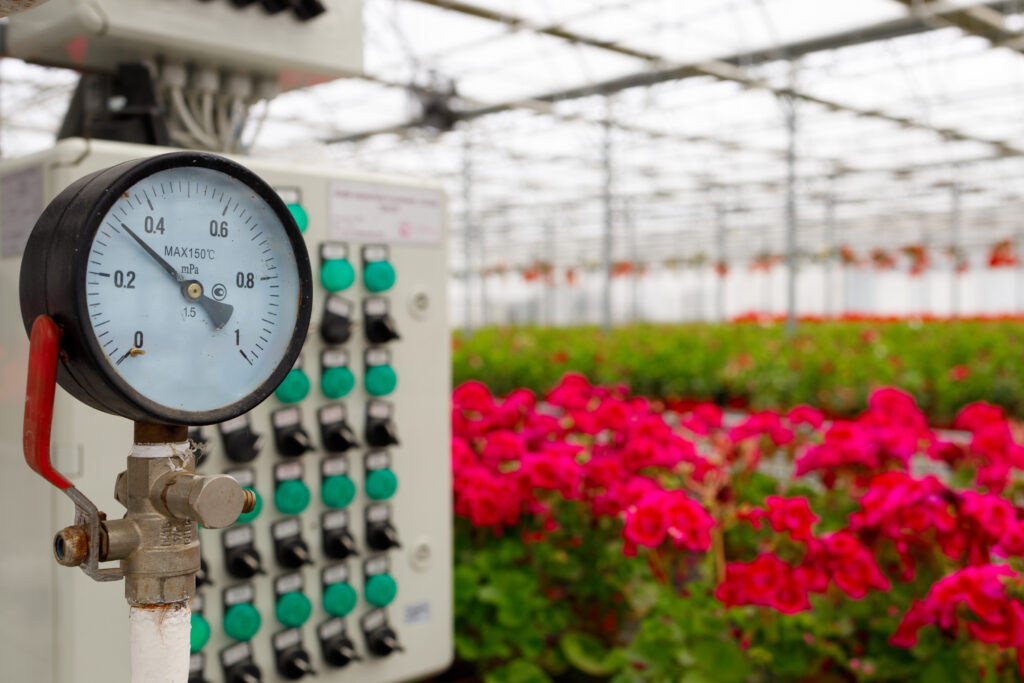
Control unit and valves
Main lines and laterals

Emitters at each plant or row
Fertigation and your water
Fertigation
Fertigation delivers nutrients with the water, directly to the root zone. Drip is the usual way. Dosing units, EC and pH monitoring keep the mix correct.
Know your water
Water quality shapes the whole design. Hard water leaves scale, iron can stain and block emitters, and algae grows wherever water and light meet. Test the water before you choose filters and nutrients.
Water quality and filtration
Filtration is essential, especially for drip
Poor water quality clogs emitters and lowers uniformity
Pressure regulation keeps flow even
Closed-loop systems filter, sanitize and recirculate drain water to reclaim it
When to irrigate
By time.
Simple, but ignores weather.
By sunlight.
Irrigation follows the light the crop has received, since plants drink more on bright days.
By moisture.
Sensors in the substrate trigger watering when it dries to a set level.
Control
- Timers and automated valves
- Soil or substrate moisture sensors
- EC and pH monitoring
- Nutrient dosing controllers
Run-to-waste or closed loop


Leaves the system.
Is caught, filtered, sanitized and reused.
Simple.
Needs more equipment.
Are not recovered.
Saves water and fertilizer, but needs attention to disease.
Tap a side, or the photo, to compare.
Maintenance
- 01
Clean filters and flush lines
- 02
Inspect emitters, nozzles and valves for clogging
- 03
Check pressure and distribution uniformity
- 04
Calibrate sensors and dosing equipment
Irrigation by crop

Fruiting vegetables.
Drip to the root zone, with fertigation.

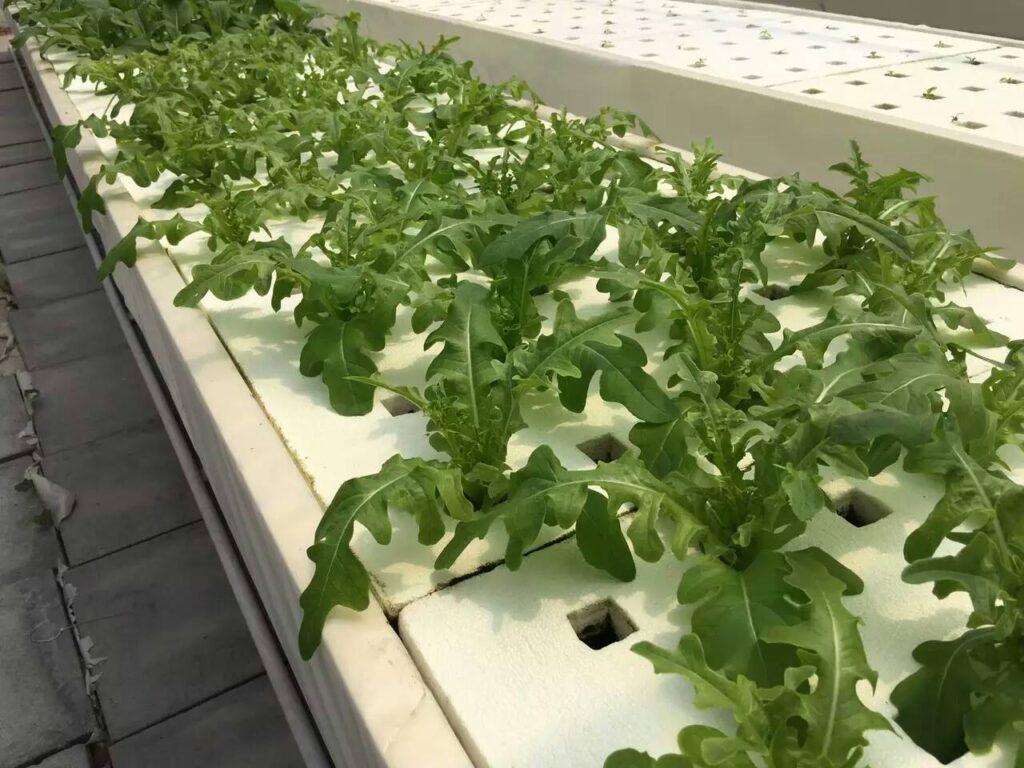
Leafy greens.
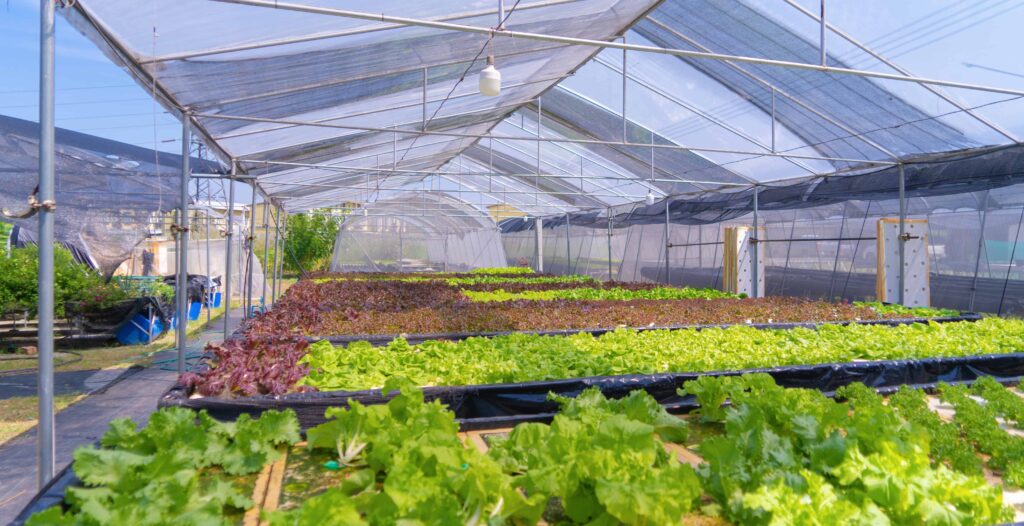
Drip or hydroponic gutters, depending on the system.
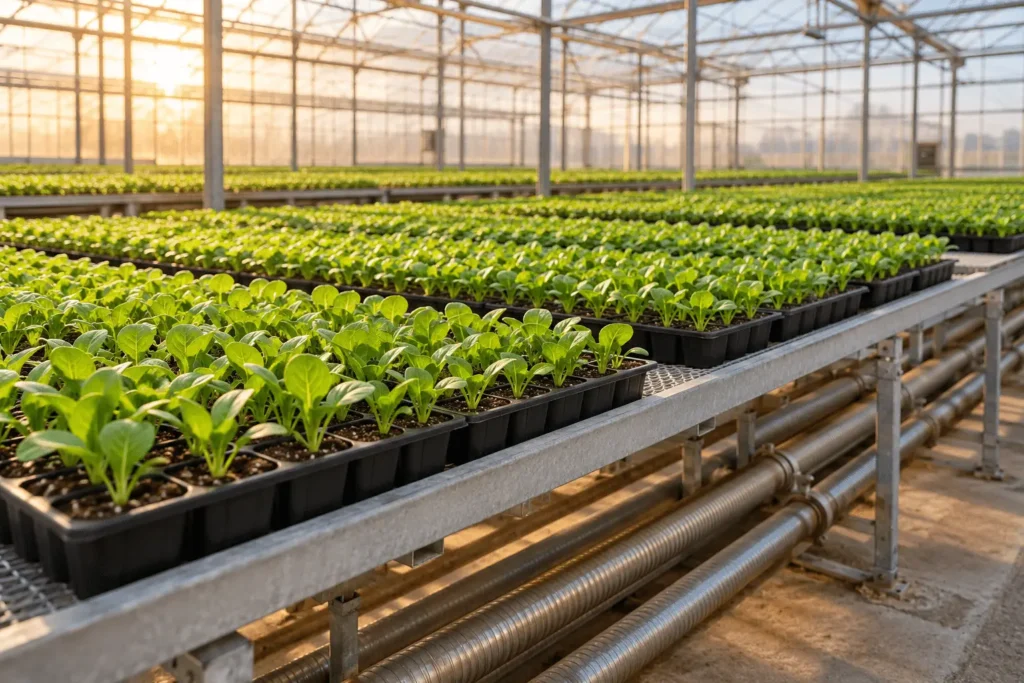
Seedlings and propagation.
Fine misting or overhead watering, or sub-irrigation.

Pots and ornamentals.
Drip stakes, sub-irrigation benches or overhead, depending on the container.
Filters and dosing in plain terms
Filtration in plain terms
Filters protect emitters from particles. Screen and disc filters remove solids, and media filters handle heavier loads of organic matter. The right type depends on water source and flow. Filters need regular cleaning, often automatically.
Injectors and dosing
A dosing unit injects fertilizer stock solutions into the irrigation water in proportion to flow. Several stock tanks let the mix change by crop stage. EC and pH sensors check the result, and the unit adjusts the dosing.
Water saving and reuse
Drip puts water at the root and reduces evaporation
Scheduling by light or moisture avoids overwatering
Closed-loop systems capture and reuse the drain
Rainwater can supplement supply where it is clean enough
What we need from you
- Crop, container and growing method
- Water source and a water test, if you have one
- Greenhouse area and layout
- Power supply
- How much you want automated
Common irrigation mistakes
No filtration, or filters that are never cleaned
Uneven pressure, so the ends of the lines get less water
Overwatering in cool, dull weather
Untested water
Dosing equipment that is never calibrated
Common questions
Straight answers. If yours is not here, ask us.
Drip is usually recommended for saving water, reducing disease risk and delivering moisture to roots. Seedlings and pots may suit misting or sub-irrigation.
Not for every crop, but it is standard in commercial production because it gives consistent nutrition.
Yes, with filtration and sanitation. Closed-loop systems add cost, and we design them for your project.
It depends on the crop, substrate, light and temperature. Many commercial systems irrigate by sunlight or by moisture sensors rather than by a fixed clock.
Clean water is important. Test it before you design the system.
Yes. Timers, valves, sensors and dosing units can be linked to climate control.
Yes. The same lines carry water and nutrients, with a dosing unit injecting the fertilizer.
Filter the water, treat hard or iron-rich water, flush the lines and inspect emitters regularly.
Explore other systems
Plan your irrigation
Send your crop, water source and area. We reply within 24 hours.
Consultation and project proposals are free.
What to include
- Location
- Crop
- Greenhouse size