Commercial Greenhouse Heating Systems
The right greenhouse heating system depends on greenhouse size and climate. Large commercial projects often use hot water pipe heating, and smaller houses may use hot air or radiant heaters. FANGCHENG designs the system, the distribution and the controls.
How a greenhouse loses heat
Through the cover: film, glass or sheet, by conduction
Through leaks around doors, vents and joints
By radiating heat to the cold night sky
By ventilation, when air is exchanged with the outside
A heating system has to replace all of that. The easier it is to reduce losses, the smaller and cheaper the heating can be.
Heating types

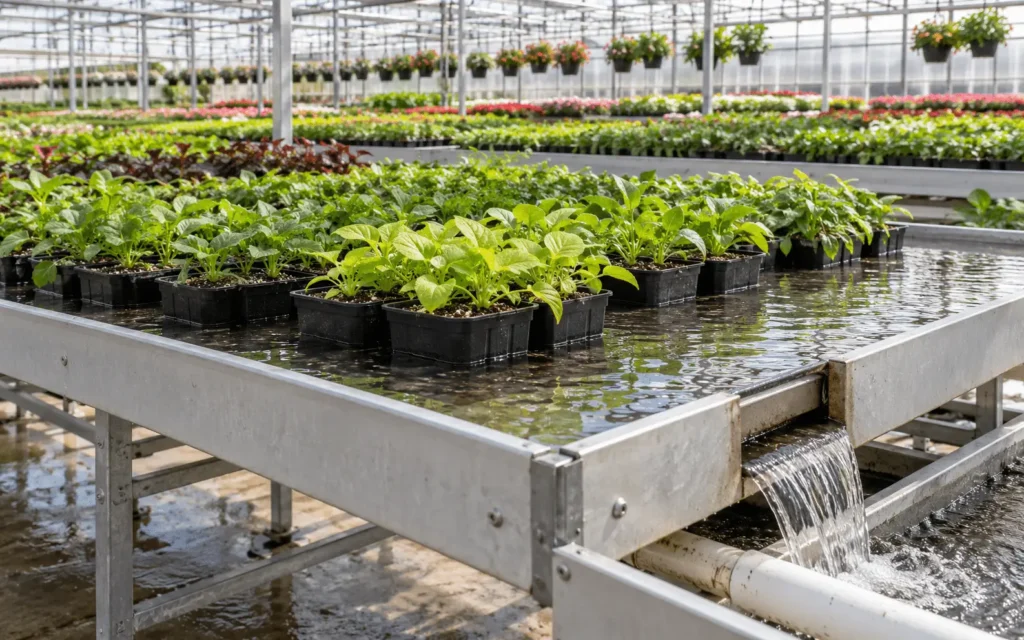
Hot water.
Pipes run near the crop rows or around the perimeter. Widely used in large commercial greenhouses.
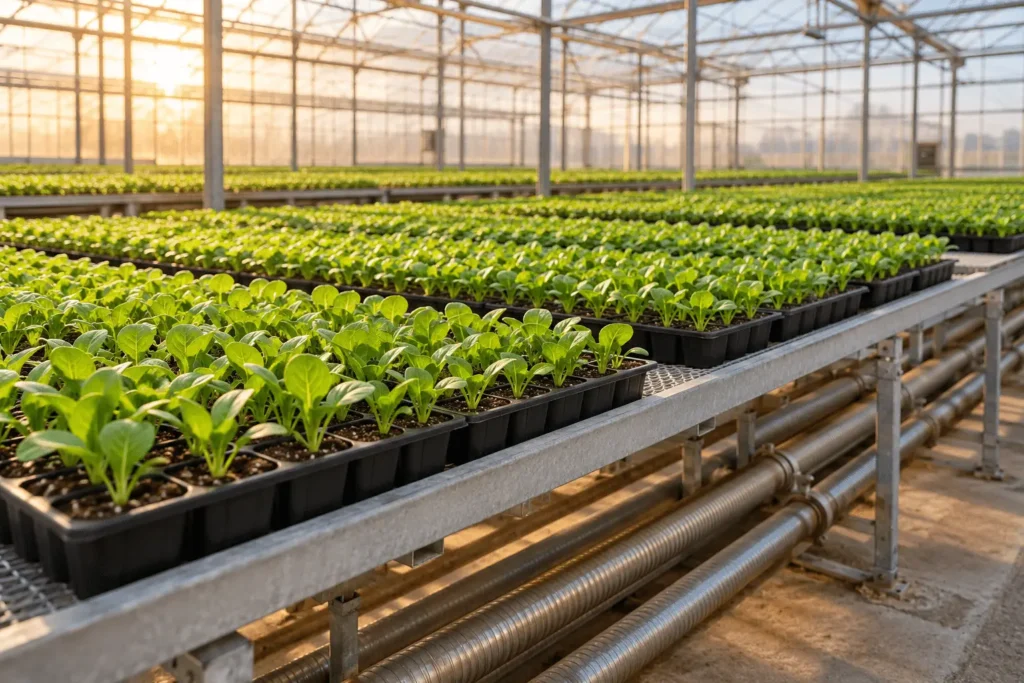
Hot air.
Heaters warm the air, distributed by ducts or fans. Suited to small and mid-sized houses.

Boiler-based central heating.
Hot water or steam serves several zones from one plant.
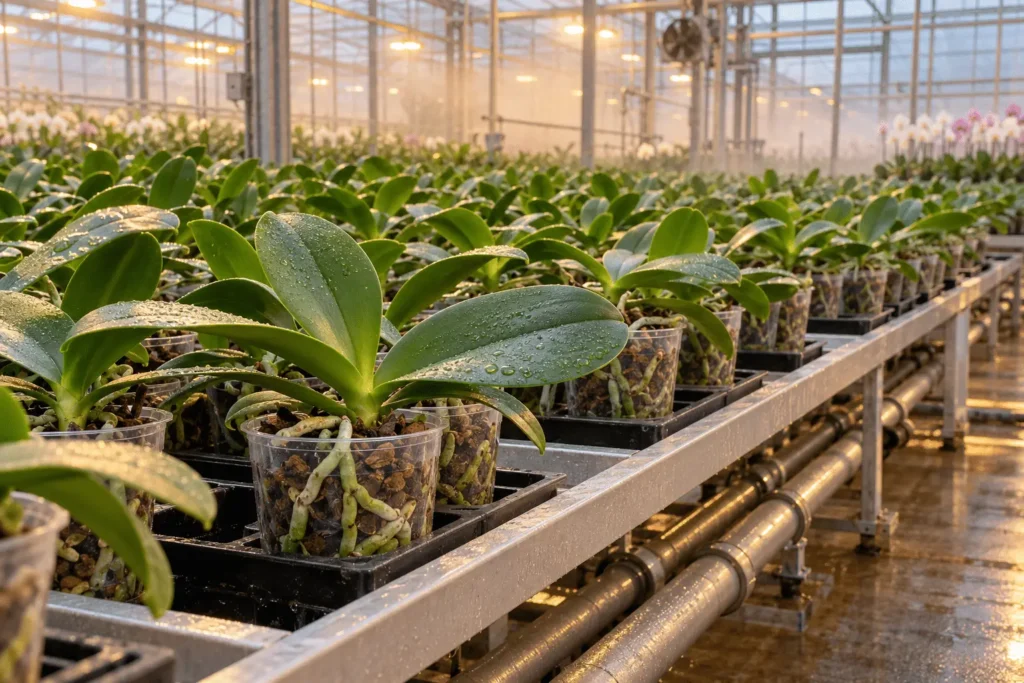
Radiant or infrared.
Warms plants and surfaces directly. Useful in tall houses and for quick recovery.
Where the heat should go
Heat can be delivered to the air or to the plants.
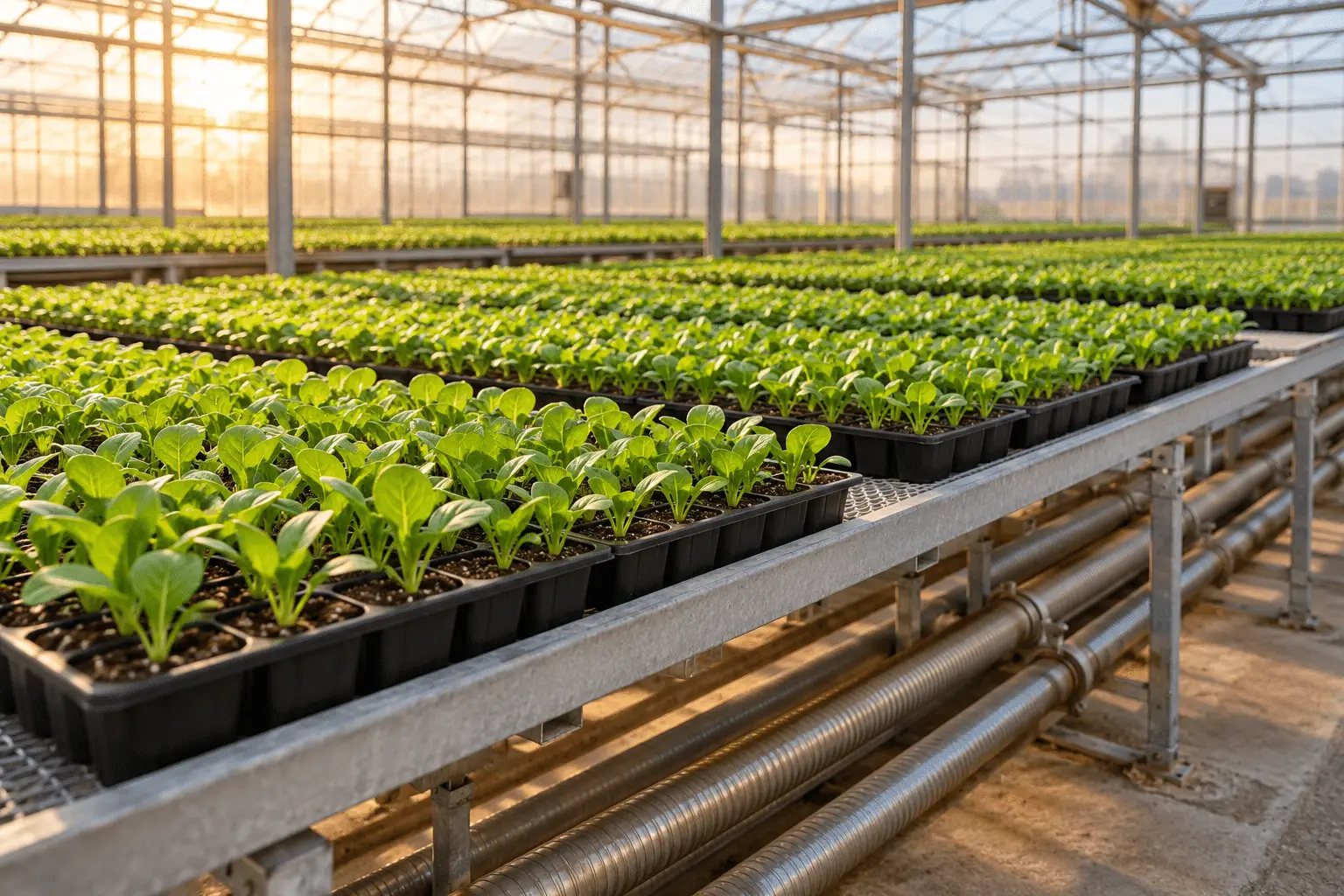
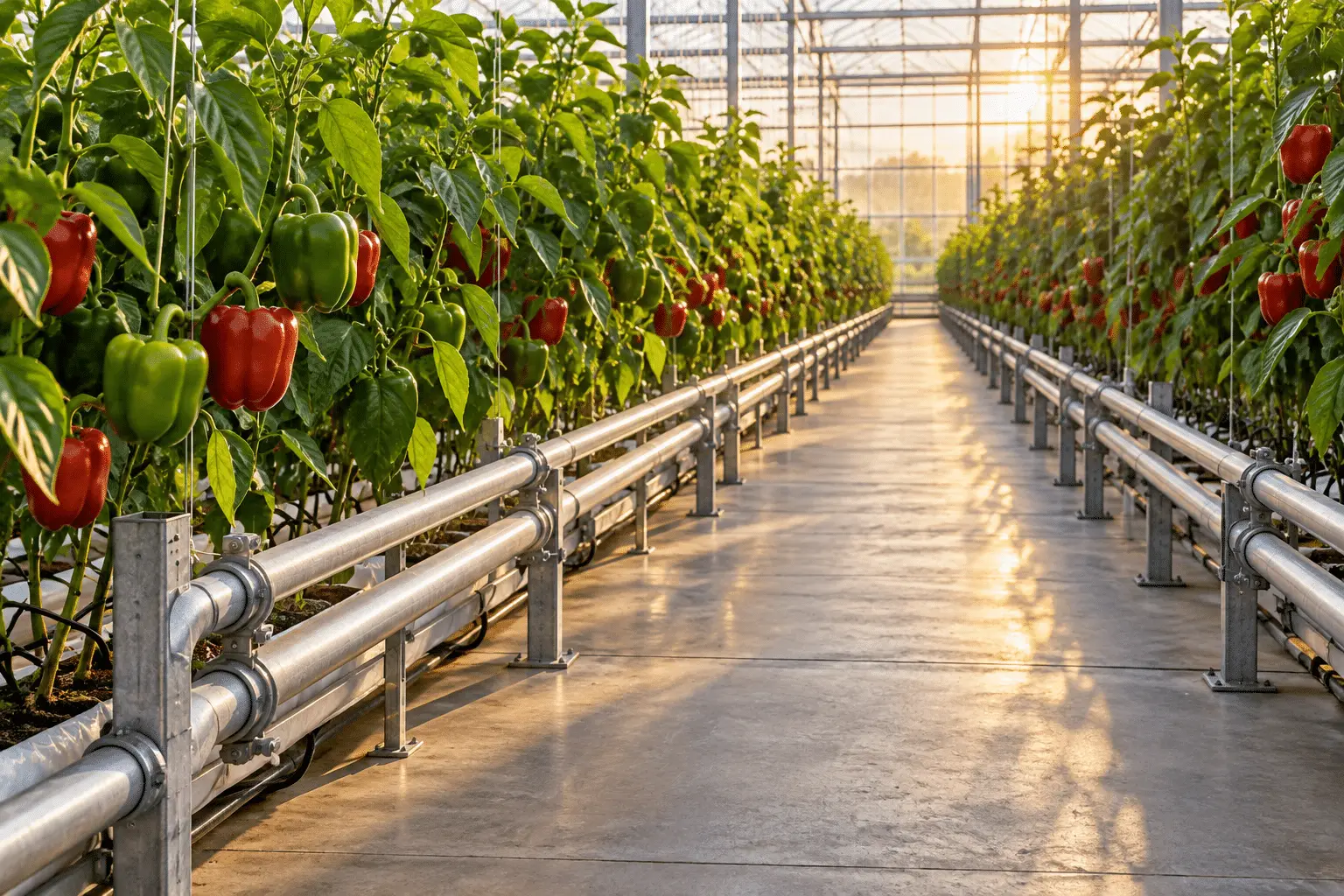
Hot air heaters warm the whole volume.
Pipes near the crop rows warm the plants directly. Radiant heaters warm surfaces.
Air has to be warmer to reach the same result.
Warming the root zone or bench can let growers run the air cooler for the same plant result.
Tap a side, or the photo, to compare.
Layout
The best layout depends on the crop and the house.
Energy sources
- Natural gas
- LPG
- Diesel
- Biomass
- Electricity
- Geothermal
- Solar-assisted heating
- Heat pumps
- Heat recovery
We design around the fuel you have: natural gas, LPG, diesel, biomass or electricity, with options such as geothermal, solar-assisted heating, heat pumps and heat recovery. Local fuel price and supply usually decide the choice.
Matching the heat source to the project
- Size of the greenhouse
- Fuel price and supply where you are
- How many months of heating you need
- Crop value and its tolerance for temperature swings
- Whether you need zones with different temperatures
- Whether a boiler plant, with its operator and maintenance, makes sense
Reduce the heating load first
A well-insulated cover: glass, polycarbonate or double-layer film
Thermal screens that hold heat in at night
Fans that break up warm and cold layers
Right-sized ventilation, so vents are not open while heating
Heat, ventilation and backup
Balance heat and ventilation
Ventilation must be balanced with heating to avoid condensation, which raises disease risk. Climate control keeps the two in step.
Controls and backup
Staged heating, where equipment comes on in steps, avoids overshoot and wasted fuel. Plan for failure too: a power cut or a burner fault on a cold night can cost a whole crop, so backup heat or alarms are worth considering.
Crop needs
Warm-season crops need higher minimum temperatures than cool-season crops. Larger and taller greenhouses need more energy because they hold more air.
Hot water heating, explained

Boiler heats water
A boiler heats water.

Pumps send it round
Pumps send it through pipes.

Pipes warm the crop
The pipes warm the air and the plants around them.

Laid where needed
Pipes can run along the crop rows, under benches, around the perimeter or in the floor. Hot water is steady and gentle, which suits large commercial greenhouses and several zones from one plant.
Hot air and radiant heating, explained
Hot air.
A heater warms air that is moved through the house by ducts or fans. It heats quickly and costs less to install, which suits small and mid-sized greenhouses.
Radiant or infrared.
Heat is sent as radiation that warms plants and surfaces directly, which helps in tall houses and for quick recovery.
Peak load and average load
A heating system has to be sized for the coldest night, but most nights are milder.

Efficiency and heat recovery
Efficiency comes from a good boiler or heat pump, short and insulated pipes, correct controls and low heat loss. Heat recovery can reclaim some heat from ventilation air, including condensation heat. Whether it pays back depends on fuel price and operating hours.
Less heat lost, less fuel usedCommon heating mistakes
Choosing a heater before reducing heat loss
Undersizing, so the house cannot hold temperature on the coldest night
Oversizing, so equipment cycles on and off
No distribution, so the crop is cold near the floor
Heating while vents are open
No backup plan for a cold night
Common questions
Straight answers. If yours is not here, ask us.
Hot water pipe heating is a common choice for large commercial projects. We confirm it against your climate and fuel.
Use the one that is cheap and reliably available where you are. We design around it.
It depends on climate, cover, crop and fuel price. We estimate after we know your site.
Unit heaters suit smaller houses and are simple to install. For large commercial projects, hot water distribution is more common. We compare them for your site.
Biomass, geothermal, heat pumps and solar-assisted heating are options. Whether they pay back depends on your site and fuel prices.
Reduce losses first: a better cover, screens and sealing. Then match the heat source to your fuel.
Some systems, such as heat pumps, can both heat and cool. We discuss this if it fits your project.
It depends on quality, water treatment and maintenance. We do not give a single figure.
Explore other systems
Plan your heating system
Send your location, crop and greenhouse size. We reply within 24 hours.
Consultation and project proposals are free.
What to include
- Location
- Crop
- Greenhouse size