
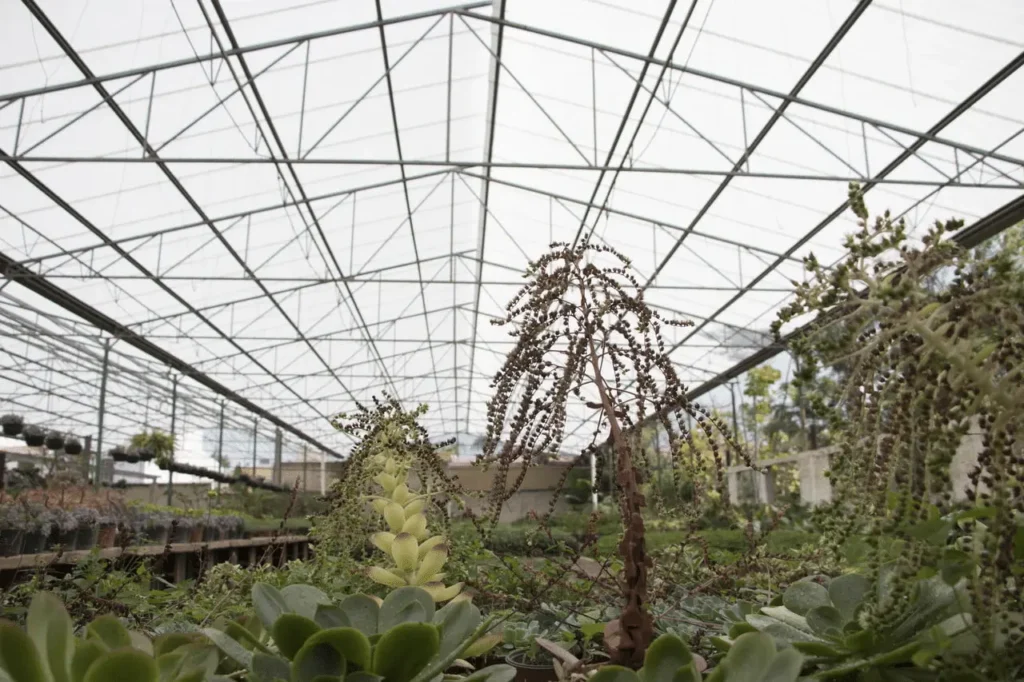
Fiberglass (FRP) Greenhouses
A fiberglass greenhouse is covered with FRP, fiberglass-reinforced plastic, in flat or corrugated panels or rolls. The panels are light, strong and diffuse the light evenly, at a lower cost than glass or polycarbonate. The weak point is ageing: untreated panels yellow in the sun and lose light, so the quality of the panel matters.
Fiberglass greenhouseWhat is a fiberglass greenhouse?
FANGCHENG supplies fiberglass greenhouse materials with design drawings, on-site assessment and installation support.
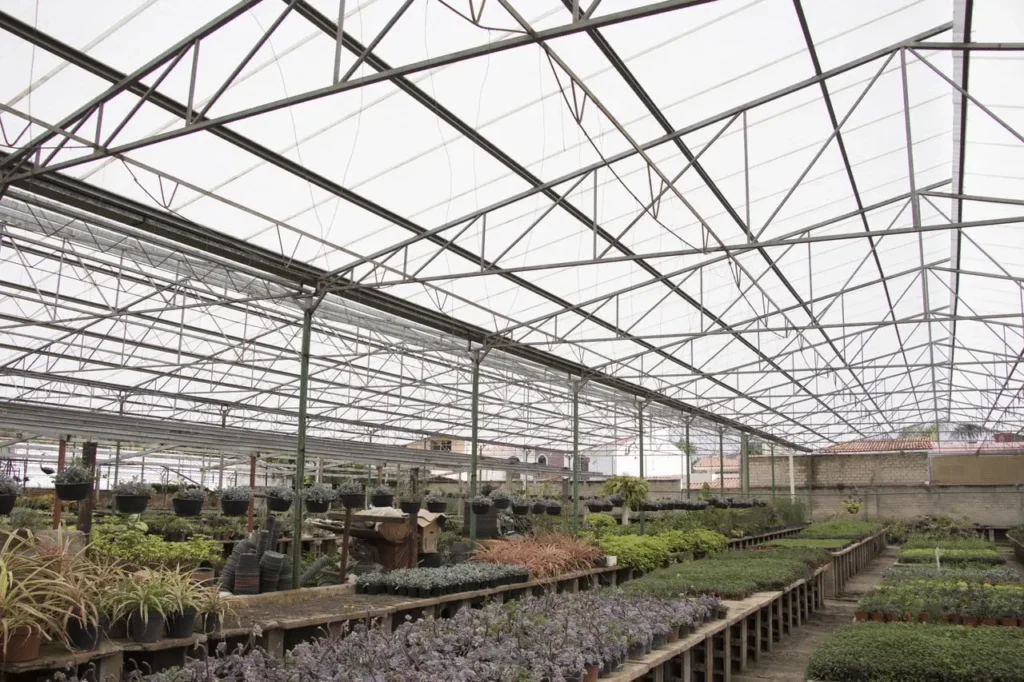
It is a greenhouse covered with panels of plastic reinforced with glass fiber. The panels are cut to fit a metal or wooden frame and are fixed with screws or rivets. Corrugated panels add stiffness to a roof, and flat panels suit walls.
The glass fibers give the panel its strength and scatter the light. They sit inside a resin that holds them in place and shares the load between them. The quality of that resin, and of the surface layer over it, decides how the panel ages.
What FRP does well

Diffused light.
The glass fibers scatter light, which reduces hot spots and plant burning.

Impact resistance.
The panels do not shatter.
Weight.
Lighter than glass, so the frame can be lighter.

Insulation.
Better than single-pane glass.

Cost.
Generally more affordable than glass.
These strengths make FRP a practical choice where light quality matters more than clarity. A crop that scorches in direct sun can grow more evenly under the soft light of FRP than under clear glass.
Corrugated or flat panels
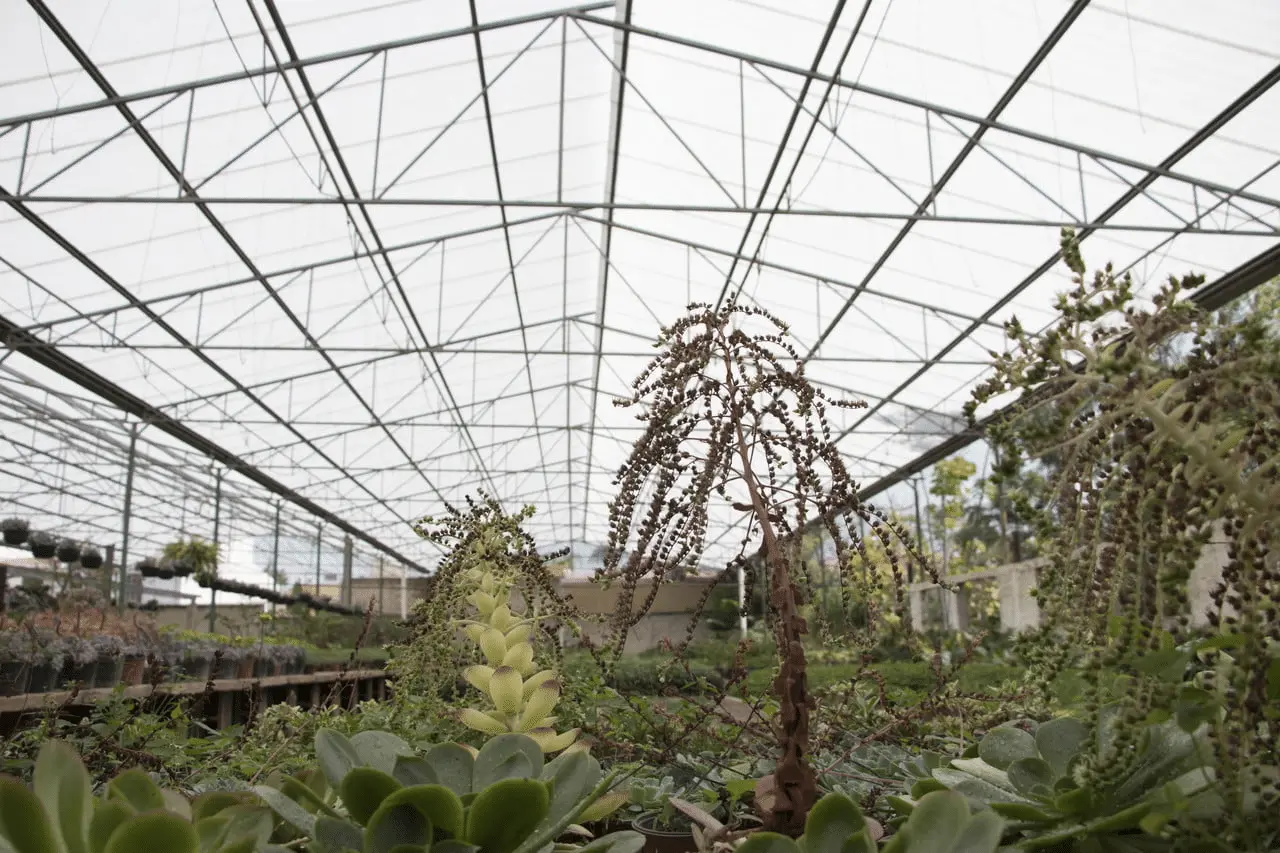
The ridges add stiffness, so they span between purlins and suit roofs.
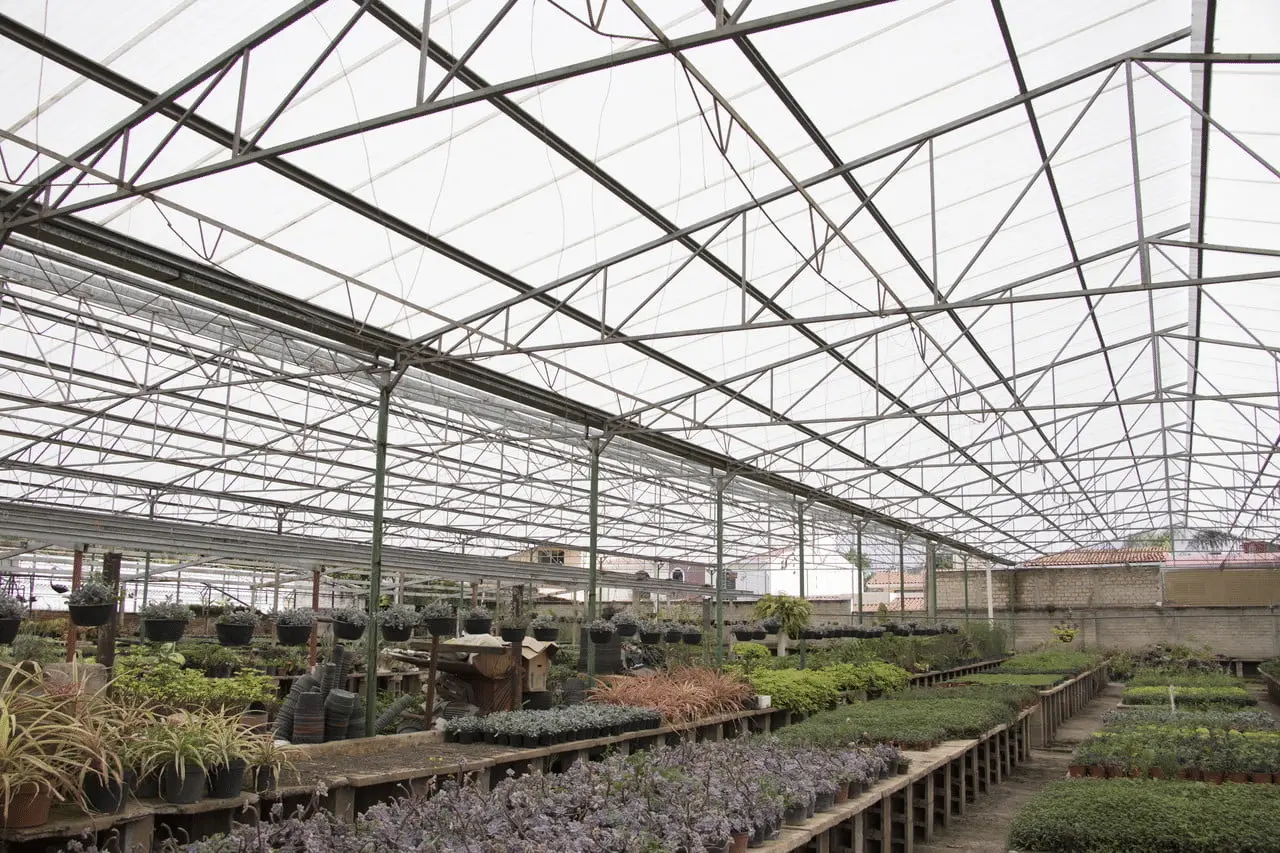
Suit walls and curved shapes, and are easy to cut.
Tap a side to compare.
Where FRP falls short
Panels yellow over time, which reduces light transmission
Scratches show more easily than on glass
Lower-grade panels can become brittle after many years of UV exposure
Older FRP panels were flammable, so ask whether a panel is flame-retardant
Clarity is lower than glass
The yellowing is the point to be careful about. A UV-treated panel from a good maker lasts far longer than an untreated one, and the price difference is small compared with a re-cover.
Yellowing happens because sunlight breaks down the resin at the surface, which then exposes the glass fibers. Once the fibers are exposed, dirt and algae catch on them and light falls faster. A protective surface layer slows this process.
How to spot a good FRP panel
- A clear surface layer, to protect the fibers from sun
- Even resin and fiber, with no dry patches
- A stated UV treatment and a clear warranty
- Light that is diffused, not cloudy
FRP, glass or polycarbonate?
FRP is lighter, cheaper and impact-resistant, with softer light. Glass has the highest clarity and lasts longer.
FRP is generally cheaper, but polycarbonate holds its clarity better and insulates more.
See the glass greenhouse.
See the polycarbonate greenhouse.
FRP panels for wholesaleFiberglass panels for wholesale and project supply
Distributors, contractors and farms often buy FRP in volume for several houses at once. We supply corrugated and flat panels and rolls direct from the factory, matched to the profile and frame they will fit.
For bulk orders, send the profile, thickness, length and quantity. We confirm the panel specification and packing before production.
How to buy FRP panels wisely
Crops under fiberglassCrops that suit fiberglass
Leafy greens, herbs, tomatoes, peppers, cucumbers, strawberries, orchids and seedlings. The soft, diffused light helps crops that scorch easily.
Fiberglass panel upkeepMaintenance
FRP panels do not rust, rot or shatter. Upkeep means cleaning dust and algae, checking the frame, replacing aging seals and refreshing protective coatings every few years if needed. Overall running costs are low.
A yearly look at the panel surface tells you how it is ageing. If it starts to feel rough or look dull, light is falling, and it is time to plan a re-coat or a panel change.
Our fiberglass service
We provide design drawings, on-site assessment and full installation support to build a durable FRP greenhouse. Supply is direct from the factory.
How long does FRP last?
Life depends on the panel and its UV treatment. Untreated panels can yellow in a year or two. Well-made, UV-treated panels last many years. When the light drops, the panels are replaced, which is a smaller job than rebuilding a greenhouse. Ask us for the rating of any panel we propose.
When to choose polycarbonate instead
If you want a longer service life, better insulation for a cold climate or a clearer view, polycarbonate is usually the better step up. If you want a low initial cost and soft light, FRP is a good fit.
Fixing FRP panels
Pre-drill
Pre-drill holes slightly larger than the screw, so the panel can move with heat
Washers
Use screws with sealing washers
Roof fixing
On roofs, fix through the crown of corrugated panels to keep water out
Laps
Lap the panels away from the prevailing wind
Ends
Seal the ends against dust and insects
Common questions
Straight answers. If yours is not here, ask us.
The panels may yellow over time and reduce light. They can scratch more easily than glass, and lower-grade panels may become brittle after many years of UV exposure.
Yes, it is lightweight, shatter-resistant and diffuses light. Panel quality and UV treatment decide how long it lasts.
It depends heavily on UV treatment and quality. Ask us for the rating of the panel we propose.
Older panels were. Ask us whether the panel is flame-retardant.
Yes. We supply direct from the factory. Send your quantity and profile.
Flat panels and rolls can follow gentle curves. Corrugated panels suit straight roof slopes. Tell us the shape and we suggest a panel.
Get a fiberglass greenhouse quote
Send your location, crop and area. We reply within 24 hours.
Consultation and project proposals are free.
What to include
- Location
- Your crop
- Planned area
- Reply within 24 hours

-1024x461.webp)


