跳至内容
跳至内容 
Winter greenhouse growing is both the most challenging and potentially the most profitable season. While outdoor fields lie dormant, a well-managed winter greenhouse can produce fresh, high-value crops that command premium prices.
For greenhouse heating solutions, see Fangcheng greenhouse heating systems.
Winter Greenhouse Challenges
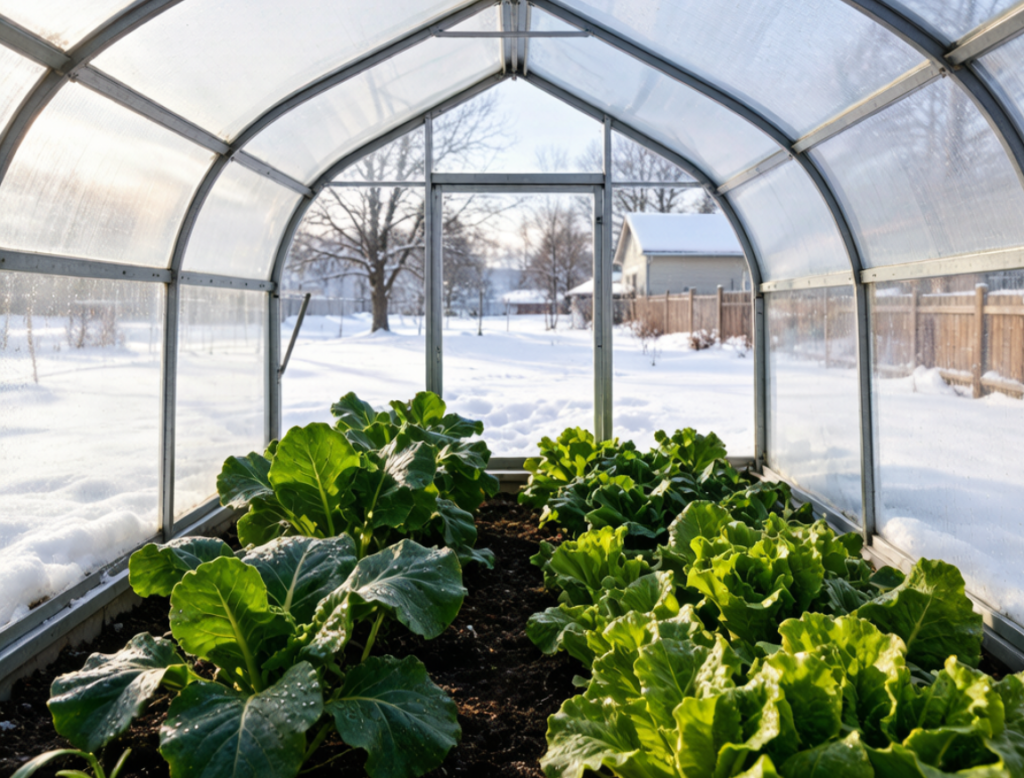
Winter growing presents three primary challenges: cold temperatures, reduced light, and increased humidity. Each requires specific strategies to maintain productive growing conditions. The University of Minnesota Extension provides excellent research-based guidance on overwintering greenhouse production.
Temperature Management
The 20°F rule: An unheated greenhouse typically stays 10-20°F warmer than outside temperatures. This means when it is 20°F outside, your greenhouse is 30-40°F — too cold for tender crops but workable for cold-tolerant greens. With proper insulation and thermal mass, this buffer can increase to 25-35°F.
Cold-tolerant crops minimum: 25-30°F (kale, spinach, lettuce). Tender crops minimum: 50-55°F (tomatoes, peppers, cucumbers). Optimal daytime: 65-80°F for most crops.
Heating Systems Comparison
| Heating Type | Efficiency | Typical Cost | Best For |
|---|---|---|---|
| Natural gas/propane unit heater | 80-95% | $2,000–8,000 installed | Large commercial, most common |
| Geothermal heat pump | 300-600% COP | $15,000–50,000+ installed | Highest efficiency, high upfront cost |
| Hydronic radiant floor | 85-95% | $8–20 per sq ft installed | Best for propagation, root-zone heating |
| Wood/biomass boiler | 60-80% | $5,000–30,000 installed | Rural areas with cheap fuel |
| Electric resistance | 100% | $300–3,000 installed | Small hobby greenhouses only |
Thermal Curtains & Night Insulation
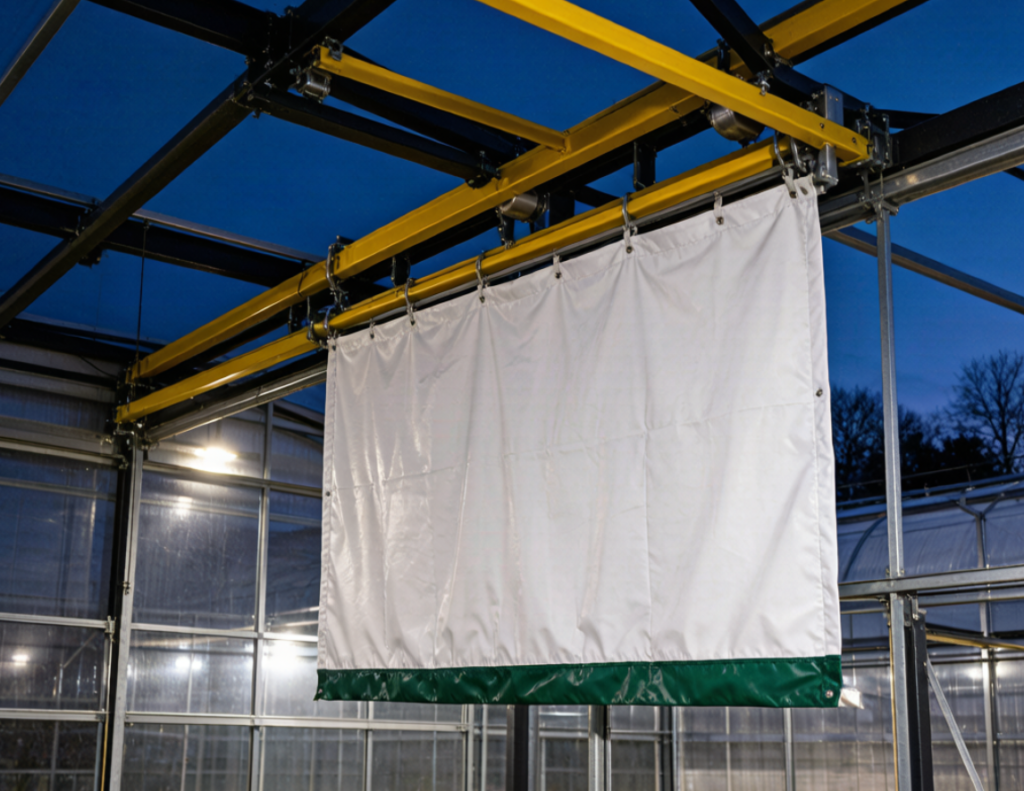
Thermal curtains (also called energy curtains or night curtains) are the single most effective investment for winter greenhouse efficiency. When deployed at night, they reduce heat loss by 50-70% by creating a dead air space between the curtain and the roof. Most thermal curtains pay for themselves in 1-3 heating seasons.
Supplemental Lighting
Winter day length (8-9 hours at 40°N latitude) is insufficient for most crops. Fruiting crops require 14-16 hour photoperiods. LED grow lights at 200-400 μmol/m²/s PPFD are recommended. DOE LED lighting guidelines help growers calculate fixture requirements and energy costs.
Best Winter Crops
- Cold-tolerant (no heat needed above freezing): Kale, spinach, mâche, claytonia, miner’s lettuce, corn salad, Tokyo bekana, mizuna
- Semi-hardy (min 25-30°F): Lettuce, Swiss chard, carrots, beets, radishes, broccoli, cabbage, cilantro, parsley
- Heated greenhouse (min 50-55°F): Tomatoes, cucumbers, peppers, eggplant, basil, strawberries, cannabis
Winter Growing Management
Humidity control: Winter greenhouses have high humidity due to closed ventilation. Maintain 50-70% RH. Reduce by venting briefly on sunny days, using horizontal air flow fans, and avoiding overhead watering. Irrigation: Water less frequently — plants transpire less in low light. Water in the morning to allow foliage to dry before night.
Heating Cost Analysis
For a 1,000 sq ft greenhouse in USDA Zone 5 (January average low 10°F): Propane: $300-600/month. Natural gas: $200-400/month. Geothermal (ground source heat pump): $80-150/month (electricity). With thermal curtains, reduce all figures by 40-60%.
FAQ
How cold is too cold for a greenhouse?
Unheated greenhouse stays 10-20°F warmer than outside. Cold-tolerant crops survive 25-30°F. Tender crops need 50-55°F.
Most efficient heating?
Combination: thermal mass + thermal curtains + zone heating + high-efficiency heater. Geothermal heat pumps are most efficient overall.
Do plants need extra light in winter?
Yes. 8-9 hour winter days are insufficient. LED supplemental lighting at 200-400 μmol/m²/s is recommended.
Best winter crops?
Kale, spinach, lettuce, mâche, carrots, beets (unheated). Tomatoes, cucumbers, peppers (heated).
Winter heating cost?
$200-600/month for 1,000 sq ft in Zone 5. Thermal curtains reduce by 40-60%.
Conclusion
Winter greenhouse growing is challenging but achievable with the right strategies. Invest in thermal curtains first — they offer the best ROI for reducing heat loss. Choose crops suited to your heating capacity. With proper temperature, light, and humidity management, a winter greenhouse can be highly productive and profitable.