 跳至内容
跳至内容 
CO2 enrichment is one of the most powerful tools for increasing greenhouse crop yields — yet many growers underutilize it. Proper CO2 management can boost yields by 20-40%.
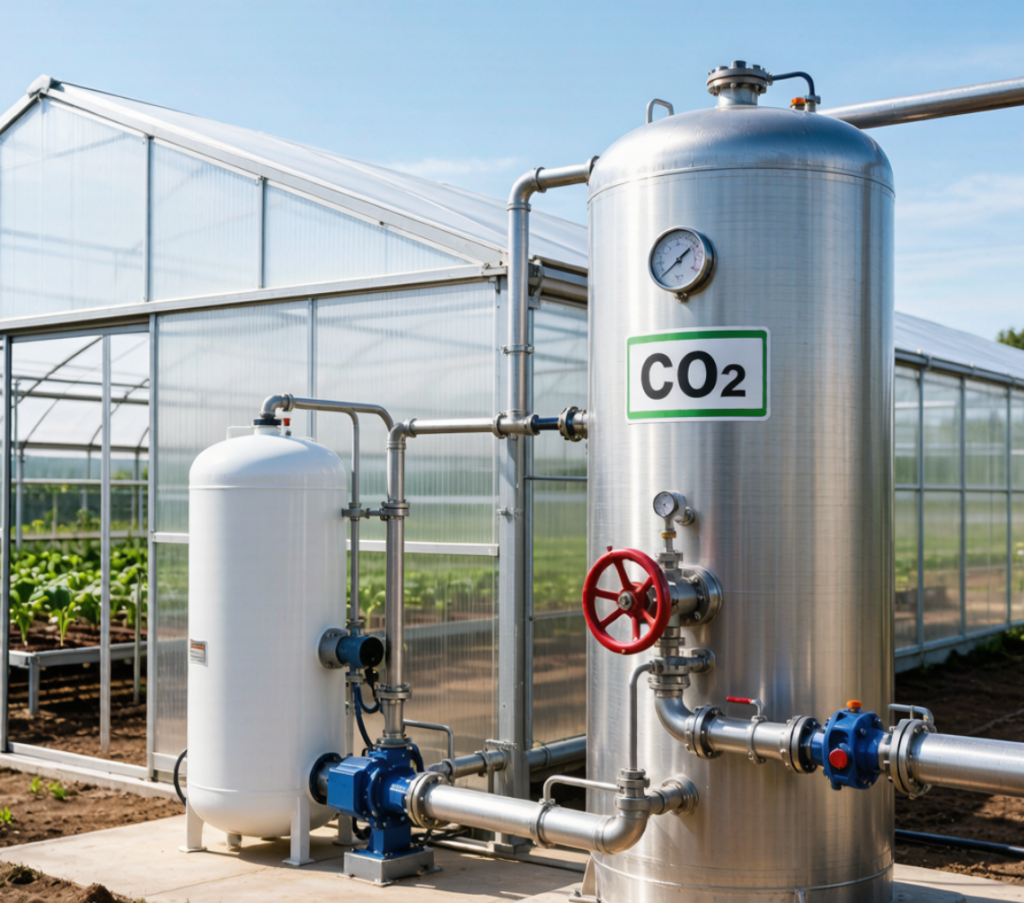
Why CO2 Matters
Ambient atmospheric CO2 is approximately 400 ppm. In a sealed greenhouse, plant photosynthesis can rapidly deplete CO2 to 200 ppm or lower — severely limiting growth. CO2 enrichment restores and elevates CO2 levels to 800-1,200 ppm for optimal photosynthesis.
CO2 & Photosynthesis
Yield potential: Increasing CO2 from 400 ppm to 1,000 ppm can increase photosynthesis rates by 30-50% in C3 plants (tomatoes, peppers, lettuce, cucumbers). The effect is strongest under high light conditions — making CO2 enrichment most valuable during summer months.
Optimal CO2 Levels
| Crop | Optimal CO2 (ppm) | Max Benefit CO2 | Notes |
|---|---|---|---|
| Tomato | 800-1,000 | 1,200 | C3 crop, strong response |
| Cucumber | 800-1,000 | 1,200 | C3 crop, strong response |
| Pepper | 800-1,000 | 1,200 | C3 crop, moderate response |
| Lettuce | 800-1,200 | 1,500 | C3 crop, very strong response |
| Strawberry | 600-800 | 1,000 | Moderate response |
| Rose | 600-800 | 1,000 | Moderate response |
CO2 Generation Methods
CO2 generators (natural gas/propane burners): Most common. Produce CO2 by burning fuel. Also produce heat — valuable in winter, problematic in summer. Cost: $2,000-8,000 per unit. Liquid CO2 (tanks): Pure CO2 stored in bulk tanks. No heat generation. Precise control. Cost: $0.05-0.15/lb CO2. Compressed CO2 cylinders: For small greenhouses. Simple but expensive per gram.
Cost Analysis
Natural gas CO2 generation: $0.01-0.03/sq ft/year operating cost. Liquid CO2: $0.05-0.10/sq ft/year. Yield increase of 20-30% on tomatoes at $2/lb = $8,000-12,000 additional revenue per acre. Payback: typically 1-2 growing seasons.
Monitoring & Control
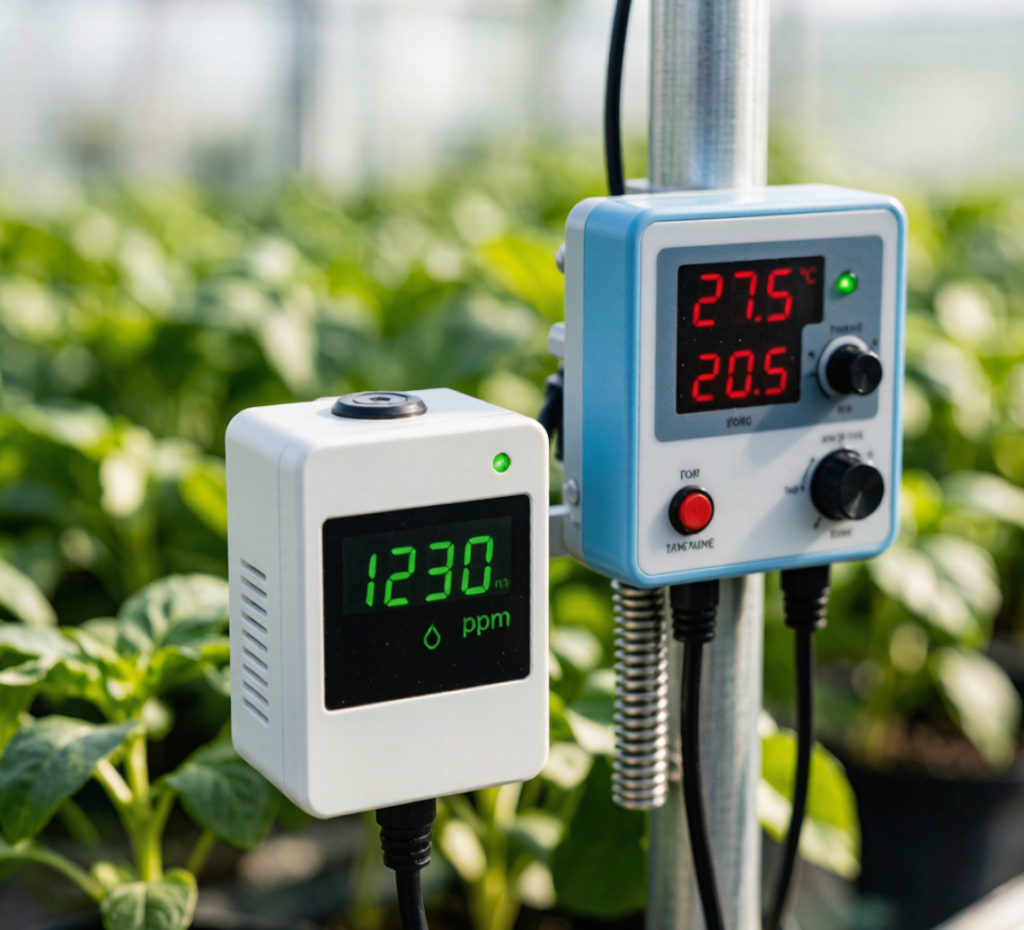
CO2 sensors ($200-800 each) paired with a greenhouse climate controller. CO2 is enriched during daylight hours when vents are closed (typically early morning to mid-day). Ventilation with outside air dilutes CO2, so enrichment stops when vents open.
Yield Impact by Crop
University research from University of Minnesota Extension shows CO2 enrichment at 1,000 ppm increases: tomato yield 20-30%, cucumber yield 25-35%, lettuce head weight 30-40%, pepper yield 15-25%.
Safety Considerations
CO2 is heavier than air and can accumulate in low areas. OSHA workplace limit is 5,000 ppm over 8 hours. At 10,000+ ppm, CO2 causes headaches and dizziness. Install CO2 monitors in worker areas. Ensure ventilation systems can purge excess CO2.
Fangcheng Environmental Control
Maximize your yields with precision CO2 control. Fangcheng greenhouse climate control systems integrate CO2 enrichment with temperature, humidity, and ventilation management. Automated sensors and controllers maintain optimal CO2 levels while ensuring worker safety.
FAQ
What is the best CO2 level for greenhouses?
800-1,200 ppm for most crops during daylight hours. Above 1,500 ppm provides diminishing returns.
How much does CO2 enrichment increase yield?
20-40% depending on crop and light conditions. Greatest benefit under high light (summer).
What is the cheapest CO2 method?
Natural gas/propane CO2 generators — lowest operating cost per gram of CO2.
Do I need CO2 enrichment in winter?
Less benefit in winter due to lower light levels. CO2 enrichment is most effective when light is abundant.
Is CO2 dangerous for workers?
At recommended enrichment levels (800-1,200 ppm), CO2 is safe. Install monitors to prevent accumulation above 5,000 ppm.
Conclusion
CO2 enrichment is one of the most cost-effective yield-boosting strategies for commercial greenhouses. A 20-30% yield increase typically pays for the equipment within 1-2 seasons. Proper monitoring and integration with climate control systems ensures optimal results while maintaining safety.
 Blog
Blog Blog
Blog Blog
Blog