跳至内容
跳至内容 
Humidity is one of the most critical — and most misunderstood — environmental factors in greenhouse production. Too high, and disease thrives. Too low, and plants stop growing. Understanding VPD and dew point transforms humidity from a guessing game into an exact science.
For greenhouse climate control systems, see Fangcheng climate control solutions.
Why Humidity Matters
Humidity directly affects three critical processes: transpiration (nutrient and water movement), photosynthesis (CO2 uptake through open stomata), and disease pressure (fungal and bacterial growth on wet surfaces). The University of Minnesota Extension has published comprehensive research on greenhouse humidity management and its effects on crop health.
Understanding VPD
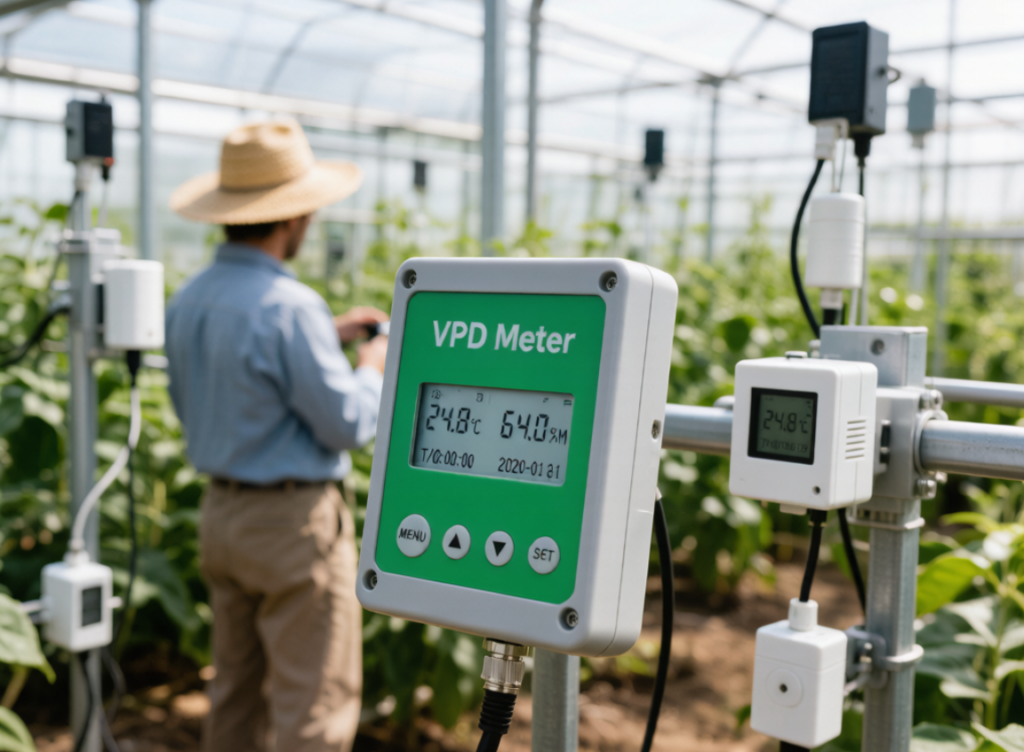
VPD (Vapor Pressure Deficit) is the most important climate metric you are not tracking. It measures the drying power of the air — the difference between the saturation vapor pressure (how much water the air can hold) and the actual vapor pressure. VPD directly correlates to plant transpiration rate.
Optimal VPD ranges: Propagating seedlings: 0.2-0.5 kPa. Vegetative growth: 0.5-0.8 kPa. Flowering/fruiting: 0.8-1.2 kPa. Below 0.2 kPa: transpiration stops, disease risk high. Above 1.5 kPa: stomata close, photosynthesis stops.
Dew Point Explained
The dew point is the temperature at which air becomes saturated and condensation begins. If leaf temperature drops below the dew point, condensation forms on the leaf surface — creating the perfect environment for Botrytis, powdery mildew, and downy mildew. A 5-10°F gap between air temperature and dew point is the safety margin.
Ideal Humidity Levels by Crop
| Crop | Day RH% | Night RH% | VPD Target (kPa) |
|---|---|---|---|
| Tomato | 60-70 | 70-85 | 0.8-1.0 |
| Cucumber | 65-75 | 75-90 | 0.6-0.8 |
| Pepper | 60-70 | 70-85 | 0.8-1.0 |
| Lettuce/leafy greens | 60-75 | 70-85 | 0.5-0.8 |
| Strawberry | 60-70 | 70-85 | 0.8-1.0 |
| Cannabis (veg) | 55-65 | 60-75 | 0.8-1.2 |
| Cannabis (flower) | 45-55 | 50-65 | 1.0-1.4 |
Humidity Control Strategies
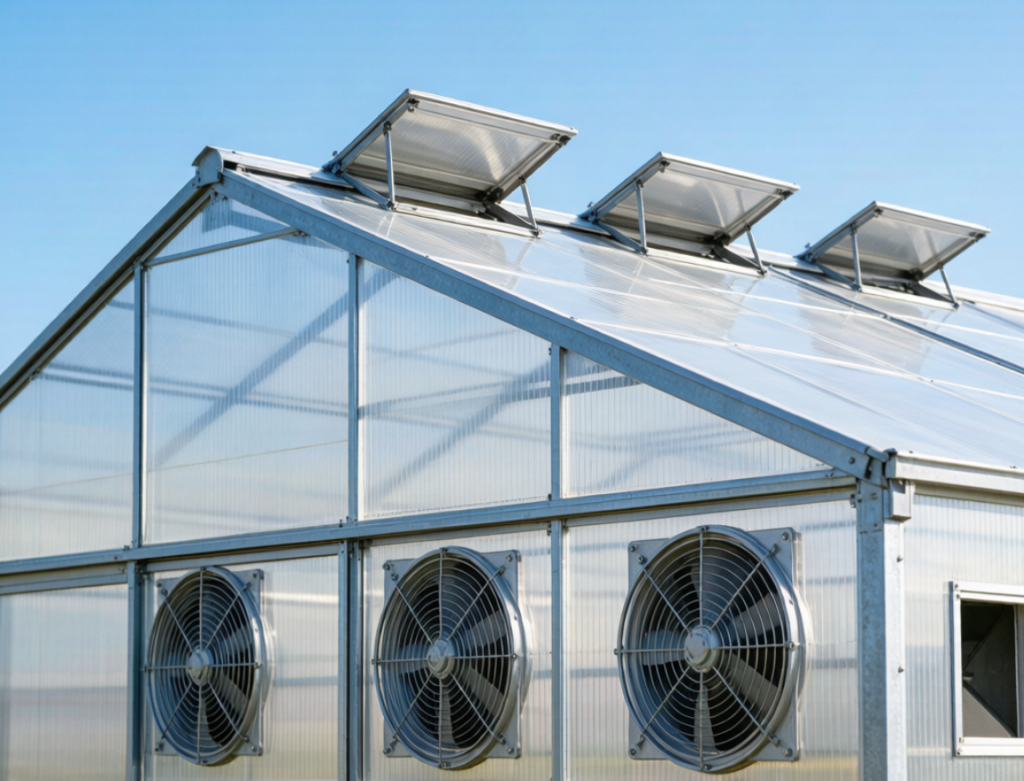
Ventilation: The most cost-effective method. Ridge vents, side vents, and exhaust fans remove humid air. Heating: Raising temperature lowers RH without removing water. Dehumidification: Mechanical dehumidifiers for sealed greenhouses, especially in winter when venting would lose heat. Air circulation: Horizontal air flow (HAF) fans prevent cold spots where condensation forms. Irrigation timing: Water in the morning so foliage dries before night.
Ventilation & Airflow
Natural ventilation (ridge + side vents) can exchange greenhouse air 1-2 times per minute. Mechanical ventilation (exhaust fans) achieves 1-3 air exchanges per minute. For humidity control, an air exchange rate of 20-40 volumes per hour is recommended during humid periods.
Active Dehumidification
In winter, venting to remove humidity wastes heat. Mechanical dehumidifiers are increasingly used in sealed greenhouses. Condensing dehumidifiers, desiccant dehumidifiers, and heat pump dehumidifiers each have different energy profiles. A new greenhouse with proper insulation may need less than 1 kWh of dehumidification per gallon of water removed.
Monitoring & Automation
Modern greenhouse control systems integrate temperature, RH, VPD, and dew-point sensors with automated ventilation, heating, and dehumidification. DOE energy efficiency guidelines for agricultural climate control recommend combined sensor-actuator systems for precise environmental management.
FAQ
Ideal humidity for greenhouse?
50-70% RH daytime. Key metric is VPD: 0.8-1.2 kPa for most crops.
What is VPD?
Vapor pressure deficit — measures the drying power of air. Controls transpiration and photosynthesis.
How to reduce humidity?
Ventilation, heating (lowers RH), dehumidifiers, HAF fans, morning irrigation.
What causes condensation?
Warm moist air hitting cold surfaces (roof, leaves) below the dew point. Disease risk.
What is dew point?
Temperature where air saturates and condensation begins. Keep a 5-10°F safety margin.
Conclusion
Humidity control is essential for greenhouse productivity. By understanding VPD and dew point, growers can make precise decisions about ventilation, heating, and dehumidification. Monitoring VPD rather than just relative humidity provides a more actionable metric for plant health. Investing in automated climate control that manages VPD pays dividends in crop quality, disease reduction, and energy efficiency.