跳至内容
跳至内容 
Lighting is often the largest energy expense in greenhouse operations — up to 30% of total operating costs. Choosing between LED, HPS, and fluorescent lighting is a major financial decision that affects crop quality, energy bills, and long-term profitability.
Lighting Technology Landscape
Three technologies dominate supplemental greenhouse lighting. Each has different characteristics in efficiency, spectrum, and cost. The DOE lighting research provides extensive data on energy efficiency comparisons.
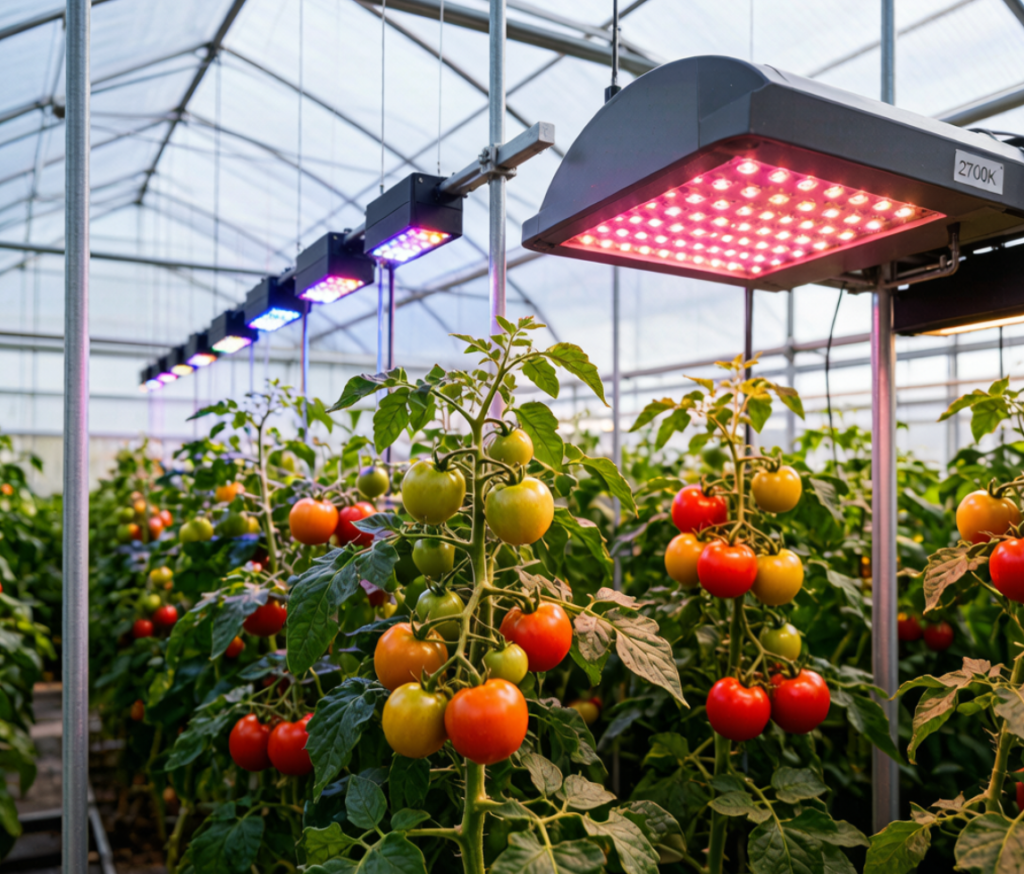
LED Grow Lights
Highest efficiency: LEDs convert 60-70% of electricity into usable light for photosynthesis (PAR). They offer tunable spectrums, run cool, and last 50,000+ hours. Upfront cost is highest ($800-1,500 per 600W equivalent) but energy savings typically pay back within 1-3 seasons.
HPS Grow Lights
HPS (High Pressure Sodium) lights have been the industry standard for decades. They deliver high PAR output but generate significant heat. Lamps need replacement every 10,000-15,000 hours. Spectrum is heavy in red/yellow — excellent for flowering but poor for vegetative growth.
Fluorescent Lights
T5 fluorescents are popular for propagation and seedlings. Low upfront cost, cool operation, but lower light intensity. Best for young plants and low-light crops, not suitable for fruiting/flowering.
Light Spectrum Comparison
| Light Type | Blue (400-500nm) | Red (600-700nm) | Far Red (700-800nm) | Best For |
|---|---|---|---|---|
| LED (full spectrum) | Excellent | Excellent | Adjustable | All stages |
| HPS | Moderate | Excellent | High | Flowering |
| Fluorescent (T5) | Good | Good | Low | Propagation |
Energy Efficiency
LED: 2.5-3.5 μmol/J (PAR efficiency). HPS: 1.5-2.0 μmol/J. T5 Fluorescent: 0.8-1.2 μmol/J. LEDs produce 50-100% more usable light per watt than T5 fluorescent and 30-60% more than HPS.
Upfront Cost Comparison
| Cost Factor | LED (600W equiv) | HPS (600W equiv) | T5 Fluorescent (8-lamp) |
|---|---|---|---|
| Fixture cost | $800-1,500 | $150-350 | $200-400 |
| Installation | $50-100 | $50-100 | $50-100 |
| Lamp replacement | Every 8-10 years | Every 1-2 years ($20-40) | Every 1-2 years ($8-15/tube) |
| Cooling needed | Minimal | Significant (HVAC) | Moderate |
ROI Analysis (5-Year, 1,000 sq ft)
LED: $8,000-15,000 total cost (fixtures + energy + maintenance). HPS: $6,000-12,000 total cost. LED energy savings: $1,000-3,000/year vs HPS. LED 5-year ROI: positive after 2-3 years. LED total 5-year cost is typically 10-20% lower than HPS despite higher upfront fixture cost.
Crop Suitability
- LED: All crops — spectrum can be tuned for specific growth stages
- HPS: Best for tomatoes, peppers, cucumbers during flowering/fruiting
- Fluorescent: Seedlings, microgreens, leafy greens, propagation only
Heating Considerations
HPS lights produce significant radiant heat, which can reduce heating costs in winter but increases cooling costs in summer. LEDs produce negligible heat, keeping cooling costs low but requiring dedicated heating in winter. This tradeoff affects the total energy calculation.
Fangcheng Greenhouse Lighting Solutions
Optimize your greenhouse lighting with Fangcheng. We provide complete greenhouse systems compatible with all lighting technologies. Whether you need supplemental LED systems, HPS retrofit layouts, or hybrid solutions, our team can design the optimal lighting configuration for your crops and climate.
Explore Greenhouse Lighting Systems → | Contact Us
FAQ
Which greenhouse light is most efficient?
LED — 2.5-3.5 μmol/J vs 1.5-2.0 for HPS and 0.8-1.2 for T5 fluorescent. LEDs use 30-60% less power than HPS for equivalent PAR output.
Is HPS better than LED for flowering?
HPS has a strong red spectrum that plants respond well to for flowering. However, modern full-spectrum LEDs with high red output now match or exceed HPS flowering performance with less energy.
Are LED lights worth the higher cost?
Yes — payback is typically 1-3 seasons through energy savings. Over 5 years, LED total cost is 10-20% lower than HPS.
What is best for seedlings?
T5 fluorescent is cost-effective for propagation. But LED with blue-rich spectrum produces stockier, healthier seedlings.
Do HPS lights reduce heating costs?
Yes — HPS waste heat can reduce winter heating bills by 20-30%. This benefit must be weighed against higher summer cooling costs.
Conclusion
LEDs are the future of greenhouse lighting — highest efficiency, tunable spectrum, and lowest total cost over the equipment life. HPS remains viable for growers with low electricity costs and existing infrastructure. Fluorescents still serve propagation well. The right choice depends on crop types, local energy costs, and investment horizon.