跳至内容
跳至内容 
Hydroponic growing has revolutionized greenhouse production. But choosing between NFT, DWC, and ebb-and-flow systems can be confusing — each has different strengths for different crops, scales, and budgets.
For greenhouse hydroponic solutions, see Fangcheng hydroponic greenhouses.
Hydroponic System Overview
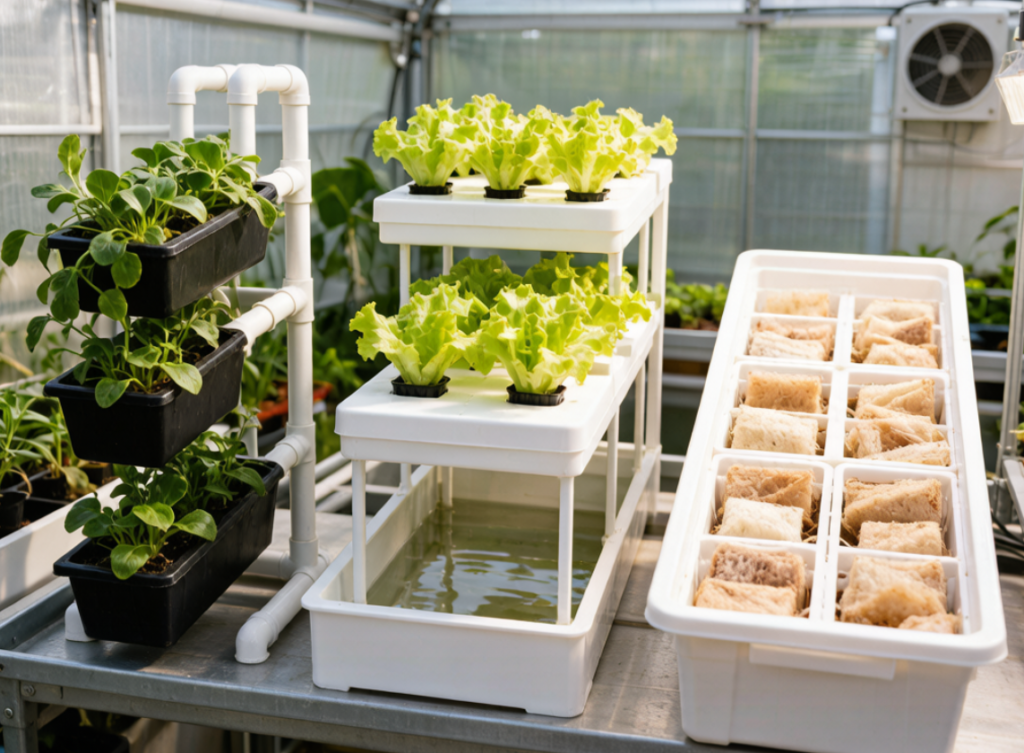
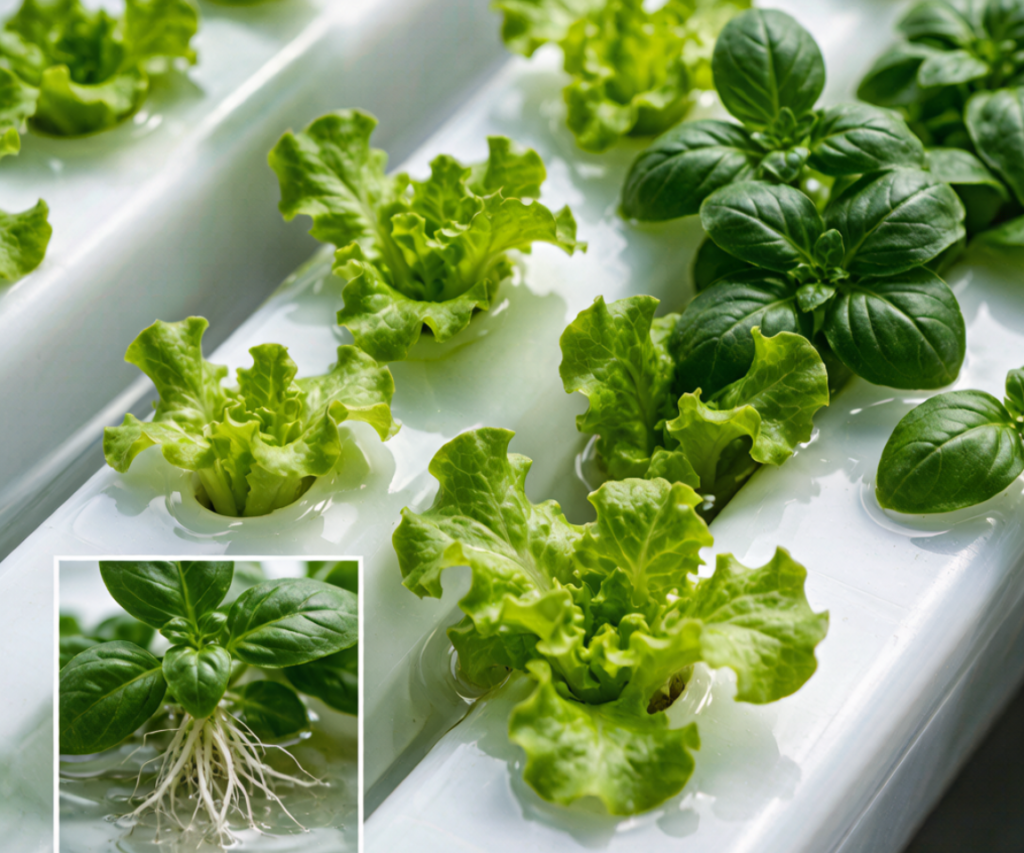
All hydroponic systems deliver nutrient-rich water directly to plant roots without soil. The key difference between NFT, DWC, and ebb and flow is how the nutrient solution is delivered and how roots are exposed to oxygen.
The USDA National Agricultural Library maintains extensive research on hydroponic production methods for controlled environment agriculture.
NFT — Nutrient Film Technique
Best for leafy greens: NFT uses a thin film of nutrient solution flowing continuously through sloped channels (typically 1-3° slope) with plant roots growing directly in the channel. The thin film ensures roots have access to both nutrients and oxygen from the air gap above the solution.
Key specs: Channel length 20-40 ft, slope 1-3°, flow rate 0.5-2 L/min per channel, pH 5.5-6.5. Best crops: Lettuce, spinach, kale, basil, mint, strawberries. Advantages: Excellent oxygenation, efficient water use, easy automation, high planting density.
DWC — Deep Water Culture
DWC suspends plant roots in a deep reservoir (6-12 inches) of oxygenated nutrient water. Air stones or diffusers connected to an air pump continuously bubble oxygen through the solution. The large water volume buffers pH and nutrient fluctuations.
Key specs: Reservoir depth 6-12″, oxygen levels 5-8 mg/L, water temp 65-75°F. Best crops: Tomatoes, peppers, cucumbers, lettuce, herbs. Advantages: Very beginner-friendly, large water volume = stable conditions, no timer/cycling needed.
Ebb and Flow (Flood and Drain)
Ebb and flow systems periodically flood the grow tray with nutrient solution (4-6 times daily for most crops), then drain it back to the reservoir. The flooding/draining cycle provides both nutrient delivery and root oxygenation.
Best crops: Versatile — works for most crops from leafy greens to fruiting plants. Advantages: Very versatile, works with many growing media, excellent oxygenation during drain cycles.
Three-Way Comparison
| Feature | NFT | DWC | Ebb & Flow |
|---|---|---|---|
| Root system | Shallow, bare root | Deep, suspended | Medium, in media |
| Oxygenation | Excellent (air gap) | Good (air stones) | Excellent (drain cycle) |
| pH stability | Low (small water volume) | High (large volume) | Medium |
| Automation | Easy (continuous flow) | Simple (air pump only) | Moderate (timer + pump) |
| Best crop type | Leafy greens | Fruiting + leafy | Most crops |
| Commercial scale | Excellent | Moderate | Good |
Crop Suitability Guide
- NFT: Lettuce, basil, spinach, kale, chard, mint, strawberries, microgreens
- DWC: Tomatoes, peppers, cucumbers, lettuce, herbs, cannabis
- Ebb and flow: Most crops — good general-purpose system for mixed production
Cost Analysis
NFT: $2-6 per plant station for channels+pump. Low media cost (no media). DWC: $50-200 per system (home) or $3-8 per plant (commercial buckets). Ebb and flow: $3-10 per plant including media and trays.
Commercial Scale Considerations
For commercial greenhouse operations, NFT is the dominant system for leafy greens due to its automation potential and high planting density. DWC is preferred for large fruiting crops in greenhouse buckets or raft systems. Ebb and flow is common in smaller commercial operations and research facilities.
FAQ
Best for leafy greens?
NFT — shallow channels perfectly suit shallow root systems of leafy greens.
Best for fruiting crops?
DWC or ebb and flow — handle larger root systems and higher nutrient demands.
Easiest for beginners?
DWC — few failure points, large water volume buffers fluctuations.
Most cost-effective?
NFT for commercial ($2-5/plant). DWC for small scale ($50-200/system).
Best for mixed crops?
Ebb and flow — most versatile across different crop types.
Conclusion
Each hydroponic system has strengths for different applications. NFT excels for commercial leafy green production. DWC offers simplicity and versatility for both small and large fruiting crops. Ebb and flow provides the most flexibility for mixed crop operations. Choose based on your crops, scale, and budget.