Table of Contents
If your greenhouse heating bill becomes painful every winter, the solution is usually not simply “adding more heat.” The real answer is improving heating efficiency while reducing heat loss. The most cost-effective winter greenhouse strategy combines efficient heating systems with stronger insulation.
For commercial growers, winter heating is not just about keeping the space warm. It is about maintaining stable growing conditions without allowing energy costs to erode profitability.
Find Where Heat Is Being Lost First
Before upgrading equipment, identify where energy is being wasted.
Many greenhouses consume too much energy because heat escapes faster than the system can retain it. Common causes include aging covering materials, poor sealing, roof heat loss, and weak night insulation.
Start by checking:
- damaged or aging greenhouse covering
- air leakage around doors and vents
- uneven heat distribution
- lack of thermal curtains
- structure design that does not suit the local climate
If these issues are ignored, even expensive heating equipment will operate inefficiently.
Upgrade to a More Efficient Heating System
If your greenhouse runs through winter, heating efficiency matters more than equipment purchase price.
A low-cost heater may look attractive upfront, but poor thermal efficiency quickly becomes expensive during continuous operation.
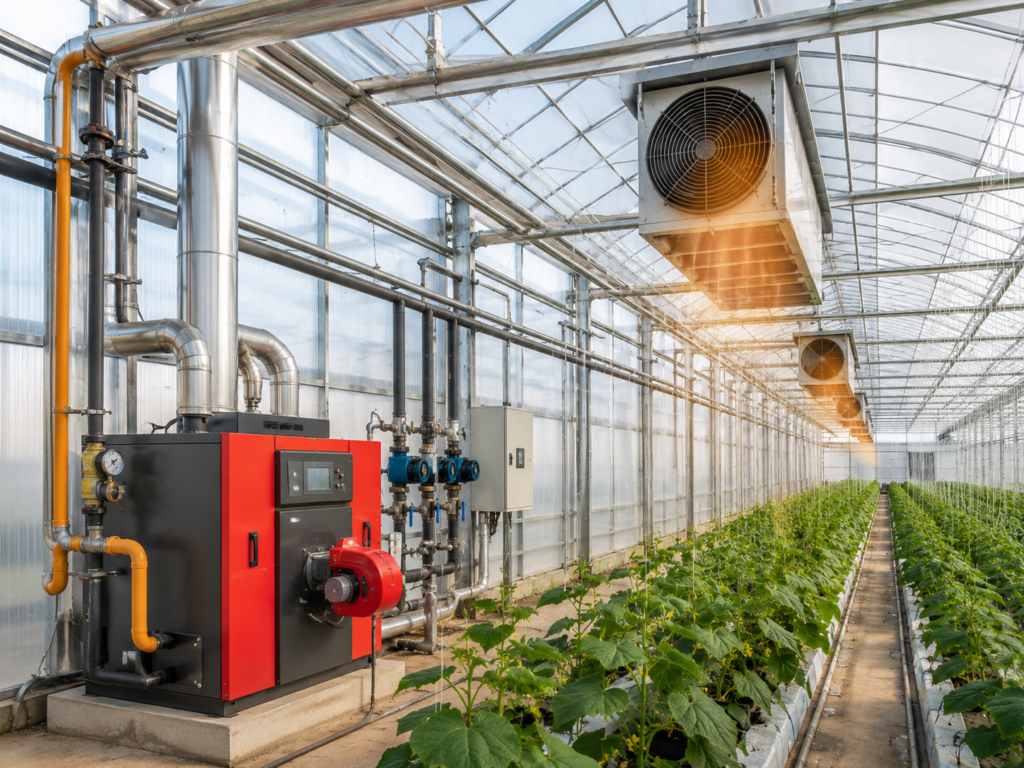
For larger commercial projects, a properly planned greenhouse heating system is usually far more effective than temporary standalone heating equipment because system design considers greenhouse size, crop type, heat distribution, and operating cost.
More efficient heating approaches may include:
- hot water pipe heating
- warm air heating systems
- zoned heating control
- automated temperature-based operation
The goal is not stronger heating. It is smarter heating.
Better Insulation Often Saves More Than Bigger Heating Equipment
This is where many growers misjudge the problem.
If your greenhouse warms quickly during the day but loses temperature rapidly at night, the issue is often heat retention—not heating capacity.
Practical insulation upgrades include:
- thermal curtains
- double-layer film systems
- reduced air leakage
- improved sealing
- higher-insulation covering materials
In colder regions, choosing a structure with stronger thermal performance, such as a polycarbonate greenhouse, can sometimes reduce long-term heating costs more effectively than repeatedly upgrading heating equipment.
Heating and Insulation Should Work Together
The most energy-efficient greenhouse is not built around a single piece of equipment. It depends on system coordination.
A practical winter strategy often looks like this:
- Capture solar heat during the day.
- Reduce heat loss at night using thermal insulation.
- Activate heating only when necessary.
- Use short controlled ventilation to manage humidity.
- Automate temperature adjustments to reduce manual error.
This is particularly important for crops sensitive to temperature fluctuations, such as tomatoes, strawberries, flowers, and nursery plants.
Greenhouse Structure Also Affects Winter Heating Costs
Heating cost is heavily influenced by greenhouse structure.
Film greenhouses usually offer lower upfront investment and work well for large commercial production, but in cold climates they may require additional insulation support. Glass greenhouses provide strong light transmission and long-term durability, though winter heating demand can still be significant depending on system design.
A multi-span film greenhouse combined with thermal curtains, double-film insulation, and efficient heating can often deliver a strong ROI for commercial growers.
The key question is not which structure is universally cheapest. It is which structure makes economic sense for your specific climate and production cycle.
When Is It Time to Redesign Your Heating Strategy?
If you are experiencing any of these issues, the problem is likely system design rather than equipment capacity:
- heating bills continue rising each winter
- large temperature differences inside the greenhouse
- poor crop performance near edges
- rapid overnight temperature drops
- heating equipment runs continuously
- system performance declined after expansion
For larger upgrades or new projects, planning the full greenhouse drawing design early often prevents expensive corrections later.
Final Thoughts
Reducing winter greenhouse heating cost is not about using less heat. It is about using heat more efficiently and keeping that heat inside the greenhouse longer.
Efficient heating equipment lowers energy waste. Strong insulation reduces heat loss. Combined, they create a more sustainable and profitable winter growing strategy.