跳至内容
跳至内容 
Greenhouse floor drainage quietly affects crop health, worker safety, sanitation, and long-term structure performance. Even with strong ventilation, irrigation, and climate control, a greenhouse becomes harder to operate when water collects after irrigation, misting, cleaning, or heavy rain.
Good drainage controls where water moves, how quickly it leaves the production area, and whether runoff stays away from walkways, crop benches, electrical equipment, and foundations.
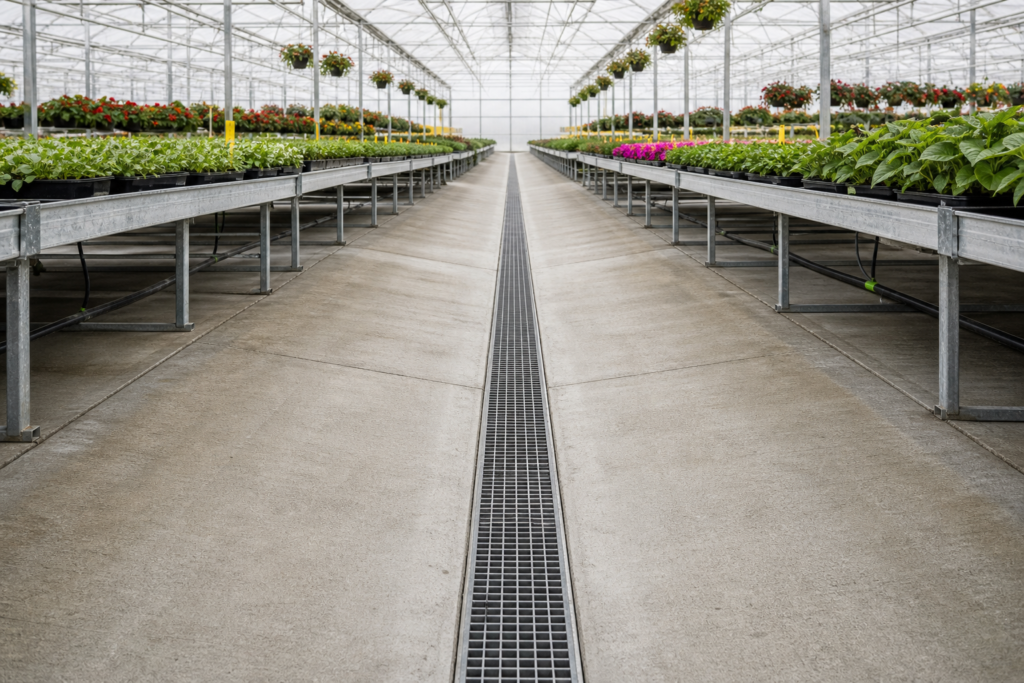
Key point: A greenhouse floor should never be treated as a flat indoor floor. It is a wet production environment, so slope, outlet capacity, surface texture, and cleaning access must be planned from the start.
Where the Water Comes From
Before choosing a floor drain, growers need to understand the water load. In most greenhouses, floor water comes from five sources:
- Irrigation runoff: excess water from drip, sprinkler, boom, ebb-and-flow, or hand watering systems.
- Condensation: water that forms on greenhouse glazing, gutters, frames, and equipment during temperature swings.
- Misting and fogging: fine droplets that may settle on surfaces if ventilation or control settings are not balanced.
- Wash-down water: cleaning benches, floors, trays, carts, tools, and production zones.
- Rainwater intrusion: water entering through doors, sidewalls, gutters, vents, or poor exterior grading.
If the greenhouse also uses high-frequency irrigation or evaporative cooling, drainage demand increases. For related system planning, see FANGCHENG’s greenhouse irrigation system and greenhouse cooling system pages.
Practical test: If water remains visible 20 to 30 minutes after normal irrigation or cleaning, check slope, grates, drain size, and outlet capacity.
Core Drainage Components
A reliable greenhouse floor drainage system combines surface grading, collection points, subsurface layers, and a safe discharge route. The layout should match the crop system, greenhouse span, floor material, water volume, and local rules.
1. Floor slope
Slope guides water toward trench drains, side channels, or collection points. It must move water without making carts, rolling benches, or automated equipment unstable.
2. Trench drains or channel drains
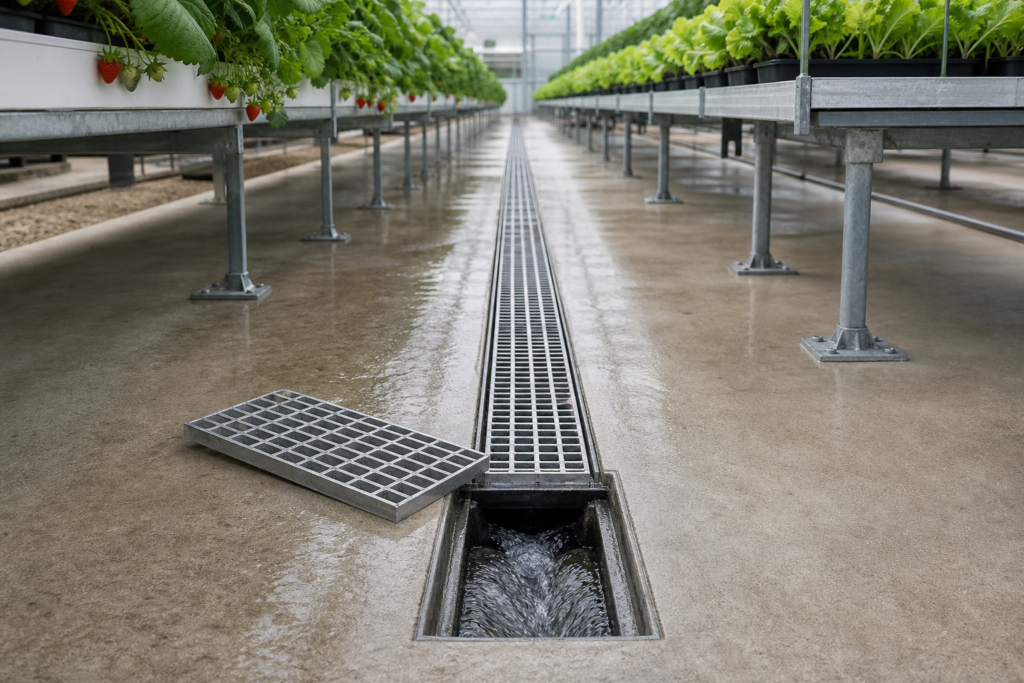
Trench drains collect water along walkways, crop rows, or central service aisles. Removable grates make them easier to clean and inspect.
3. Perimeter drainage
If rainwater runs toward the greenhouse, interior drains must handle water they were not designed for. Site grading, swales, gutters, and downspouts should move stormwater away from the structure.
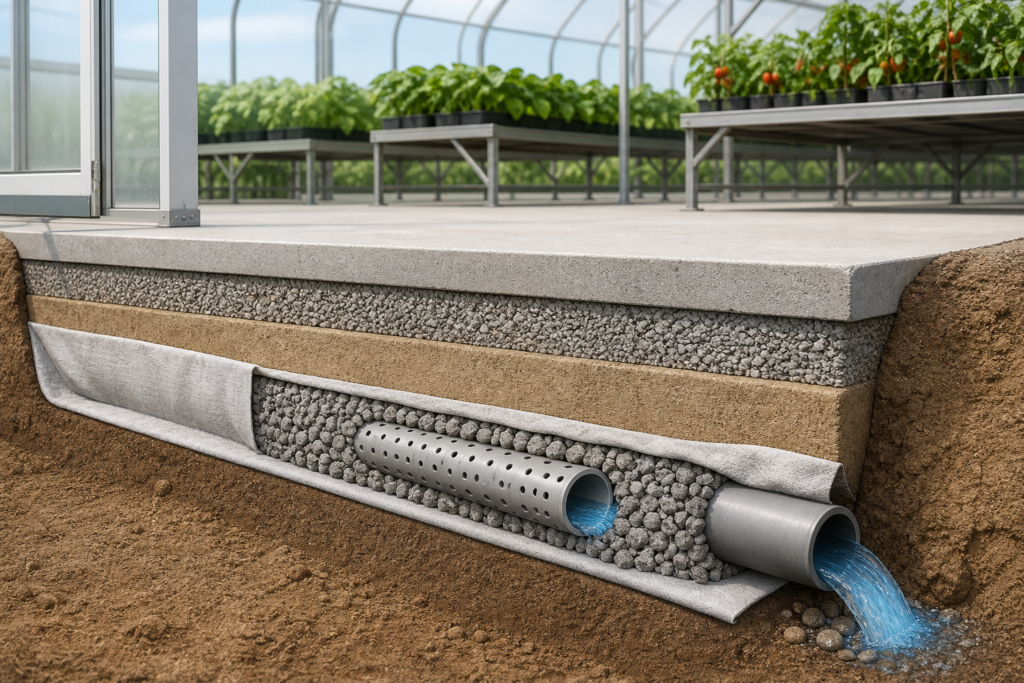
4. Subsurface drainage layer
Gravel bases, perforated pipes, geotextile fabric, and compacted subgrades help water move below the finished surface, especially under gravel floors.
5. Outlet and discharge control
Collected water needs a legal, controlled discharge path. In some areas, runoff from fertilizers, pesticides, disinfectants, or nutrient solutions may need containment, treatment, or special discharge handling. The U.S. Environmental Protection Agency provides stormwater and runoff guidance through its NPDES stormwater resources, while USDA NRCS water conservation resources explain broader water management concerns.
Floor Options Compared
The floor surface determines cleaning speed, water movement, and maintenance workload. No single surface is best for every greenhouse.
| Floor Type | Drainage Strength | Best Use | Main Caution |
|---|---|---|---|
| Sloped concrete with trench drains | Excellent surface control | Commercial production, rolling carts, clean walkways | Higher upfront cost and needs careful engineering |
| Compacted gravel | Good infiltration when graded correctly | Lower-cost structures, propagation zones, seasonal houses | Can rut, compact, or hold algae if not maintained |
| Concrete strips with gravel beds | Balanced | Mixed-use houses with carts and crop rows | Drainage transitions must be detailed well |
| Pavers or porous blocks | Moderate to good | Retail greenhouses and display areas | Joints can clog with organic matter |
| Bare soil | Variable | Low-cost or temporary houses | Poor sanitation, uneven drainage, difficult traffic control |
Important design sentence: For most intensive commercial greenhouses, the best greenhouse floor drainage strategy is a cleanable hard surface, planned slope, accessible trench drains, and a discharge path sized for peak irrigation plus wash-down water.
Design Principles for Greenhouse Floor Drainage
Start with the crop and workflow
Drainage should follow how the greenhouse is used. Rolling benches need smooth lanes; hydroponic systems may need runoff containment; propagation houses need close attention to humidity, algae, and surface drying.
FANGCHENG often coordinates drainage with greenhouse layout, irrigation, benches, shading, cooling, and structure details during the early design stage. For integrated planning, see greenhouse drawing design and greenhouse system integration.
Keep drains accessible
Drains that cannot be inspected cannot be trusted. Avoid placing permanent benches, tanks, or equipment directly over grates and cleanouts.
Separate clean water from production runoff
Roof water, exterior stormwater, irrigation runoff, and nutrient solution should not automatically be mixed together. Separation supports reuse, treatment, and compliance.
Think about sanitation
Standing water supports algae, creates slippery surfaces, and may help pests and pathogens move through the greenhouse. The American Society of Agricultural and Biological Engineers publishes agricultural engineering standards, and FAO water management resources provide broader irrigation and drainage context.
Design tip: Drainage should be drawn on the greenhouse plan, not decided after the floor is poured. Once concrete slope and drain elevations are wrong, correction is slow, messy, and expensive.
Maintenance and Inspection
Even a well-designed drainage system needs routine maintenance. Leaves, potting media, roots, algae, labels, plastic clips, and fertilizer residues can all slow water movement.
Inspection checklist
- After irrigation: look for standing water and low spots.
- Weekly: remove leaves, soil, and debris from drain grates.
- Monthly: lift removable grates, clean sediment, and flush accessible drain lines.
- Seasonally: inspect exterior grading, gutters, downspouts, cracked concrete, and sunken gravel.
Bottom line: The cheapest drainage detail on construction day can become the most expensive problem during production if it causes standing water, worker slips, crop disease pressure, or repeated cleaning downtime.
FAQ
Why is greenhouse floor drainage important?
Greenhouse floor drainage removes irrigation runoff, condensation, wash-down water, and stormwater intrusion before they create standing water, slippery walkways, root disease pressure, algae growth, or structural moisture problems.
What is the best floor for greenhouse drainage?
The best floor depends on the greenhouse use. Concrete with trench drains is best for intensive commercial production and clean traffic areas. Compacted gravel can work for lower-cost structures when paired with proper grading and perimeter drainage.
How much slope does a greenhouse floor need?
Many commercial greenhouse floors use a gentle slope toward trench drains, gutters, or side drains. The exact slope should be engineered for greenhouse width, crop system, irrigation volume, local rainfall, and outlet capacity.
Can poor drainage damage greenhouse crops?
Yes. Standing water increases humidity around the floor, supports algae and pest habitat, creates slippery work areas, and can contribute to root-zone disease when runoff reaches production zones.
Should drainage be planned before or after greenhouse construction?
Drainage should be planned before construction. Floor elevation, trench drain location, base preparation, outlet routing, and exterior grading all affect the final result.
Conclusion
Greenhouse floor drainage is part of the growing system. A well-designed floor keeps water moving, reduces sanitation pressure, protects workers, and makes irrigation and cleaning easier to manage.
If you are designing a new greenhouse or upgrading an existing facility, FANGCHENG can help coordinate floor drainage with the full greenhouse system. Explore Fangcheng Greenhouse solutions or contact the FANGCHENG team to discuss your project.