跳至内容
跳至内容 
Sustainability in greenhouse design is no longer optional — it is an operational necessity. Building a greenhouse that minimizes resource consumption while maximizing production is the smartest investment you can make. For structure options, see our greenhouse structures overview.
Why Build a Sustainable Greenhouse?
A sustainable greenhouse reduces energy consumption, conserves water, and minimizes waste — all while improving crop yields. Benefits include 30-60% lower heating/cooling costs, 50-80% less water usage, reduced carbon footprint, and access to green building incentives.
ROI perspective: The upfront premium for sustainable design (10-25% above standard) is typically recouped within 2-5 years through energy and water savings. Over 20 years, sustainable design can save $50,000-200,000+ per acre vs conventional construction.
Step 1: Site Selection & Orientation
The most cost-effective sustainable design choices are made before construction begins. Correct orientation can cut energy needs by 20-40% at zero equipment cost.
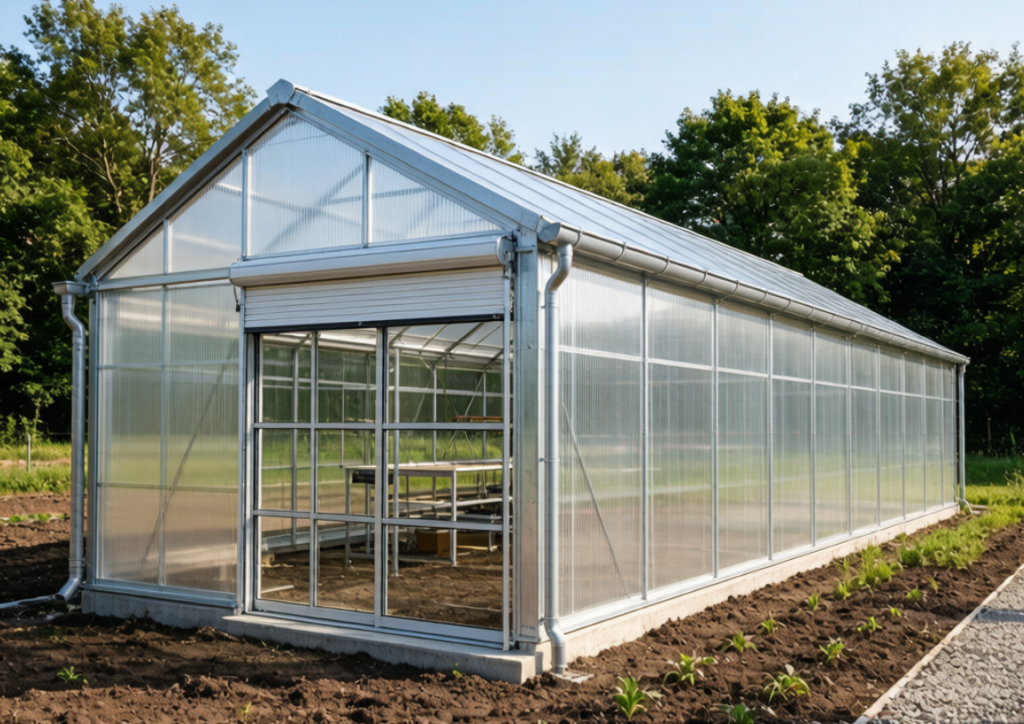
Orientation (Northern Hemisphere): Long axis east-west, south-facing glazing at latitude + 15°, ridge vents running east-west. Site criteria: South-facing slope (5-15° grade), natural windbreaks to north/west, good drainage, proximity to water and power.
Step 2: Energy-Efficient Structure Design
The building envelope is the biggest factor in energy performance. Every choice — glazing, insulation, ventilation — directly affects heating and cooling loads.
| Element | Option | Saving |
|---|---|---|
| Glazing | Double-wall polycarbonate (R-2 to R-4) | 30-50% vs single glass |
| North wall | Insulated panel (R-20 to R-40) | 15-25% heating reduction |
| Night insulation | Thermal curtains | 40-60% heat loss reduction |
| Natural ventilation | Ridge + side vents | 50-100% cooling energy reduction |
| Thermal mass | Water/concrete/PCM | 10-20% temp stabilization |
Best single investment: Thermal curtains pay for themselves in 1-3 heating seasons by cutting night heat loss 40-60%, reducing both upfront equipment and ongoing energy costs.
Step 3: Water Management Systems
A sustainable greenhouse integrates rainwater harvesting, efficient irrigation, and recycling.
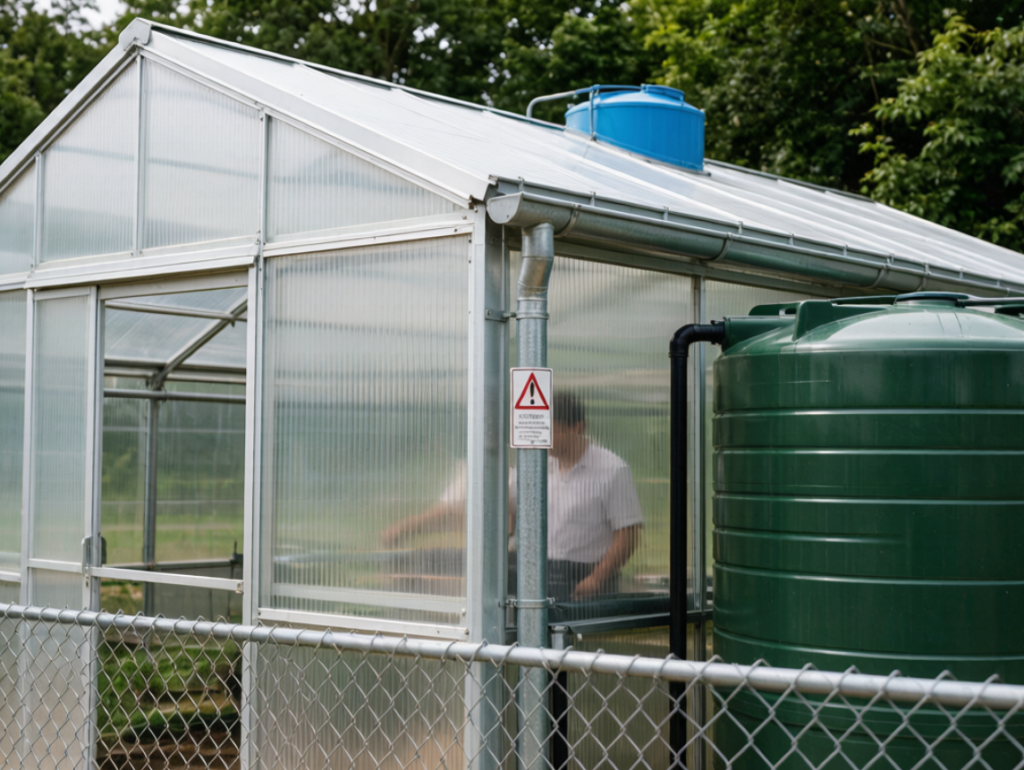
Rainwater harvesting: A 10,000 sq ft roof collects 280,000-620,000 gallons/year. Direct to storage tanks with filtration. Irrigation: Drip uses 30-50% less water than overhead. Sensors cut additional 15-25%. Recycling: Closed-loop hydroponic systems recirculate 80-95% of water.
Step 4: Renewable Energy Integration
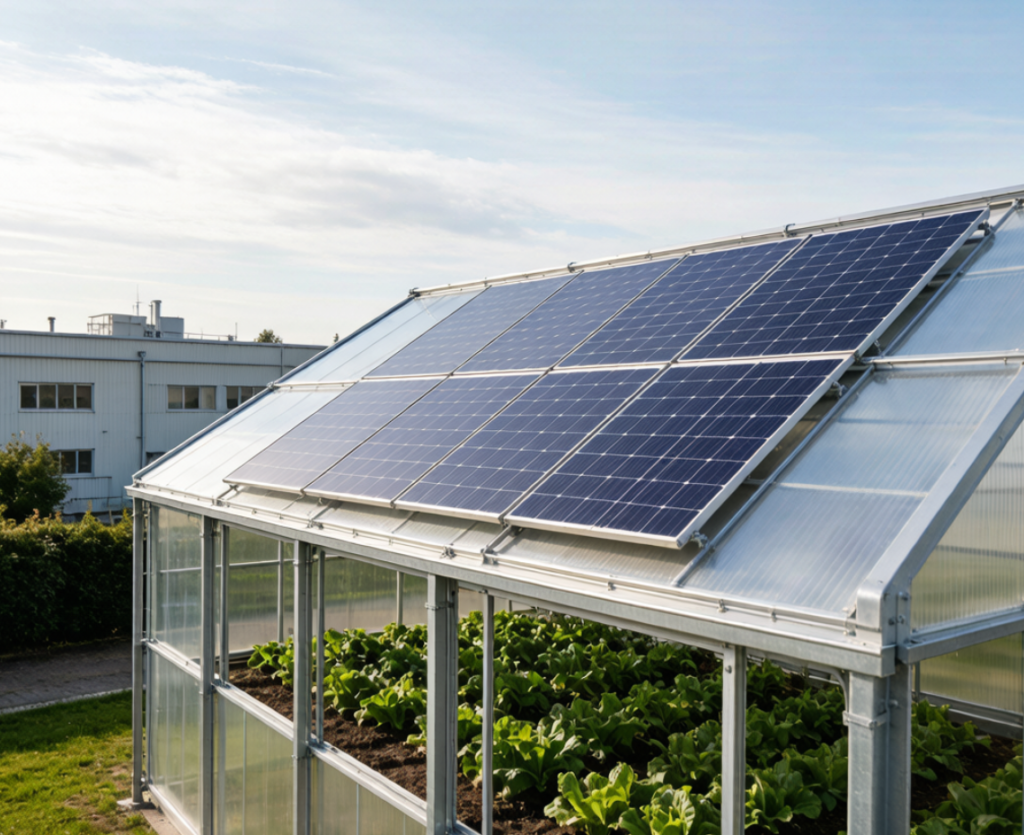
| Technology | Application | Payback |
|---|---|---|
| Solar PV | Fans, pumps, controllers, lighting | 4-8 years |
| Solar thermal | Water/boiler preheat | 3-6 years |
| Geothermal heat pump | Heating and cooling | 5-10 years |
| Climate battery (GAHT) | Underground thermal storage | 3-7 years |
Step 5: Sustainable Material Choices
- Framing: Galvanized steel (recyclable, 30+ yr). Aluminum (light, corrosion-resistant). Wood (lowest embodied energy).
- Glazing: Double-wall polycarbonate (R-2 to R-4, recyclable, 10-15+ yr). Glass (infinite recyclability). ETFE film (lightest, 25+ yr).
- Foundation: Concrete (longest life). Recycled plastic lumber (lower carbon). Pier/grade beam (60% less concrete).
- Insulation: Polyisocyanurate foam (highest R/inch). Recycled denim. Hempcrete (lowest carbon, renewable).
Cost & ROI Overview
| Feature | Added Cost | Payback |
|---|---|---|
| Double-wall polycarbonate | +$2-4/sq ft | 2-4 years |
| Thermal curtains | +$2-5/sq ft | 1-3 years |
| Rainwater harvesting | +$5,000-20,000 | 3-6 years |
| Solar PV | +$1.50-3.00/watt | 4-8 years |
Build Your Sustainable Greenhouse with FangCheng
Ready to build a greenhouse that works with nature? FangChengspecializes in sustainable greenhouse design with double-wall polycarbonate, insulated panels, rainwater systems, and renewable energy compatibility.
Explore FangCheng Greenhouses → | Request a Consultation
FAQ
What makes a greenhouse sustainable?
Energy-efficient design, water conservation, renewable energy, and sustainable materials working together to minimize environmental impact.
Best orientation?
East-west axis, south-facing glazing, ridge vents aligned for prevailing winds. Maximizes winter solar gain and natural ventilation.
How to heat sustainably?
Passive solar + thermal mass + geothermal + solar thermal + renewable-powered heat pump. A layered approach eliminates fossil fuel use.
How much water saved?
50-80% with rainwater harvesting + drip + recycling. Closed-loop hydroponic saves 80-95% vs conventional.
Best glazing?
Double-wall polycarbonate — best insulation (R-2 to R-4), 10-15+ year lifespan, recyclable, excellent light transmission.
Conclusion
Building a sustainable greenhouse is a series of smart decisions — from orientation to materials — each contributing to a structure that uses fewer resources while producing more. The 5-step framework in this guide provides a practical path: orient for passive solar, insulate the envelope, manage water wisely, integrate renewables, and choose sustainable materials. The upfront investment pays for itself through lower operating costs and a greenhouse that performs better for decades.