Fertilization has always been a critical part of crop production, but traditional methods often come with limitations. Manual application is time-consuming, inconsistent, and difficult to scale, especially in commercial operations.
Fertigation offers a more efficient approach by combining irrigation and fertilization into one controlled system. Instead of applying nutrients separately, growers deliver water and nutrients together, directly to the root zone. This shift is not just about convenience—it changes how nutrients are managed across the entire growing cycle.
What Is Fertigation and Why It Matters
Fertigation refers to the process of injecting water-soluble fertilizers into an irrigation system. This allows plants to receive nutrients in a more precise and consistent way compared to traditional soil application.
In conventional fertilization, a portion of nutrients is often lost due to runoff, uneven distribution, or poor absorption. Fertigation reduces this waste by delivering nutrients exactly where they are needed, improving efficiency and uptake.
More importantly, it allows growers to maintain better control over nutrient concentration, pH levels, and timing, all of which directly influence plant health and yield.
How Fertigation Systems Work
A typical fertigation system consists of fertilizer tanks, an injection unit, and a control system connected to the irrigation network.
Fertilizers are dissolved in water and stored in tanks. The system then injects these solutions into the irrigation line at controlled ratios. Depending on the setup, this can be done through simple proportional injectors or more advanced dosing systems.
In modern systems, sensors such as EC and pH monitors are used to track water conditions in real time. The system can adjust nutrient levels automatically, ensuring consistency throughout the irrigation cycle.
This level of control is difficult to achieve with manual fertilization and becomes especially valuable in large-scale or high-precision growing environments.
Key Advantages of Using Fertigation
One of the main benefits of fertigation is consistency. Nutrients are delivered evenly across all plants, reducing the variability that often occurs with manual application.
It also improves efficiency. Because nutrients are applied directly to the root zone—especially in drip irrigation systems—plants absorb more of what they receive, reducing overall fertilizer usage.
Labor savings are another important factor. Once the system is set up, much of the process can be automated, reducing the need for constant manual intervention.
In addition, fertigation makes it easier to adjust nutrient formulas based on plant growth stages. This flexibility allows growers to respond quickly to changing conditions without disrupting the entire system.
Different Fertigation Approaches
Fertigation can be applied in different ways depending on the system design and crop requirements.
Some growers apply nutrients continuously with every irrigation cycle, maintaining a stable nutrient environment. Others use staged feeding, where nutrients are introduced at specific times and followed by clean water to flush the system.
More advanced systems use proportional dosing, where nutrient injection automatically adjusts based on water flow. This approach is often used in commercial operations where precision and consistency are critical.
The choice of method depends on the level of control required and the scale of the operation.
What to Consider When Implementing a Fertigation System
Implementing fertigation is not just about installing an injector. The overall system design plays a major role in its effectiveness.
Water quality is one of the first considerations. Poor water quality can affect nutrient solubility and system performance. Regular monitoring is necessary to maintain stability.
Fertilizer compatibility is also important. Not all fertilizers dissolve well or mix properly, which can lead to clogging or uneven distribution.
System calibration is another key factor. Injection rates must be accurate and consistent to avoid over- or under-feeding plants.
In larger systems, distribution uniformity becomes critical. Even small variations in flow or pressure can affect how nutrients are delivered across different zones.
Fertigation in Modern Growing Systems
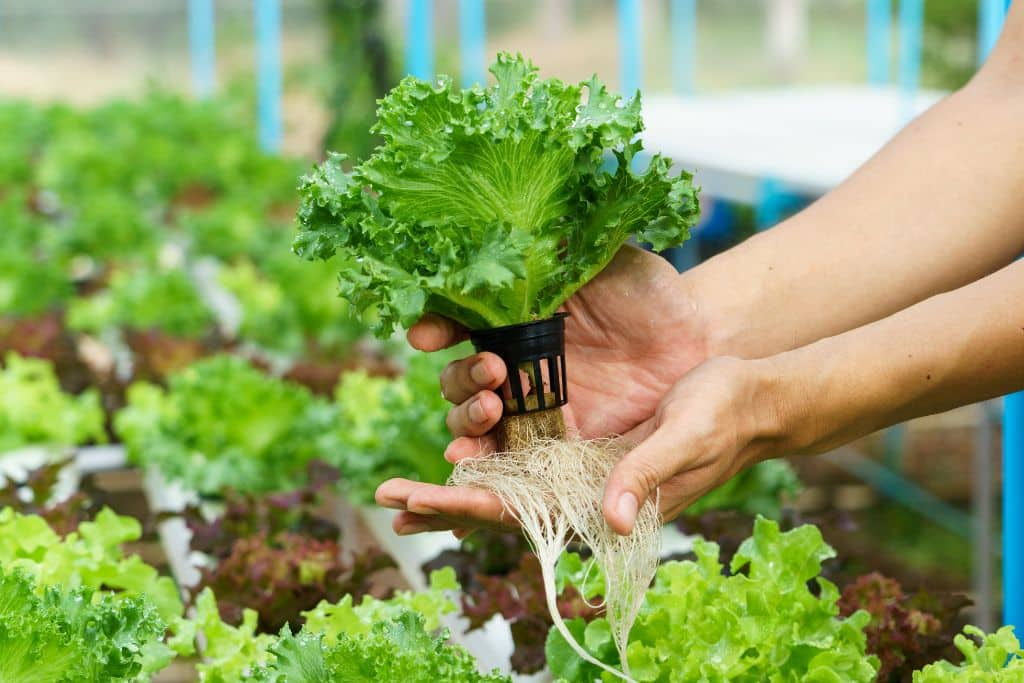
Fertigation is widely used in greenhouse and hydroponic systems, where precise control over growing conditions is essential.
In these environments, fertigation is often integrated with climate control and irrigation systems, creating a fully managed growing environment. This integration allows growers to optimize both resource use and crop performance.
As operations scale up, the role of fertigation becomes even more important, not just for efficiency, but for maintaining consistency across production cycles.
Final Thoughts
Fertigation represents a shift from traditional fertilization toward a more controlled and efficient system.
By delivering nutrients more precisely, reducing waste, and simplifying operations, it allows growers to improve both productivity and cost management.
For many commercial growers, fertigation is no longer an optional upgrade. It has become a standard part of modern agricultural systems.