跳至内容
跳至内容 
Pest management is one of the greatest challenges in greenhouse production. The choice between biological and chemical control affects not just your pest control budget, but your crop quality, worker safety, export compliance, and environmental impact.
For greenhouse construction and climate control systems that support effective pest management, see Fangcheng ventilation solutions.
Pest Control Philosophy
Modern greenhouse pest management has evolved from “spray and pray” to strategic Integrated Pest Management (IPM). The EPA Integrated Pest Management principles provide the framework: prevention first, monitoring second, and intervention — preferably biological — as the last resort.
Biological Control
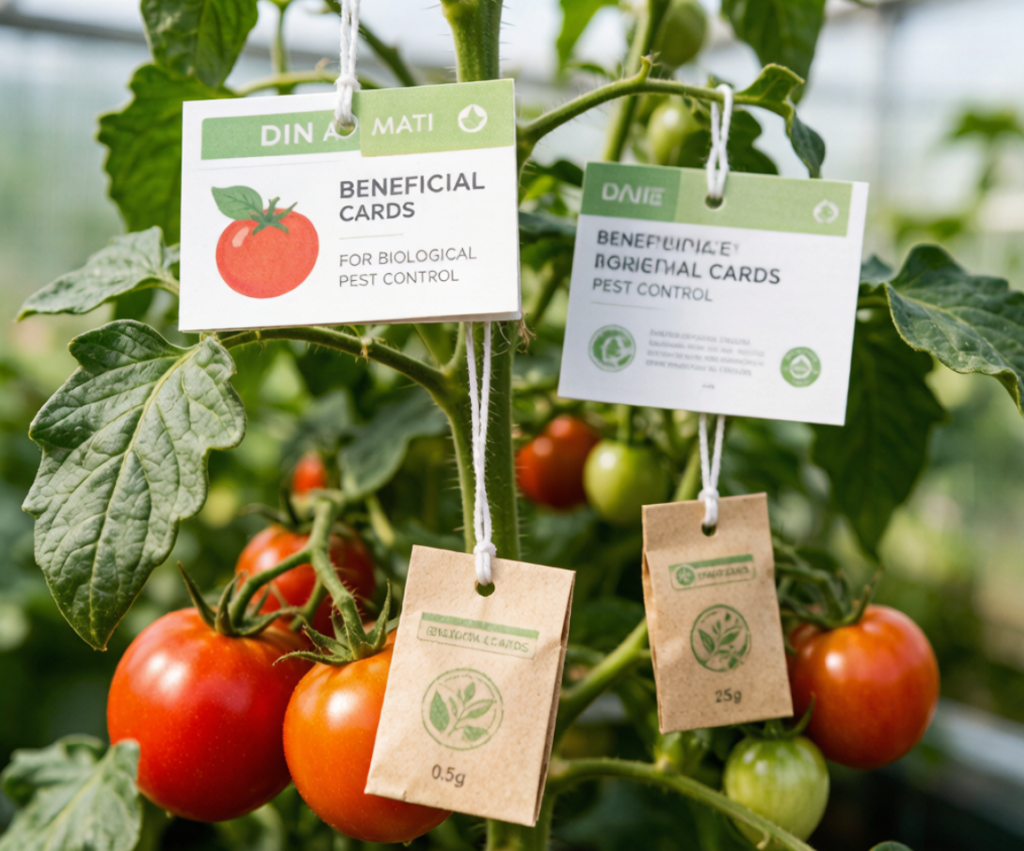
Nature’s pest control: Biological control uses living organisms — predators, parasitoids, and pathogens — to suppress pest populations. Once established, a biological control system can be self-sustaining, requiring only periodic monitoring and occasional augmentation.
Key benefits: No chemical residues on crops, zero pre-harvest interval (PHI), no worker re-entry restrictions, pests cannot develop resistance to predators, supports organic certification, and improves export market access (exporting countries often reject detectable pesticide residues).
Chemical Control
Chemical pesticides include both synthetic compounds (organophosphates, pyrethroids, neonicotinoids) and organic-approved options (neem oil, spinosad, Bacillus thuringiensis, insecticidal soaps). Chemical control provides rapid knockdown of pest outbreaks and is essential when biological control alone is insufficient.
Key benefits: Fast-acting, predictable results, relatively low cost per application, effective against severe infestations.
Beneficial Insects Guide (Common Greenhouse Pests vs Controls)
| Pest | Biological Control | Selective Chemical |
|---|---|---|
| Whitefly | Encarsia formosa (parasitic wasp) | Insecticidal soap, pyriproxyfen |
| Spider mites | Phytoseiulus persimilis (predatory mite) | Abamectin, fenpyroximate |
| Aphids | Aphidius colemani (parasitic wasp), ladybugs | Flonicamid, pymetrozine |
| Thrips | Amblyseius cucumeris, Orius insidiosus | Spinosad, chlorfenapyr |
| Fungus gnats | Dalotia coriaria (rove beetle), Bti | Pyrethrin drench |
| Caterpillars | Bacillus thuringiensis (Bt) | Chlorantraniliprole |
Comparison Table
| Factor | Biological Control | Chemical Control |
|---|---|---|
| Speed of action | Slow (days to establish) | Fast (hours to days) |
| Resistance risk | Very low (co-evolution) | High (pesticide resistance) |
| Crop residues | None | Yes — PHI must be observed |
| Worker safety | Safe | PPE required, re-entry intervals |
| Export compliance | No residue issues | MRL limits, testing required |
| Cost — initial | $0.01-0.05/sq ft | $0.005-0.02/sq ft |
| Cost — long-term | Declining (self-sustaining) | Stable to increasing (resistance) |
Integrated Pest Management (IPM)
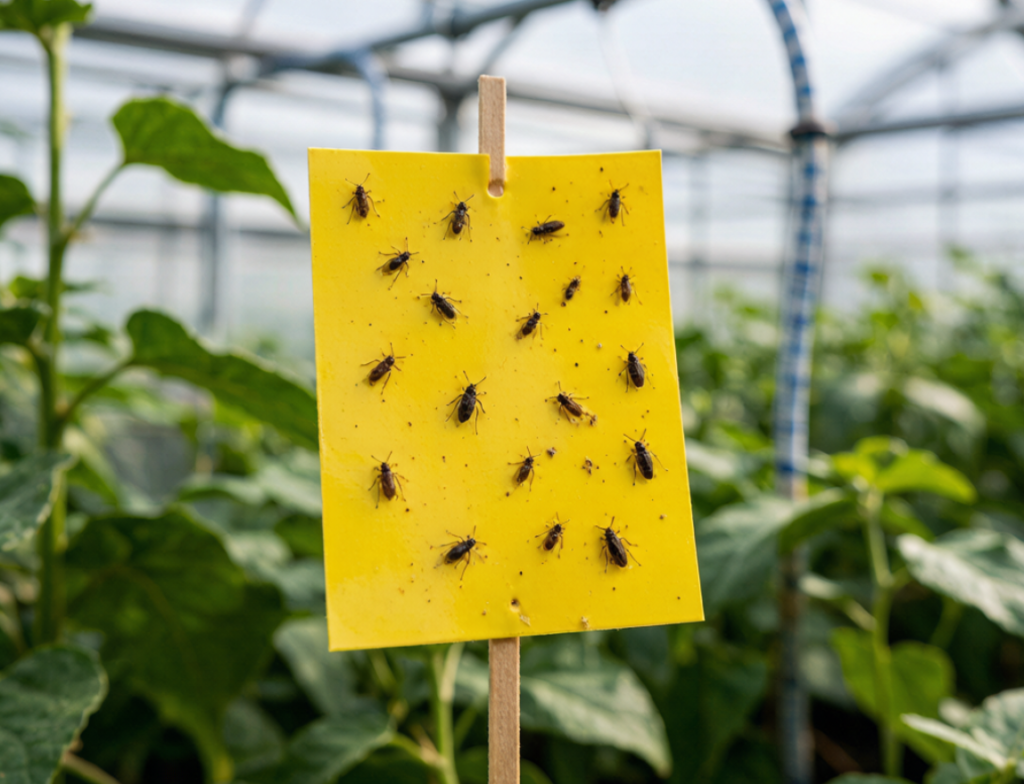
IPM combines biological and chemical control with monitoring, prevention, and cultural practices. The key principle: use the least toxic method that will effectively control the pest. Start with prevention (sanitation, screening, climate management). Monitor with sticky cards and scouting. Introduce biological controls preventatively. Use selective chemicals only when monitoring indicates pest thresholds are exceeded.
Cost Analysis
Biological program (1 acre greenhouse, year 1): $2,000-5,000 for beneficial insect establishment including monitoring. After year 1: $1,000-2,000/year. Chemical program (1 acre): $500-2,000/year depending on pest pressure and product choice. IPM program: Typically $1,500-3,500/year — higher than chemical-only initially but lower long-term due to reduced resistance development and fewer crisis sprays.
Resistance Management
Pesticide resistance is a growing crisis in greenhouse production. Spider mites, whitefly, thrips, and aphids have all developed resistance to multiple pesticide classes. Rotating pesticide modes of action, using biological controls, and maintaining refuge populations of susceptible pests are essential resistance management strategies.
FAQ
Biological vs chemical control?
Biological uses living organisms — self-sustaining, residue-free, but slower. Chemical provides fast knockdown but resistance is a growing problem.
Most effective approach?
IPM — integrate both methods strategically. Use biological preventatively, chemicals only when needed.
Common beneficial insects?
Encarsia (whitefly), Phytoseiulus (mites), Aphidius (aphids), Amblyseius (thrips).
Can they be used together?
Yes, with careful planning. Use selective pesticides that spare beneficials. Check compatibility charts.
Is biological control more expensive?
Initially yes. Long-term: comparable or lower due to reduced sprays and no resistance management costs.
Conclusion
The most effective greenhouse pest management strategy is IPM — integrating biological and chemical controls based on monitoring data. Biological control offers sustainable, residue-free pest suppression ideal for organic and export-oriented operations. Chemical control remains essential for rapid response to outbreaks. By understanding both approaches and implementing them strategically, growers can protect their crops, workers, and market access.