Table of Contents
Hydroponic greenhouses are often promoted as high-efficiency production systems. However, commercial yield is not determined by hydroponics alone.
True commercial performance depends on how well structure, climate control, irrigation engineering, and automation are integrated into one coordinated system.
Designing a hydroponic greenhouse for commercial yield requires a systematic, engineering-driven approach — not simply selecting a hydroponic method.
1. Define Commercial Yield Targets Before System Design
Before choosing any equipment or structure, define:
Target crop type (leafy greens, tomatoes, cucumbers, herbs, berries)
Annual yield goal (kg/m²/year)
Production cycle frequency
Market delivery schedule
Labor availability
Commercial yield planning should answer:
What output must the facility achieve per square meter per year?
System design should always be yield-driven — not technology-driven.
2. Choosing the Right Hydroponic System
Different hydroponic methods support different commercial objectives.
Comparison of Major Hydroponic Systems
| System Type | Best For | Yield Potential | Technical Complexity | Maintenance Level |
|---|---|---|---|---|
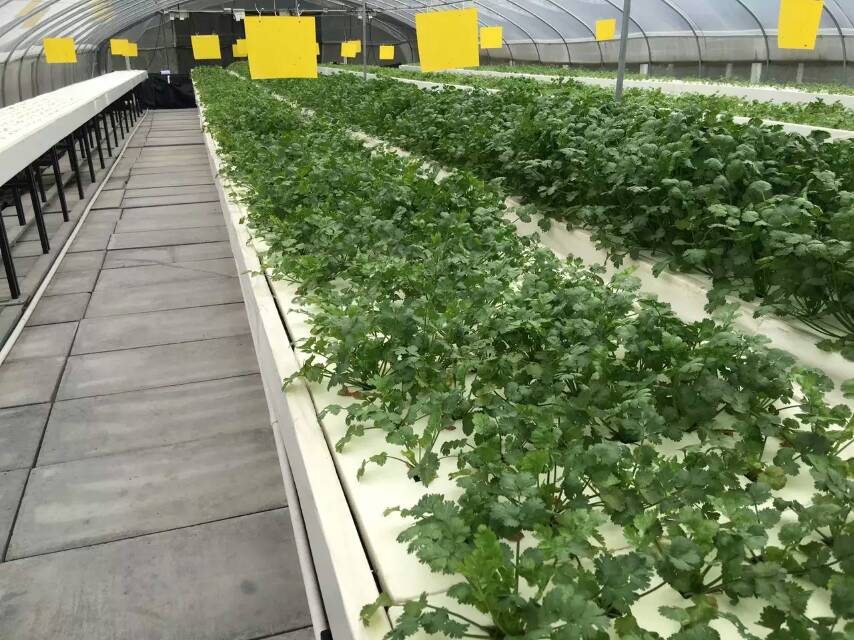
| NFT (Nutrient Film Technique) | Leafy greens | High per m² | Moderate | Moderate |
| DWC (Deep Water Culture) | Lettuce & herbs | Stable, consistent | Low–Moderate | Low |
| Ebb & Flow | Mixed crops | Flexible | Moderate | Moderate |
| Drip Irrigation (Substrate-based) | Tomatoes, cucumbers, peppers | Very High | Higher | Higher |
| Aeroponics | High-value crops | Very High | High | High |
Key Consideration:
Leafy crop facilities prioritize density and fast turnover.
Vine crops require structural support and irrigation precision.
System selection must align with:
Crop physiology
Labor capacity
Desired automation level
Water recirculation strategy
3. Greenhouse Structural Engineering Considerations
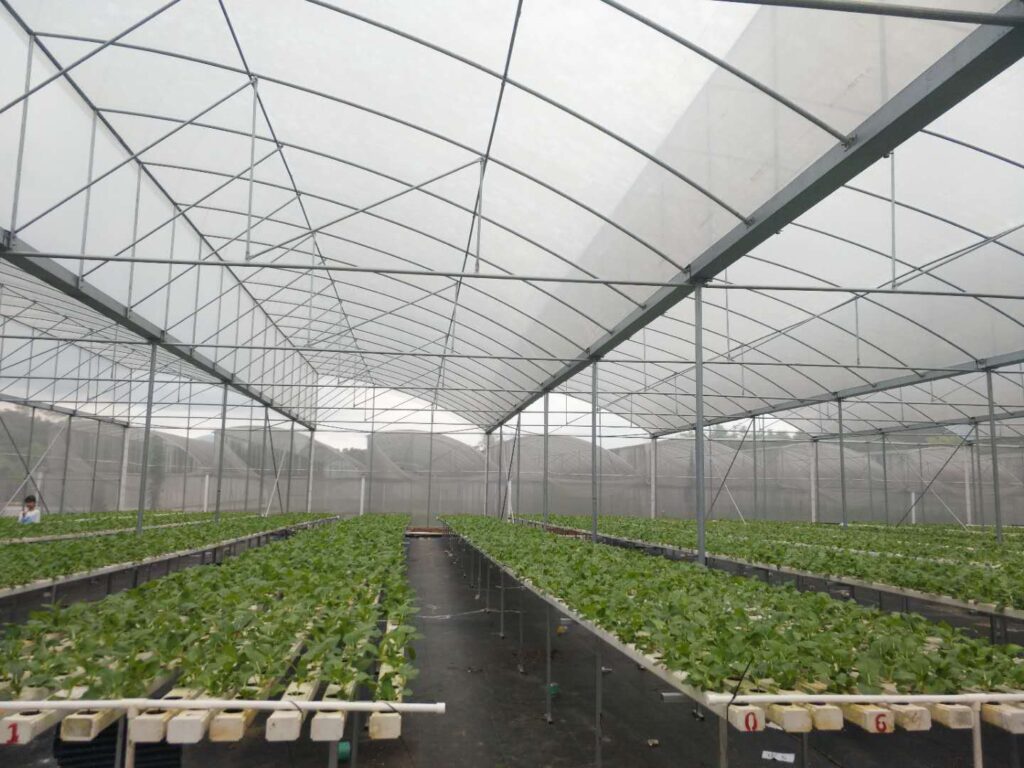
Hydroponics performs best in stable environments. Structural design directly affects environmental consistency.
Critical Structural Factors
Wind load and snow load compliance (region-specific)
Light transmission performance (glass vs polycarbonate vs film)
Structural height (affects air stratification)
Gutter height for vine crop systems
Integration points for irrigation and lighting systems
Covering Material Comparison
| Material | Light Transmission | Thermal Insulation | Lifespan | Best Climate Use |
|---|---|---|---|---|
| Glass | Very High | Low | 20+ years | Temperate regions |
| Polycarbonate | High | Moderate–High | 10–15 years | Mixed climates |
| Plastic Film | Moderate–High | Moderate | 3–7 years | Cost-sensitive regions |
Structural decisions influence:
Light uniformity
Energy efficiency
Ventilation effectiveness
Long-term durability
A hydroponic system cannot compensate for structural weaknesses.
4. Climate Control System for Yield Stability
Yield variability in hydroponic greenhouses is usually linked to environmental instability.
Core Environmental Parameters
Temperature (°C)
Relative humidity (%)
CO₂ concentration (ppm)
Air exchange rate (CFM)
Heating load (BTU)
Improper design leads to:
Uneven transpiration
Nutrient uptake imbalance
Disease pressure
Reduced fruit set
Global Climate Design Considerations
| Climate Type | Primary Challenge | Design Priority |
|---|---|---|
| Hot & Arid | Excess heat | Cooling pads + high ventilation rate |
| Tropical | High humidity | Dehumidification + airflow |
| Cold | Heat retention | Insulation + heating load calculation |
| Mixed | Seasonal extremes | Adaptive climate systems |
Climate engineering must be calculated — not estimated.
5. Water & Nutrient Management Engineering
Hydroponic yield depends heavily on nutrient precision.
Design Components
Reservoir sizing (based on system volume & crop load)
Pump capacity (flow rate stability)
EC and pH monitoring systems
Filtration and sterilization
Water temperature regulation
Recirculation vs Drain-to-Waste
| System Type | Water Efficiency | Disease Risk | Nutrient Control |
|---|---|---|---|
| Recirculating | High | Moderate | High control required |
| Drain-to-Waste | Lower | Lower | Simpler control |
Commercial yield improves when:
Nutrient consistency is stable
Water temperature is controlled
System downtime is minimized
6. Lighting Strategy for Commercial Production
In many global markets, natural light is insufficient for year-round yield optimization.
Supplemental lighting considerations:
Crop-specific photoperiod
LED spectrum tuning
Energy consumption modeling
Light uniformity mapping
Lighting decisions directly affect:
Growth rate
Fruit size
Harvest timing
7. Automation & Monitoring Systems
Modern hydroponic greenhouse systems rely on real-time data.
Core Automation Components
Environmental sensors
Irrigation timers & nutrient dosing units
Climate control integration
Data logging & remote monitoring
Automation reduces:
Labor dependency
Human error
Nutrient variability
Yield stability increases with monitoring precision.
8. Cost vs Yield Optimization
Design decisions must balance CAPEX and OPEX.
Major Cost Categories
Structural construction
Hydroponic equipment
Climate control systems
Lighting
Automation
Installation labor
Yield-Driven ROI Model
Commercial hydroponic facilities typically evaluate:
kg/m²/year output
Revenue per crop cycle
Energy cost per kg
Payback period
5–10 year lifecycle value
Well-designed integrated systems usually outperform low-cost fragmented setups in long-term profitability.
Conclusion: Integrated Engineering Drives Commercial Yield
A hydroponic greenhouse is not defined by its growing channels — it is defined by how structure, climate, water management, and automation work together.
Commercial yield is the result of:
Engineering-based structural design
Precise environmental control
Optimized nutrient delivery
Data-driven automation
Long-term operational planning
When these systems are integrated from the design stage, hydroponic greenhouses achieve higher yield stability, better energy efficiency, and stronger return on investment.