Sawtooth Greenhouse
The sawtooth greenhouse features a modern appearance, stable structure, and excellent light transmission of over 90%. With roof vents positioned at each span, it enables efficient natural ventilation by releasing hot air through thermal buoyancy, effectively reducing internal temperature and humidity. This design makes it well suited for flower cultivation and seedling production.
Service Support
- Greenhouse Design & Engineering
- Greenhouse Manufacturing
- System Supply & Integration
- Installation Guidance & Technical Support
What can I get?
Please leave your contact email, and one of our professional greenhouse engineers will reach out to you within 24 hours.
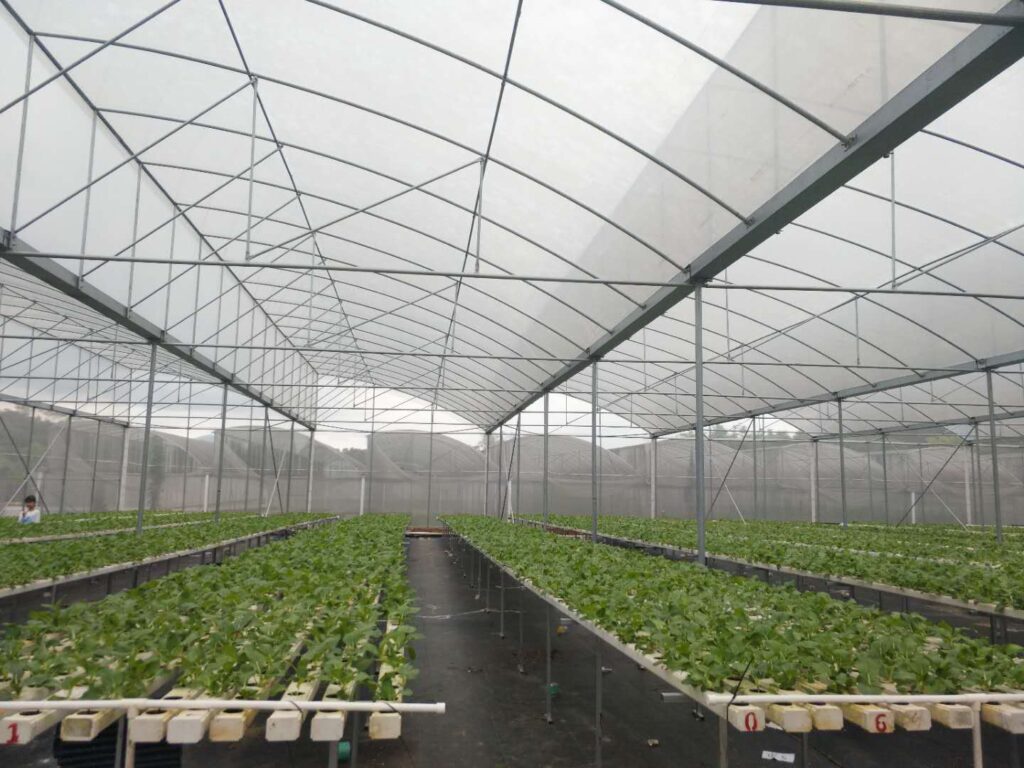
A sawtooth greenhouse is a greenhouse structure designed specifically to improve natural ventilation. Its roof shape allows hot air to escape efficiently, making it a reliable solution for crop production in warm or mixed climates. Because of its simple logic and stable performance, the sawtooth greenhouse is widely used in flower cultivation, nurseries, and commercial planting projects.
This guide explains how a sawtooth greenhouse works, where it performs best, and how it compares with smaller sawtooth designs.
What Is a Sawtooth Greenhouse?
A sawtooth greenhouse is defined by its single-slope roof combined with continuous roof vents. When multiple spans are connected, the roof forms a repeating sawtooth profile. Each “tooth” includes an opening at the highest point of the structure, allowing warm air to exit naturally.
Most sawtooth greenhouses use plastic film as the covering material and hot-dip galvanized steel as the main structure. This combination keeps construction costs reasonable while maintaining good durability and light transmission.
How Natural Ventilation Works in a Sawtooth Greenhouse
The performance of a sawtooth greenhouse is based on a simple physical principle: hot air rises.
As sunlight heats the interior space, warm air accumulates near the roof. The sawtooth roof vents are positioned exactly at this highest point, allowing hot air to escape continuously. At the same time, cooler outside air enters through side roll-up vents, creating a steady airflow cycle.
Compared with greenhouses that rely mainly on side ventilation, this roof-based airflow is more efficient and more evenly distributed, especially during hot weather.
Structural Design and Materials
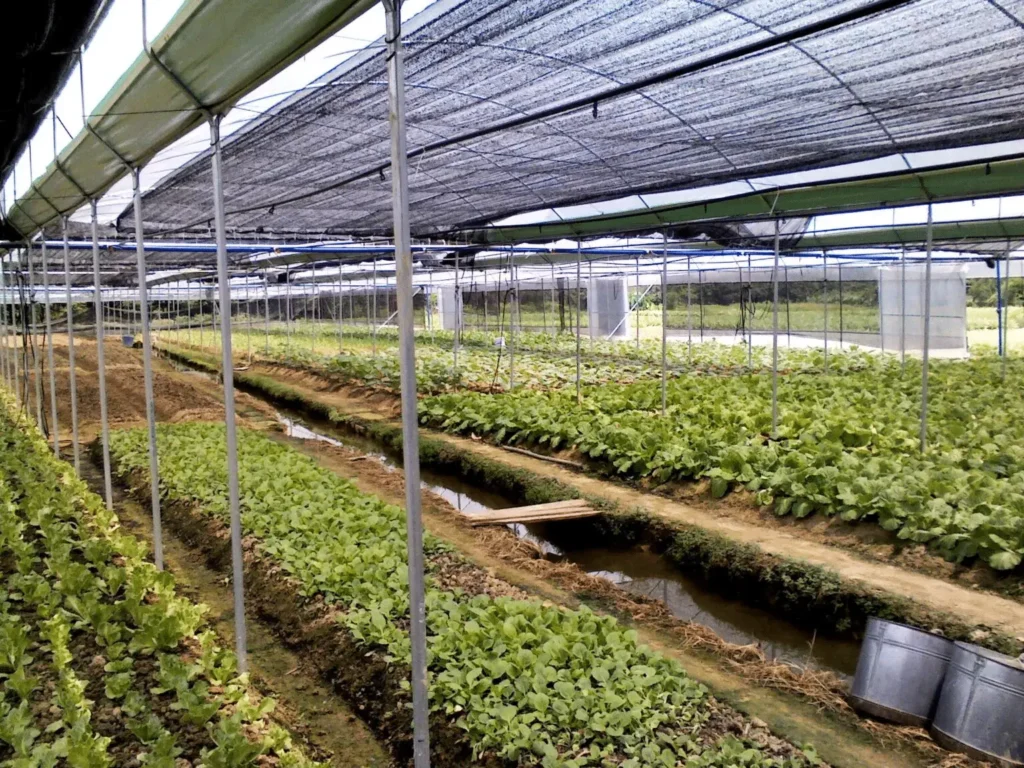
-1024x768.jpg)
Sawtooth greenhouses typically use a mono-slope continuous steel frame, assembled from prefabricated components. This structure provides good stability while keeping the interior space open and easy to manage.
The steel components are usually hot-dip galvanized to protect against corrosion. Column spacing and span width are designed according to local wind and load requirements.
High-transparency PE or PO film is commonly used as the covering material, allowing light transmission to exceed 90%. Polycarbonate panels are often applied at doors or end walls to improve strength and service life.
Light Environment and Crop Conditions
Good light transmission is one of the key advantages of a sawtooth greenhouse. The film covering allows sunlight to enter evenly, while the roof angle helps reduce excessive condensation.
Because ventilation is continuous, humidity levels are easier to control. This creates a healthier growing environment and reduces the risk of disease, which is especially important for flowers and seedlings.
System Integration and Optional Equipment
Although natural ventilation is the core feature, sawtooth greenhouses can still integrate additional systems when required.
Common options include:
Manual or motorized side roll-up vents
External or internal shading systems
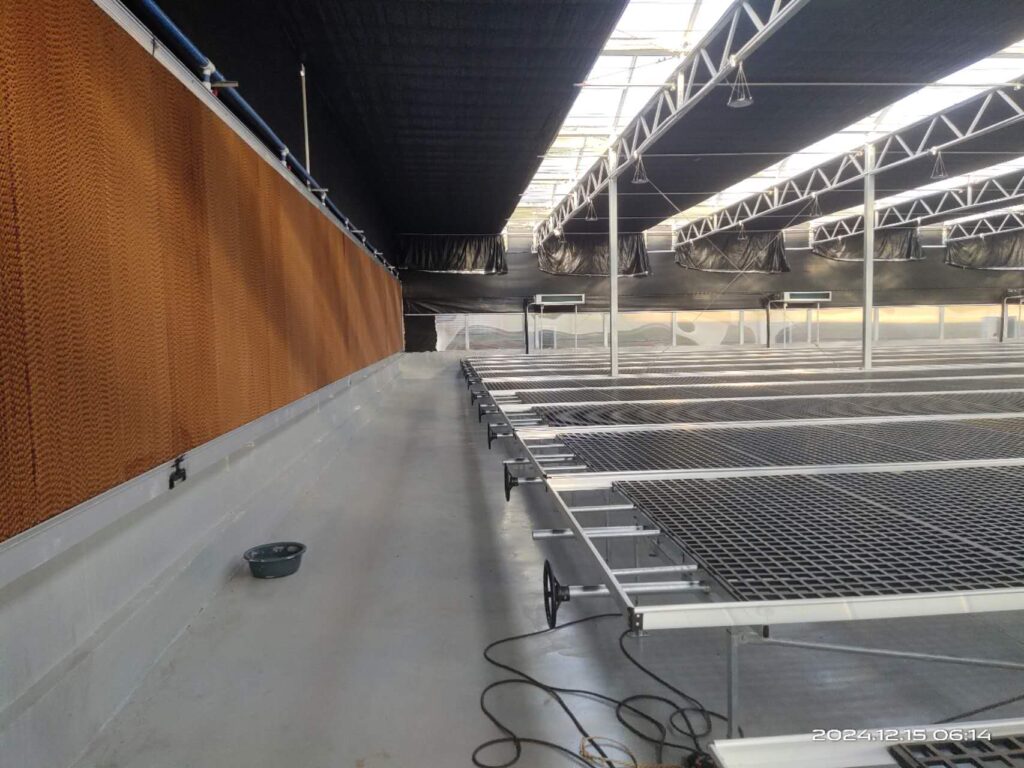
Cooling pad and exhaust fan systems
Internal circulation fans
These systems are often used selectively, allowing growers to balance investment cost with environmental control needs.
Sawtooth Greenhouse vs. Small Sawtooth Greenhouse
A small sawtooth greenhouse uses the same ventilation principle but on a reduced scale. It is often applied in limited land areas, demonstration projects, or small nurseries.
Small sawtooth greenhouses are easier to install and require lower initial investment, but their interior volume and ventilation capacity are limited.
A full-scale sawtooth greenhouse, especially in a multi-span configuration, offers larger interior space, more stable airflow, and better suitability for centralized management. It is more appropriate for commercial production and long-term operation.
In practice, the choice depends on project scale and production goals rather than structure alone.
Typical Applications
Sawtooth greenhouses are commonly used for:
Flower cultivation
Seedling and nursery production
Vegetable growing in warm regions
Agricultural research and demonstration projects
They are especially effective where natural ventilation is preferred over intensive mechanical cooling.
Installation and Maintenance
Installation is usually carried out using bolted, prefabricated components, which improves construction efficiency and consistency. The modular design also makes future expansion easier.
Maintenance mainly involves checking the ventilation system, film tension, and structural connections. The steel structure offers long service life, while the film covering can be replaced periodically at relatively low cost.
Is a Sawtooth Greenhouse the Right Choice?
A sawtooth greenhouse is not ideal for every climate. In cold regions where heat retention is the primary concern, other greenhouse types may perform better.
However, for projects that prioritize natural ventilation, stable airflow, and energy efficiency, the sawtooth greenhouse remains one of the most practical and proven solutions.
Final Thoughts
The sawtooth greenhouse is a design driven by function rather than complexity. Its structure is simple, but its ventilation performance is highly effective.
For growers and project developers operating in warm or mixed climates, a well-designed sawtooth greenhouse provides a reliable balance between performance, cost, and long-term usability.
Sawtooth Greenhouse Specifications
Technical Parameters
Span options: 9.6 m / 10.8 m / 12 m; Bay width: 4 m
Eave height: 3.5 m; Ridge height: 5 m; External shading height: 5.6 m
Side column spacing: 2 m; Arch spacing: 2 m
Performance Specifications
Wind load capacity: 0.56 kN/m² (equivalent to Beaufort scale 11)
Crop load: 15 kg/m²
Maximum rainfall drainage capacity: 140 mm/h
Standard Configuration
Greenhouse civil works: foundation, surrounding brick walls, and drainage channels
Main steel structure: prefabricated, hot-dip galvanized for corrosion resistance
Covering materials: 5 mm PC hollow sheets for doors; 0.15 mm plastic film for other areas
Roof vents: motorized roll-up film system with an opening height of approximately 1.5 m
Side vents: manual roll-up film system with a roll-up height of approximately 2.5 m
External shading system: motorized rack-and-pinion drive mechanism
Cooling system: cooling pad and exhaust fan system, with internal circulation fans
Key Features
The greenhouse adopts a mono-slope sawtooth continuous structure with specialized profiles, resulting in a compact structure and a clean, uniform appearance.
Roof roll-up film vents with a height of 1.5 m and 2.5 m high manual side roll-up vents ensure effective air exchange, providing excellent natural ventilation and cooling with low operating costs.
The external movable shading system allows flexible adjustment of light intensity and internal temperature.
Hot-dip galvanized steel components offer strong corrosion resistance and long-term durability.
Small Sawtooth Greenhouse Specifications
Technical Parameters
Span: 8 m; Bay width: 4 m
Eave height: 3 m; Ridge height: 5.1 m; External shading height: 5.6 m
Side column spacing: 2 m; Arch spacing: 2 m
Performance Specifications
Wind load capacity: 0.6 kN/m² (equivalent to Beaufort scale 11)
Crop load: 15 kg/m²
Maximum rainfall drainage capacity: 140 mm/h
Standard Configuration
Greenhouse civil works: foundation, surrounding brick walls, and drainage channels
Main steel structure: prefabricated, hot-dip galvanized for corrosion resistance
Covering materials: 5 mm PC hollow sheets for doors; 0.15 mm plastic film for other areas
Roof vents: manual roll-up film system with an opening height of approximately 0.7 m
Side vents: manual roll-up film system with a roll-up height of approximately 2.5 m
External shading system: motorized rack-and-pinion drive mechanism
Key Features
The greenhouse frame adopts a single-slope sawtooth continuous structure with specialized profiles, resulting in a more compact structure and a clean, uniform appearance.
Roof roll-up vents with a height of 0.7 m and 2.5 m high manual side roll-up vents ensure effective air exchange, providing excellent natural ventilation and cooling with low operating costs.
1. What is the main advantage of a sawtooth greenhouse?
Its roof vent design allows hot air to escape naturally, providing efficient ventilation and reducing internal temperature without heavy reliance on mechanical cooling.
2. In which climates is a sawtooth greenhouse most suitable?
Sawtooth greenhouses perform best in warm or mixed climates where natural ventilation is essential for controlling heat and humidity.
3. What crops are commonly grown in a sawtooth greenhouse?
They are widely used for flowers, seedlings, and vegetables that require stable airflow and good humidity control.
4. Can additional cooling or shading systems be added?
Yes. Side vents, shading systems, cooling pads, exhaust fans, and circulation fans can be integrated when needed.
5. How does a sawtooth greenhouse compare with a small sawtooth greenhouse?
Small sawtooth greenhouses suit limited-scale projects, while full-scale sawtooth greenhouses offer better ventilation performance and efficiency for commercial production.

2025-03-15
FANGCHENG’s PC greenhouse has been a great investment for us. The structure is strong, the climate is stable, and our crops grow better than before. We no longer worry about wind or constant repairs. Excellent installation and support—highly recommended.

2025-02-08
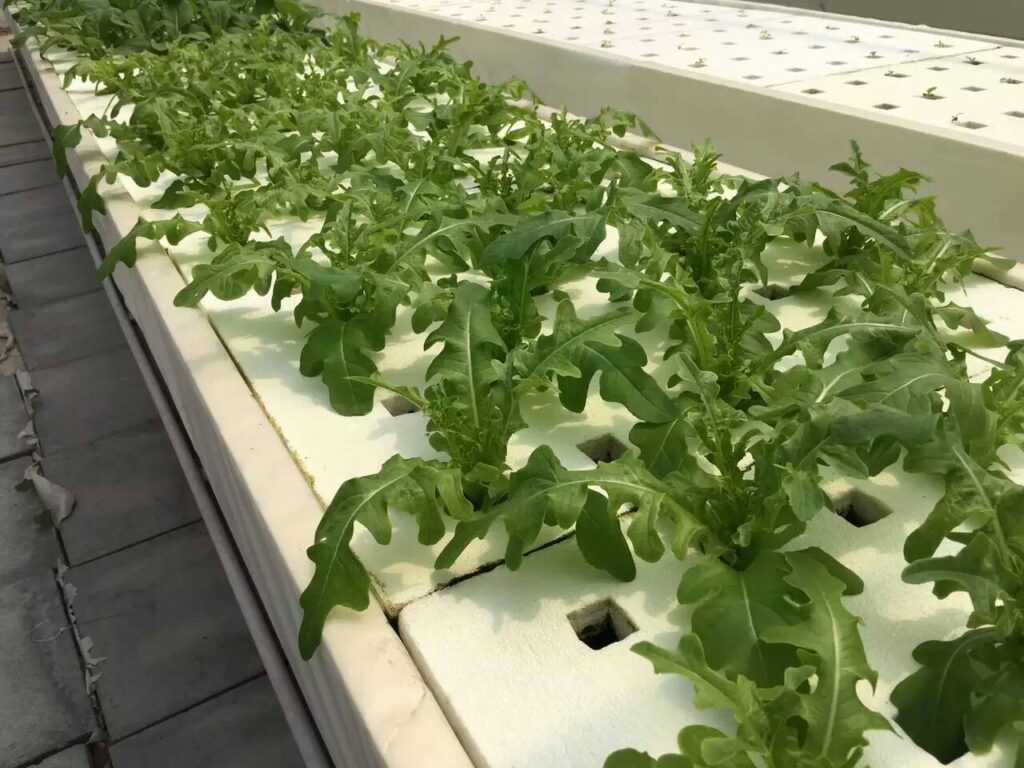
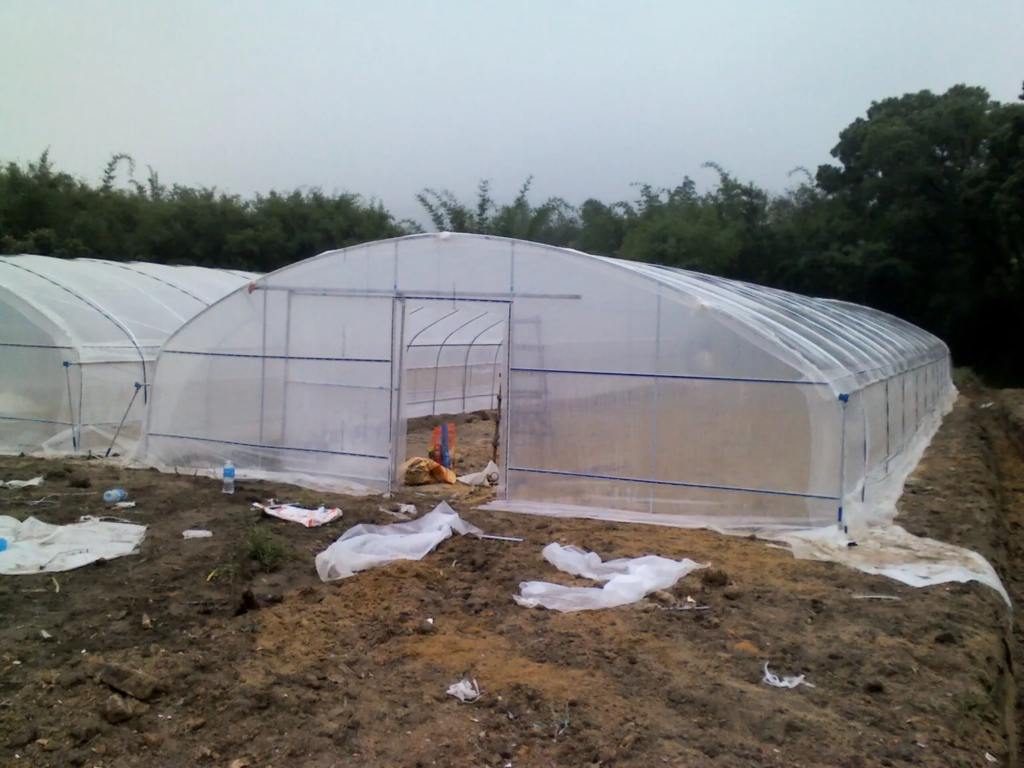
FANGCHENG’s greenhouse has greatly improved the stability of our hydroponic system. Temperature and humidity are much easier to control, and our vegetables grow faster and more uniformly. The structure is clean, well-designed, and perfect for hydroponic production. We’re very satisfied with the performance and support.

2024-06-20
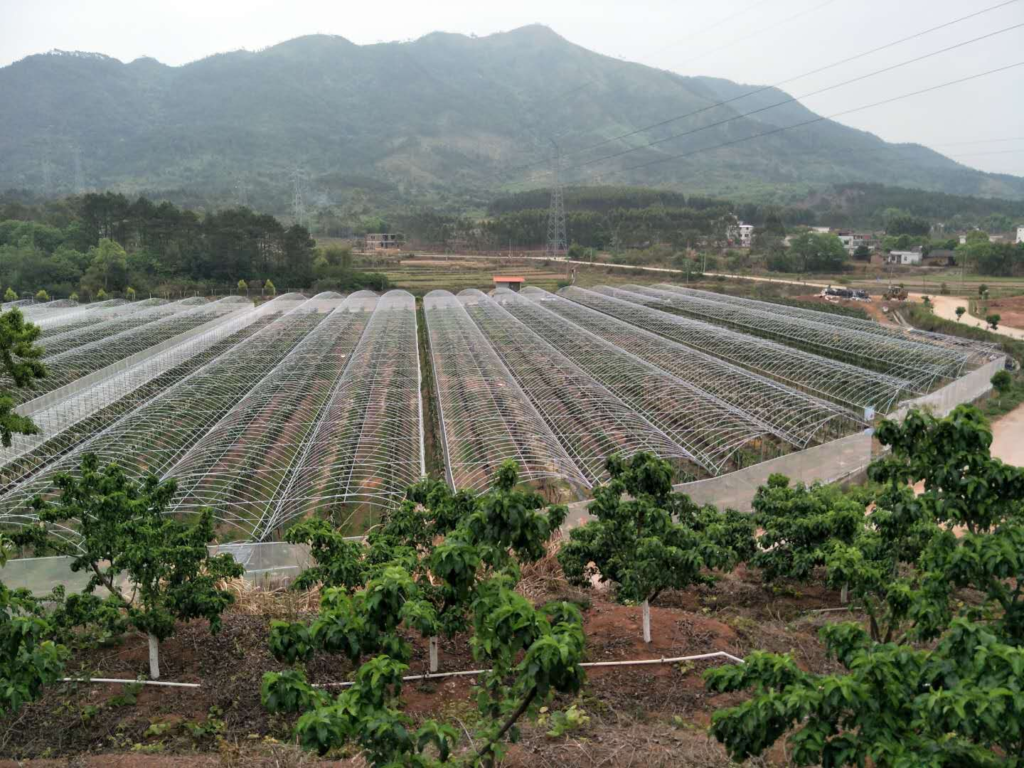
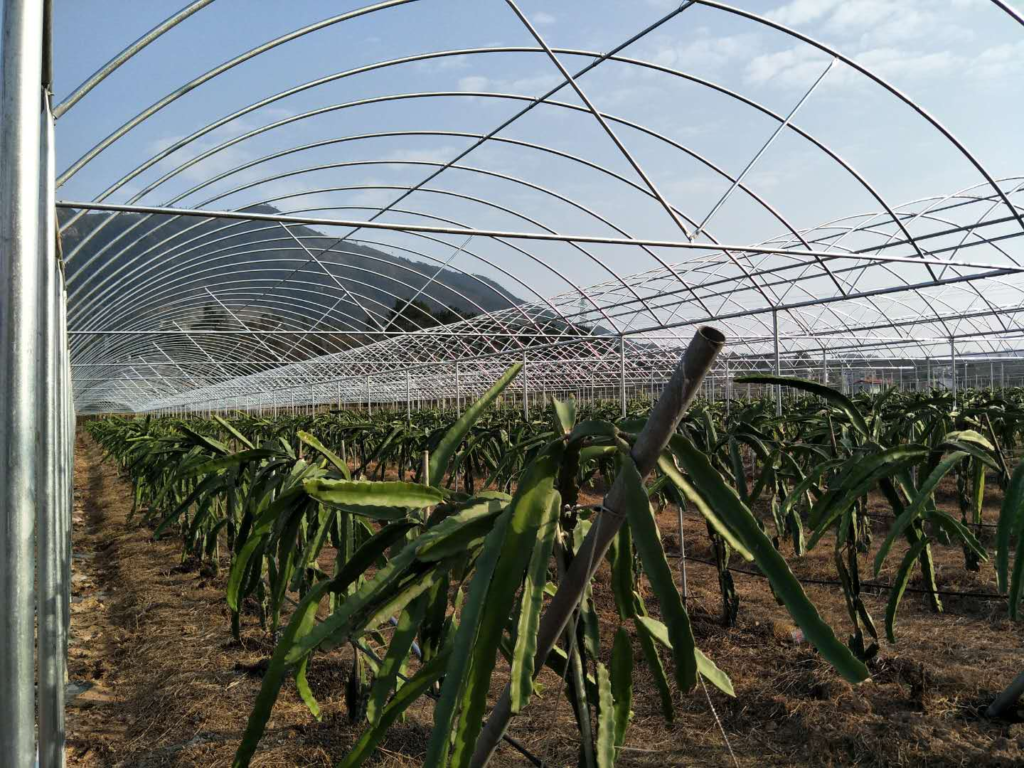
The multi-span greenhouse from FANGCHENG has made our dragon fruit production much more stable. Temperature and humidity are easier to manage, flowering is more consistent, and fruit quality has clearly improved. The structure handles local weather well, and overall, it has been a reliable upgrade for our plantation.

2024-05-25
FANGCHENG’s single-span greenhouse has made our vegetable production much more stable. Temperature and ventilation are easier to control, and our crops grow more uniformly than before. The structure is strong, simple to manage, and a clear improvement over our old setup. We’re very satisfied with the results.

rapid response
Interested in the product? Fill out the form now to get more information.