When planning a greenhouse project, choosing between a poly greenhouse and a glass greenhouse is rarely a simple material decision.
In practice, the right choice depends on climate conditions, crop requirements, budget structure, and how the greenhouse will be operated over time.
Generally speaking, poly greenhouses perform better in variable or harsh climates where insulation, durability, and energy control are critical, while glass greenhouses are better suited to mild environments where light transmission and visual impact are priorities. Understanding these differences early can prevent costly adjustments later in the project.
What Is a Poly Greenhouse?
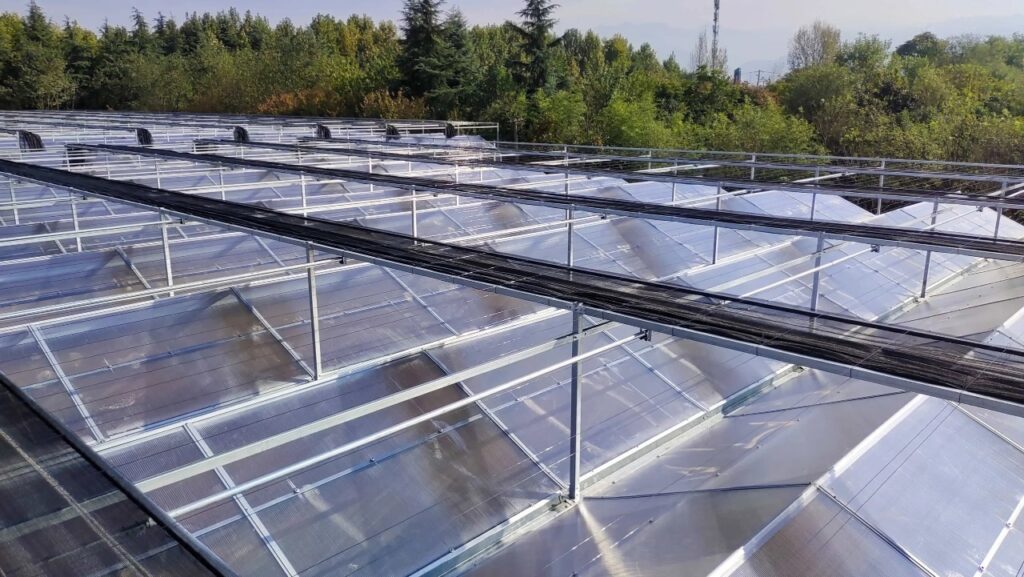
A poly greenhouse typically uses polycarbonate panels—single-wall, twin-wall, or multi-wall—as its glazing material. Unlike glass, polycarbonate is designed to balance light transmission with insulation and impact resistance.
In real-world projects, poly greenhouses are widely used in commercial production and long-term growing operations. The material is lightweight, structurally forgiving, and highly resistant to wind, hail, and accidental impact. These characteristics make poly a reliable option in regions with unpredictable weather or demanding operating conditions.
What Is a Glass Greenhouse?
Glass greenhouses use tempered or insulated glass panels and are known for their high transparency and clean visual appearance. From a design standpoint, glass offers unmatched clarity and a strong architectural presence.
From a project perspective, glass greenhouses are often selected for research facilities, botanical displays, and premium horticultural applications. However, they require precise structural design, careful installation, and more attentive maintenance. As a result, glass is best suited for environments where climate conditions are relatively stable and operational control systems are well established.
Light Performance: Transparency vs. Plant-Friendly Light
Light is one of the most discussed factors when comparing poly and glass greenhouses, but more light is not always better. Glass allows direct sunlight to enter the greenhouse, which can be an advantage in low-light regions or during winter months.
In high-light or warm climates, however, direct sunlight can create hot spots and uneven temperature distribution. Polycarbonate panels diffuse incoming light, spreading it more evenly across the growing area. This often results in more consistent plant growth and easier climate management, especially in commercial operations.
Please leave your contact email, and one of our professional greenhouse engineers will reach out to you within 24 hours.
Insulation and Energy Efficiency
Energy efficiency plays a major role in long-term greenhouse performance. Poly greenhouses benefit from multi-wall structures that trap air and reduce heat loss. This makes temperature control more stable and helps lower heating costs during colder seasons.
Glass greenhouses rely more heavily on additional systems for insulation. While double or insulated glass can improve performance, it also increases construction costs. In cold climates or year-round production projects, energy consumption should be carefully evaluated before selecting glass.
Durability and Maintenance in Real Projects
In operational environments, durability directly affects safety, maintenance frequency, and long-term cost. Polycarbonate is highly impact-resistant and does not shatter, making it suitable for areas with strong winds, hail, or frequent on-site activity.
Glass, while strong when properly installed, is more vulnerable to breakage and requires careful handling. Repairs and replacements tend to be more costly, which is an important consideration for projects operating at scale.
Cost and Long-Term Value
From an initial investment perspective, poly greenhouses are generally more budget-friendly and faster to install. They also allow for easier modifications or future expansion.
Glass greenhouses involve higher upfront costs but offer long-term value in projects where aesthetics, visibility, or controlled research environments are key objectives. The decision should be based not only on construction cost, but also on operating expenses and project lifespan.
Which One Is Right for Your Project?
If your project is located in a region with fluctuating temperatures, strong winds, or cold winters—and if long-term operational efficiency is a priority—a poly greenhouse is often the more practical choice.
If your project is in a mild climate and places strong emphasis on natural light, visual clarity, or architectural presentation, a glass greenhouse can deliver excellent results when paired with proper climate control systems.
Ultimately, the best greenhouse material is the one that aligns with your environment, operating strategy, and long-term goals.