Table of Contents
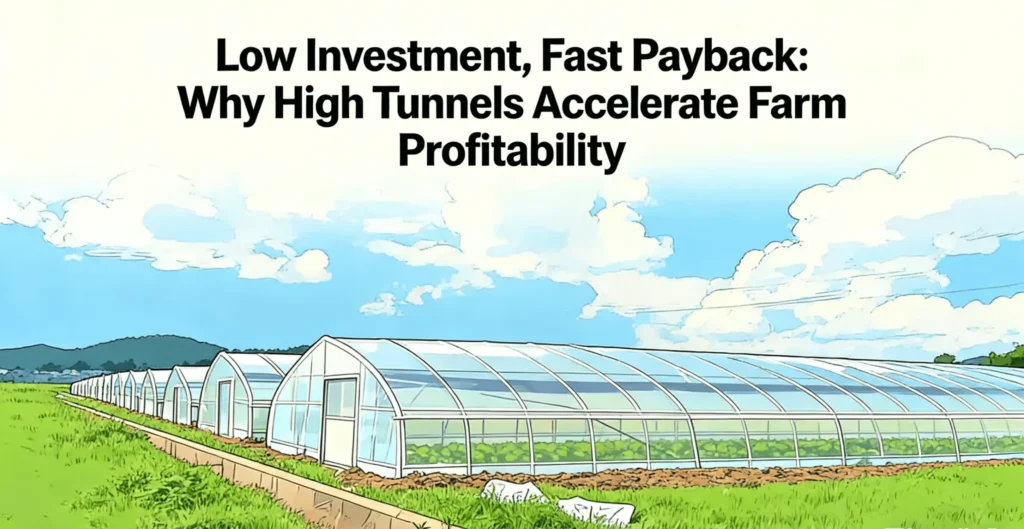
In modern agriculture, profit growth is often limited not by growing skill, but by investment risk and payback time. Not every farm is ready—or needs—to invest in high-cost, fully automated greenhouses. For many growers, the smarter path is to improve production efficiency without overextending capital.
This is where High Tunnels have proven their value. Rather than chasing maximum environmental control, they focus on practical protection and stability. The result is a structure that delivers measurable returns quickly while keeping financial risk low.
What Is a High Tunnel? A Practical Approach to Crop Protection
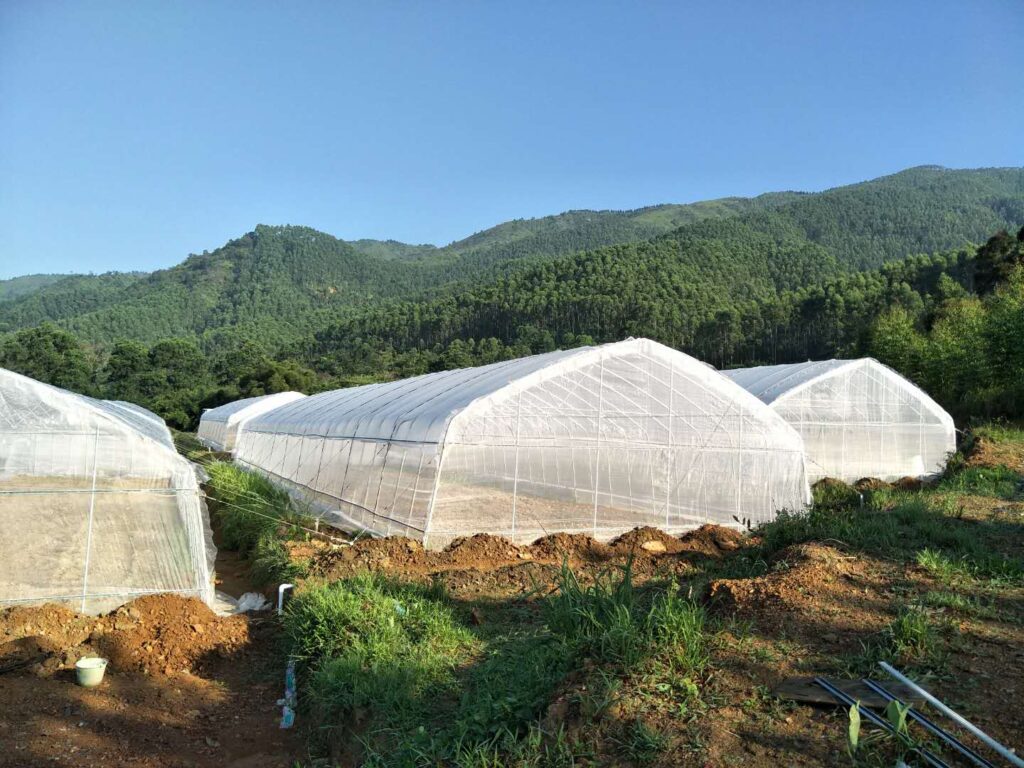
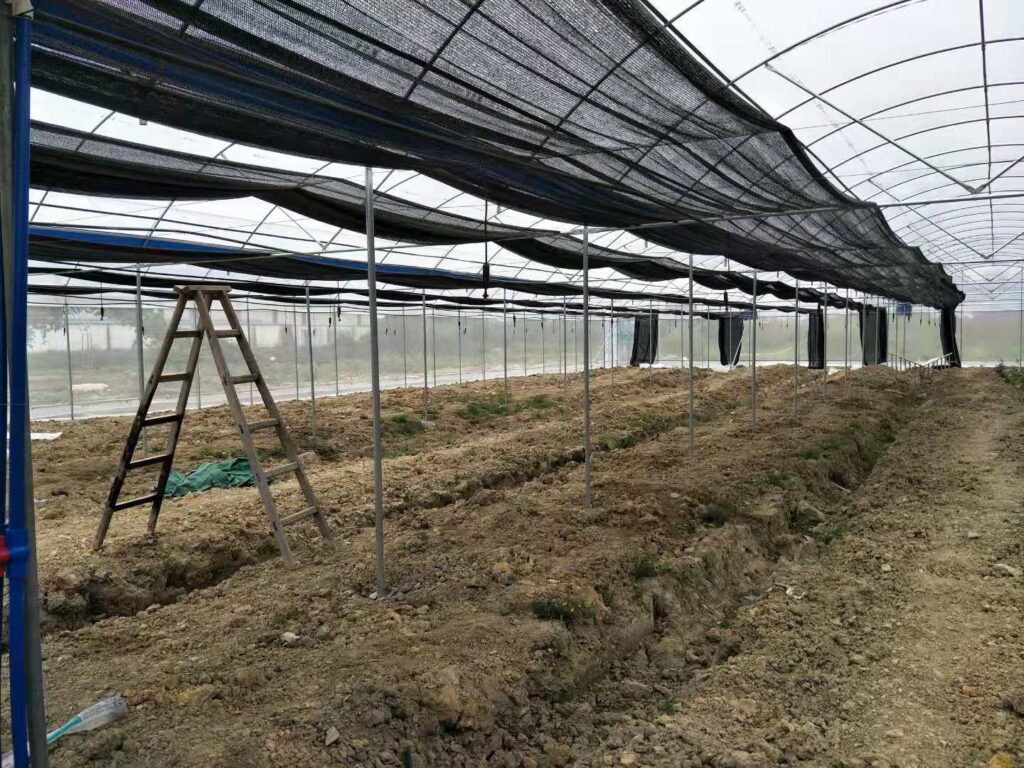
A High Tunnel is typically built with a steel pipe frame covered by a single layer of polyethylene film. The structure is tall and wide enough for people and equipment, making it suitable for commercial production.
Unlike glass greenhouses, High Tunnels are usually unheated and rely on passive solar energy and natural ventilation. Roll-up sidewalls or end vents regulate airflow, helping manage temperature and humidity without complex automation.
At its core, a High Tunnel is not designed to control nature completely. Instead, it moderates the extremes, creating a more stable microclimate that supports consistent crop growth.
Why High Tunnels Improve Growing Performance
The most immediate benefit of a High Tunnel is season extension. By protecting crops from early spring cold and late fall frost, growers can plant earlier and harvest later, increasing annual production from the same land.
Beyond extending the season, High Tunnels help improve crop quality and consistency by:
Reducing wind and heavy rain damage
Lowering disease pressure caused by prolonged leaf moisture
Producing cleaner, more uniform, market-ready crops
Many growers report that the greatest advantage is not faster growth, but more predictable outcomes. That predictability translates directly into better planning and stronger market positioning.
High ROI Explained: Small Investment, Targeted Impact
The high return on investment of High Tunnels comes from their focus on essentials. They eliminate many of the costs that do not directly contribute to yield or quality.
Compared with traditional greenhouses, High Tunnels typically require:
No concrete foundation in most installations
Short construction time with minimal disruption
No high-energy heating or advanced automation systems
Because costs are concentrated on effective crop protection rather than full climate control, many farms recover their investment within two to three growing seasons.
Policy Support: Why High Tunnels Are Especially Popular in the U.S.
In the United States, High Tunnels benefit from strong institutional support. Through the NRCS EQIP program, eligible growers can receive financial assistance to install High Tunnels as part of conservation and sustainability initiatives.
For small and medium-scale farms, these incentives significantly lower entry barriers. In some cases, growers can begin protected production with minimal upfront cost, making High Tunnels an ideal first step into controlled-environment agriculture.
Please leave your contact email, and one of our professional greenhouse engineers will reach out to you within 24 hours.
Flexible Construction for Scalable Farm Growth
High Tunnels are well suited to farms that grow in stages rather than all at once. Their modular design allows growers to start small and expand as demand increases.
They also offer practical flexibility:
Structures can be extended in length
Units can be relocated if crop plans change
Layouts adapt easily to different crop rotations
This adaptability helps farms respond to market changes without committing to permanent, high-cost infrastructure.
Conclusion: Not the Most Complex Solution, but Often the Smartest
High Tunnels are not a replacement for advanced glass greenhouses. Instead, they fill a critical role by offering a low-risk, fast-return option for improving farm profitability.
For growers focused on cash flow, scalability, and operational simplicity, High Tunnels are often the most efficient way to strengthen production and reduce risk. That is why they continue to gain traction as a core component of profitable, modern farm systems.