Table of Contents
When developing a commercial greenhouse project, the choice of growing method directly influences production capacity, operational stability, and long-term return on investment.
Many investors ask whether hydroponics is inherently more profitable than soil-based cultivation. The answer is not absolute. Profitability depends on how well the production system aligns with market demand, capital capacity, technical expertise, and environmental conditions.
This article compares hydroponic and soil-based greenhouse systems from a commercial yield and profitability perspective.
Understanding Hydroponic Greenhouse Production
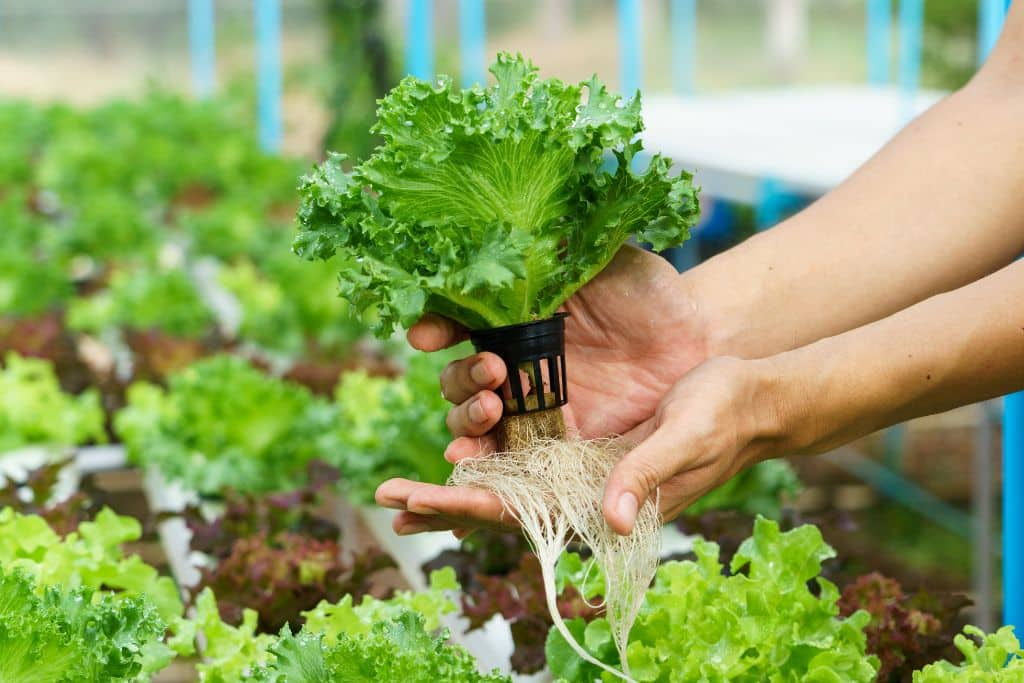
Hydroponic greenhouse systems grow crops without soil, delivering nutrients directly to plant roots through a controlled nutrient solution. In commercial environments, hydroponics is commonly used for leafy greens and vine crops where consistency and density are critical.
The key advantages of hydroponics include:
Precise nutrient control
Higher planting density
Faster crop cycles
Reduced water consumption through recirculation
Under optimized conditions, hydroponic systems can significantly increase yield per square meter. However, this efficiency relies on stable engineering systems. Irrigation accuracy, pump reliability, climate control precision, and continuous monitoring are essential.
Hydroponics is not simply a growing method — it is a system-driven production model.
Understanding Soil-Based Greenhouse Production
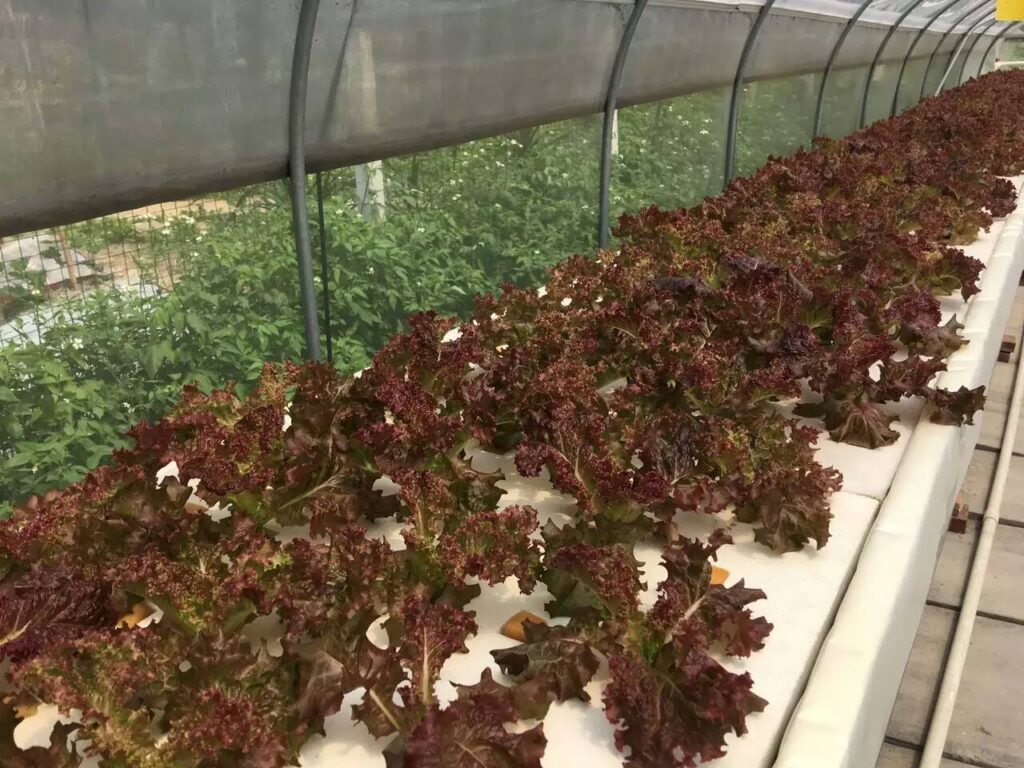
Soil-based greenhouse cultivation follows traditional agricultural principles within a protected structure. Crops are grown in natural or improved soil, supported by irrigation and fertilization systems.
This model generally offers:
Lower initial equipment investment
Simpler operational requirements
Greater tolerance for minor management errors
For regions with abundant land and moderate labor costs, soil-based systems remain economically viable.
However, soil cultivation introduces variability. Soil-borne diseases, uneven nutrient distribution, and long-term soil fatigue can affect consistency and long-term productivity, especially at scale.
-1024x768.jpg)
Yield and Efficiency Comparison
From a commercial standpoint, the most important indicator is annual output per square meter.
Hydroponic systems often support:
Higher crop density
Shorter harvest cycles
Year-round controlled production
This typically results in higher annual yield potential when the system is properly engineered and maintained.
Soil-based greenhouses generally produce moderate yields and may depend more heavily on seasonal variation and soil quality management.
Below is a simplified comparison:
| Factor | Hydroponic Greenhouse | Soil-Based Greenhouse |
|---|---|---|
| Yield per m² | High under optimized control | Moderate |
| Growth Cycle | Shorter | Longer |
| Water Efficiency | Very high (recirculated) | Lower |
| Initial Investment | Higher | Lower |
| Technical Complexity | Higher | Moderate |
| Disease Risk | No soil-borne pathogens | Soil-related risk |
| Scalability | Highly modular | More limited |
Cost Structure and Investment Considerations
Hydroponic greenhouse systems require investment beyond the structure itself. Major capital components often include:
Nutrient delivery and circulation systems
Automated dosing and monitoring equipment
Advanced climate control systems
Supplemental lighting (in some regions)
These increase initial capital expenditure. However, higher yield density and faster turnover can improve revenue potential per square meter.
Soil-based systems concentrate investment on structure, irrigation, soil preparation, and fertilizer inputs. Entry cost is lower, but yield ceiling and production standardization may also be limited.
From a financial modeling perspective:
Hydroponics follows a high-investment, high-efficiency model
Soil cultivation follows a lower-investment, moderate-efficiency model
The more valuable the crop and the stronger the market demand, the more attractive hydroponics becomes.
Market Suitability and Regional Factors
The choice between hydroponic and soil-based systems should reflect regional and commercial realities.
Hydroponic systems are particularly suitable in:
Water-scarce regions
Urban or peri-urban high-value markets
Year-round supply contracts
Areas with high labor costs
Soil-based systems may remain competitive in:
Regions with lower land cost
Markets focused on bulk crops
Projects with limited technical workforce
No system is universally superior — suitability depends on strategic positioning.
What Truly Determines Profitability?
Growing method alone does not guarantee commercial success. Profitability is driven by system integration.
Key performance drivers include:
Structural design and light optimization
Climate control stability
Irrigation precision
Energy efficiency
Operational management capability
A poorly engineered hydroponic system can underperform, while a well-managed soil-based system can remain profitable within its market segment.
Commercial success is achieved when structure, climate, irrigation, and crop strategy are aligned from the design phase.
Conclusion: Profitability Is a Strategic Decision
Hydroponic greenhouses generally offer higher yield potential and resource efficiency, but require stronger capital investment and technical management. Soil-based greenhouses provide lower entry cost and operational simplicity, but may face yield and scalability constraints.
The more important question is not which system is better, but which system aligns with:
Your target market
Your capital capacity
Your operational expertise
Your long-term expansion plan
When engineering design and commercial strategy are integrated properly, both models can achieve sustainable returns.