Table of Contents
When choosing a structure for protected growing, many growers ask the same question:
Should I build a hoop house or a greenhouse?
Although they may look similar at first glance, hoop houses and greenhouses are designed for very different purposes. The key differences lie in structure, climate control, cost, and how long you plan to grow.
This article explains those differences in a clear and practical way.
Structure and Materials
A greenhouse is usually a permanent structure. It uses rigid frames made from galvanized steel, aluminum, or sometimes wood. The covering materials are solid panels, such as glass or polycarbonate sheets. Most greenhouses require a concrete or fixed foundation to support the structure and resist strong wind or snow.
A hoop house, also known as a high tunnel, is a semi-permanent or temporary structure. Its frame is typically made from lightweight steel pipes or PVC pipes, shaped into hoops. The covering is a flexible plastic film, usually polyethylene. Hoop houses are often anchored directly into the ground and can be removed or relocated if needed.
In simple terms, a greenhouse is built to stay in place long-term, while a hoop house is designed for flexibility.
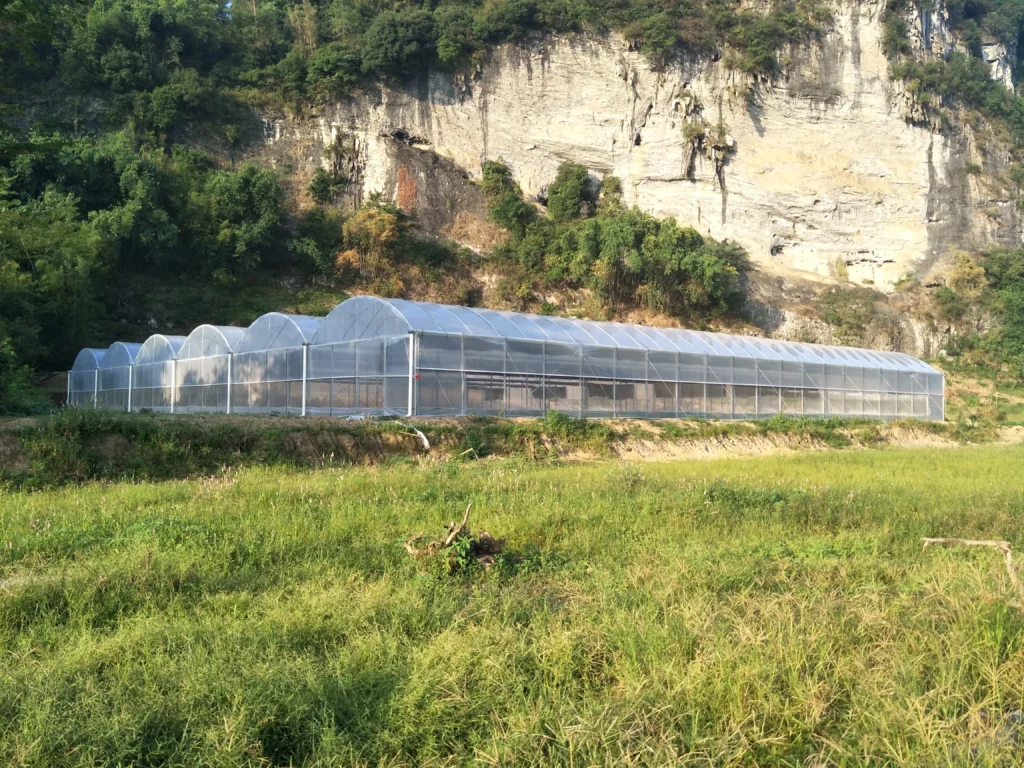
greenhouse
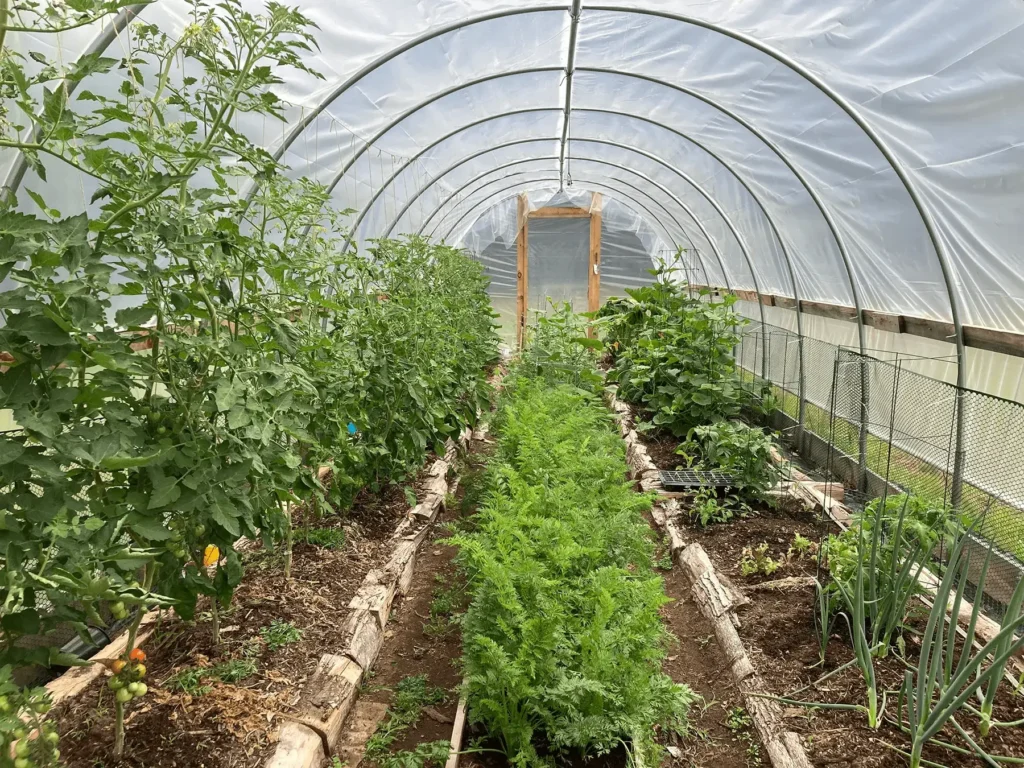
hoop house
Climate Control and Utilities
A greenhouse offers active climate control. It is usually connected to electricity and water. Systems for heating, cooling, ventilation, lighting, and humidity control can be automated. This allows growers to precisely manage the internal environment and reduce the impact of outdoor weather.
A hoop house relies mainly on passive climate control. It uses sunlight for heat and roll-up sides or end walls for natural ventilation. Most hoop houses do not have permanent heating or cooling systems, although some growers use small portable heaters. Because of this, temperature and humidity are harder to control accurately.
This difference is critical when planning winter production or sensitive crops.
Growing Season and Use
A greenhouse is designed for year-round growing. With insulation and heating, it can protect plants during winter and support warm-season crops even in cold climates. Greenhouses are suitable for tropical plants, seedling propagation, hydroponic systems, and bench-based growing.
A hoop house is mainly used to extend the growing season. It allows earlier planting in spring and later harvest in fall. However, in very cold climates, it may not provide enough protection for plants during winter. Hoop houses are commonly used for in-ground crop cultivation rather than benches or hydroponics.
If year-round production is the goal, a greenhouse is usually required.
Please leave your contact email, and one of our professional greenhouse engineers will reach out to you within 24 hours.
Cost and Installation
A greenhouse requires a higher upfront investment. Materials are more expensive, and additional costs come from foundations, utilities, and control systems. Even small greenhouses can start at over USD 1,500, and larger or fully automated systems can cost much more. Installation is more complex and often requires professional support or advanced DIY skills.
A hoop house is much more affordable. The cost per square foot is often only one-eighth to one-tenth of a greenhouse. Many hoop houses fall within a total budget of USD 500 to 2,000. Installation is simple and fast, often completed within hours or a few days.
For growers with limited budgets, hoop houses are an easy entry point.
-1-1024x768.jpg)
Durability and Maintenance
Greenhouses are built for long service life. Polycarbonate panels can last 10–20 years, and glass can last even longer. Maintenance usually involves cleaning panels and servicing equipment. Properly built greenhouses can withstand strong wind and snow loads.
Hoop houses are less durable. Plastic film degrades under UV exposure and weather stress. It typically needs replacement every 4–6 years. In extreme weather, such as heavy snow or strong wind, hoop houses are more vulnerable to damage.
Durability is one of the main trade-offs for lower cost.
Summary: Which One Should You Choose?
A simple way to understand the difference is this:
A hoop house is like a camping tent.
It is light, affordable, movable, and provides basic protection for seasonal use.
A greenhouse is like a house.
It is solid, permanent, and equipped with systems that create a stable environment for year-round growing.
If your goal is to extend the growing season at low cost, a hoop house may be enough.
If you need full climate control and year-round production, a greenhouse is the better choice.