Greenhouse Lighting System
Table of Contents
Why Choose FANGCHENG?
Customizable, professional, and knowledgeable. We produce cost-effective & high-quality commercial greenhouses.
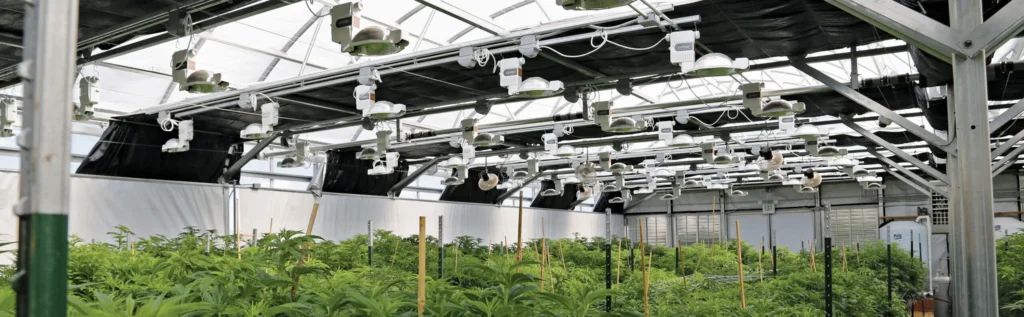
A greenhouse lighting system provides controlled, consistent illumination that supports plant growth when natural sunlight is insufficient. For commercial growers, supplemental lighting is essential for improving yield, maintaining year-round production, and ensuring predictable crop cycles—especially in regions with short days, low winter light, or indoor/vertical setups.
FANGCHENG offers complete lighting solutions tailored to crop type, greenhouse structure, and production goals. From light-intensity planning and fixture selection to system layout and energy-efficiency optimization, FANGCHENG helps growers achieve uniform illumination, faster growth, and stable, high-quality harvests.
Why Lighting Matters
in a Greenhouse
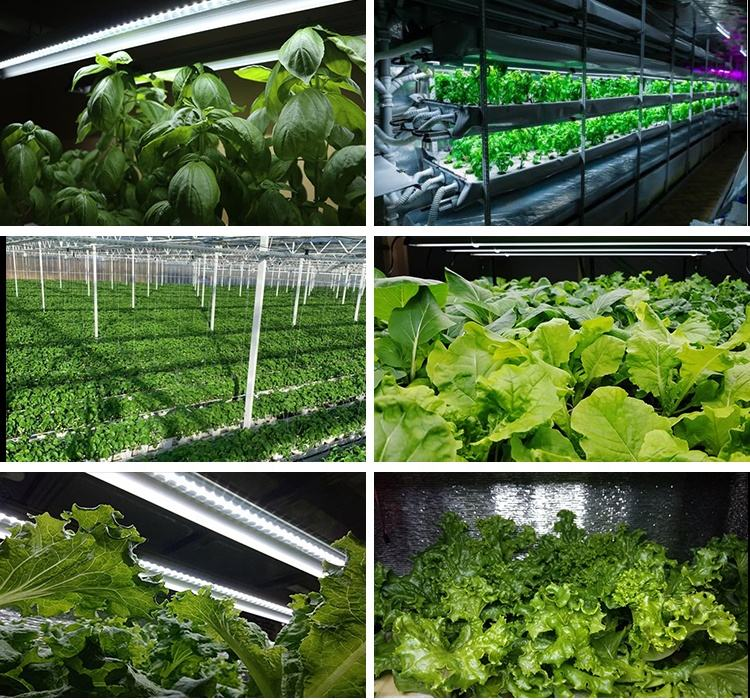
Light is one of the most important factors affecting photosynthesis, plant morphology, flowering, and fruit development. While greenhouses rely primarily on natural sunlight, seasonal and geographical variations often lead to inconsistent light levels. Low light intensity slows growth, reduces yield, and disrupts production schedules. Supplemental lighting compensates for these fluctuations, ensuring crops receive the necessary daily light integral (DLI) to grow efficiently.
Proper lighting becomes even more critical for high-value or light-sensitive crops such as leafy greens, tomatoes, cucumbers, ornamentals, and seedlings. When used correctly, supplemental lighting helps maintain predictable growth rates, uniform plant development, and consistent quality throughout the year.
How Greenhouse Lighting Works
Greenhouse lighting systems are designed to deliver specific light intensity, spectrum, and photoperiod based on the crop’s biological needs. Modern lighting solutions integrate automated controls that adjust output according to real-time sunlight availability. When natural light decreases—cloudy weather, early sunsets, or winter seasons—the system activates to maintain optimal light levels.
The goal is not simply to illuminate the space, but to provide plants with the precise light quality and quantity required for efficient photosynthesis. A well-designed system considers factors such as light distribution uniformity, fixture height, shading impact, heat generation, and electrical consumption.
Types of Lighting
Used in Greenhouses
LED Grow Lighting
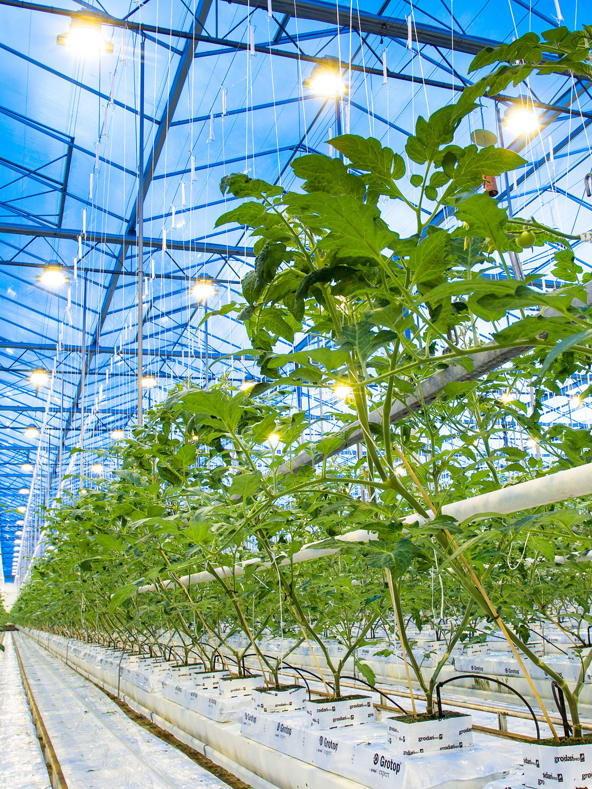
LEDs are the most widely adopted greenhouse lighting option today. They offer high energy efficiency, targeted light spectra, long lifespan, and low heat emission. LEDs can deliver specific wavelengths that trigger vegetative growth, flowering, or rooting. Because they generate minimal heat, they are suitable for year-round close-canopy installations.
High-Pressure Sodium (HPS) Lighting
HPS lamps produce intense light with strong penetration and are historically popular for fruiting crops. Their warm spectrum promotes flowering and fruit production. However, they generate significant heat and consume more energy compared with LEDs, making them more suitable for cold-season heating-assisted applications.
Fluorescent Lighting
Fluorescent lamps—mainly T5 and compact fluorescent types—are used for propagation, young seedlings, and small-scale greenhouse operations. They offer gentle, uniform light but lower intensity compared to LEDs or HPS.
What can I get?
Please leave your contact email, and one of our professional greenhouse engineers will reach out to you within 24 hours.
Key Factors in Designing a
Greenhouse Lighting System
Lighting design begins with understanding crop light requirements. Different crops demand different daily light integrals (DLI). Leafy greens and herbs often require moderate DLI, while fruiting vegetables need significantly higher levels.
Light distribution is another essential consideration. Fixtures must be arranged to avoid dark spots or excessive brightness, ensuring all plants receive uniform illumination. Mounting height, greenhouse structure, and reflective surfaces influence how light spreads across the canopy.
Heat output must also be managed. HPS lighting contributes to thermal load, which can be beneficial in winter but problematic in summer. LEDs reduce excess heat, enabling more stable climate control.
Energy efficiency plays a major role in system planning. Growers commonly integrate dimming controls, light sensors, and scheduling systems that adjust lighting only when necessary. This reduces operational cost and extends fixture lifespan.
Lighting Spectrum and Plant Response
Plants respond differently to various wavelengths. Blue light influences vegetative growth and compactness, while red light promotes flowering and fruit development. Far-red light affects stem elongation, and green light supports deeper canopy penetration.
Modern LED systems combine these spectral components to create customizable lighting recipes. This allows growers to fine-tune plant morphology—compact seedlings, stronger stems, optimized flowering—based on market needs or production goals.
Photoperiod management is equally important. Some crops require long days to flower, while others need short-day conditions. Automated lighting schedules help maintain consistent biological responses regardless of season.
Integrating Lighting with Greenhouse Climate
Lighting cannot be considered in isolation. Heat generated by lighting affects temperature, humidity, and ventilation requirements. In winter, lighting heat may reduce heating costs. In summer, excess heat may require additional cooling or airflow management.
A well-coordinated system ensures lighting, ventilation, heating, and shading work together to maintain balanced conditions. Climate computers and sensors provide feedback on temperature, humidity, and natural light levels, enabling dynamic adjustments.
Energy and Operational Considerations
Energy consumption is a major concern for commercial greenhouses. Cost-effective lighting strategies include:
- Using high-efficiency LEDs
- Implementing automated dimming and scheduling
- Mixing supplemental lighting with natural sunlight
- Installing reflective surfaces to maximize light use
- Designing zoning controls to illuminate only active areas
Proper electrical planning—wiring, load capacity, breaker sizing—is also essential for safety and long-term reliability.
Trends and Innovations
in Greenhouse Lighting
Modern greenhouses increasingly rely on precision lighting systems integrated with full climate automation. Smart LEDs with spectral tuning capabilities allow growers to shift from vegetative to flowering recipes instantly. AI-assisted lighting controllers analyze sunlight patterns, adjusting supplemental lighting to meet exact DLI targets.
Wireless monitoring, remote management, and energy-optimized algorithms are transforming greenhouse lighting into a data-driven, efficient, and scalable technology.
Sustainability is also shaping new developments. Low-energy fixtures, recyclable materials, and renewable-powered lighting systems help reduce environmental footprint while maintaining high production performance.
Conclusion
A well-designed greenhouse lighting system is essential for maintaining strong, predictable crop growth throughout the year. By understanding crop light requirements, choosing the right fixtures, and integrating lighting with climate systems, growers can achieve faster growth, improved uniformity, and higher production efficiency.
Whether for propagation, leafy greens, fruiting vegetables, or specialty crops, effective greenhouse lighting creates the conditions necessary for consistent, high-quality harvests in any season.