Greenhouse Climate Control and IoT
A greenhouse climate control system is an automated platform that reads sensors and runs the greenhouse equipment to hold the conditions your crop needs. It manages temperature, humidity, ventilation, lighting, irrigation and CO2. FANGCHENG supplies it with the structure and the systems it controls.
How it works
Sense, decide, act.

Sensors measure
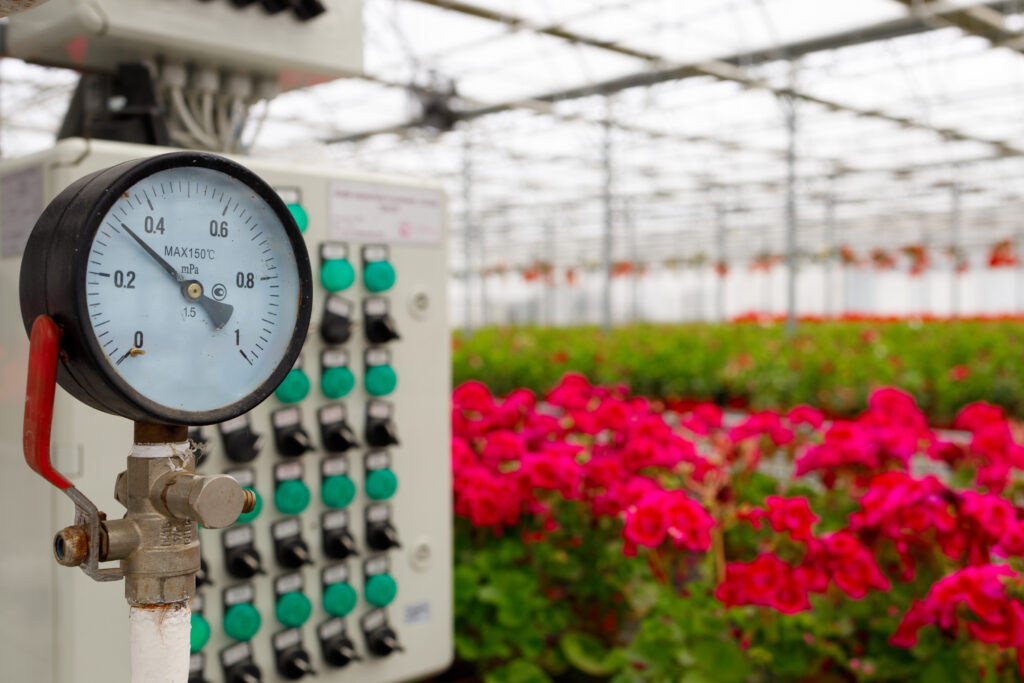
Temperature, humidity, light intensity, CO2 and, where used, substrate moisture, EC and pH.

The controller decides
It compares readings with your setpoints.
Equipment acts
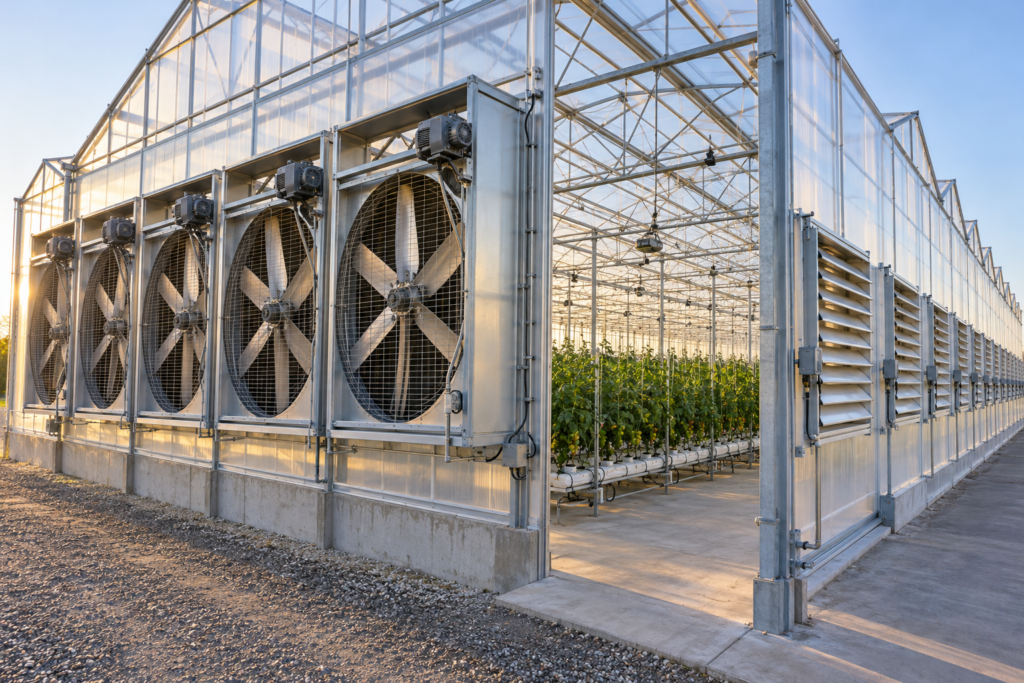
Vents open, fans and cooling start, heaters run, screens move, lights adjust and irrigation starts.
The control loop in plain terms
- 01
A setpoint is the value you want, such as a target temperature
- 02
A sensor reports the actual value
- 03
The controller compares the two and acts
- 04
A buffer zone around the setpoint, called a deadband, stops equipment from switching on and off constantly
- 05
Staging brings equipment on in steps, so a small deviation gets a small response
What it can control
Temperature.
Ventilation fans, evaporative cooling, shading and heating.
Humidity.
Ventilation, heating, optional dehumidification and vapor pressure deficit (VPD) management.
Ventilation.
Roof and side vents, fans and circulation airflow.
CO2.
Injection timing and level.
Lighting.
Supplemental light based on the light the crop has received, with dimming.
Irrigation and fertigation.
Automated watering and nutrient dosing.
Temperature, humidity and VPD
Temperature and humidity affect each other, and plants respond to the combination. Vapor pressure deficit, or VPD, describes how strongly the air pulls water from the plant at a given temperature and humidity. Too high and plants lose water too fast. Too low and the air stays humid, which raises disease risk. Many controllers manage this combined target, not temperature alone.
Temperature and humidity togetherWhat to measure and where
- Temperature and humidity at crop height, in a shaded and ventilated sensor housing
- Sensors placed where they represent the crop, not next to a vent or heater
- Outside weather: temperature, wind, rain and sunlight
- Light inside the house
- Substrate moisture, EC and pH where fertigation is used
- Enough sensors in a large house to see variation
Systems working together, and failing safely
Systems working together
A good controller coordinates systems. For example, CO2 injection pauses when vents open, and cooling offsets the heat from lights.
Alarms and failsafes
A control system should tell you when something is wrong: a fan that is not running, a temperature that is too high or low, a pump that has stopped. Alarms by message, with safe default positions for vents and screens, protect the crop when no one is on site.
Monitoring, alarms and remote access
Real-time data on mobile or desktop
Alerts for equipment failure, extreme temperature change and water shortage
Records and dashboards of conditions over time
Changing settings from anywhere
Standalone controllers or an integrated system


One device per task, such as a thermostat on a fan.
One system runs ventilation, cooling, heating, shading, lighting and irrigation together.
Simple and low-cost.
More to set up, with shared logic.
The devices do not talk to each other.
The systems interact, and the controller coordinates them.
Tap a side, or the photo, to compare.
Most commercial projects
Most commercial projects benefit from integration, because the systems interact.
From one bay to a large site
Control scales from a single bay to a multi-hectare site, with zone control and crop-specific programs.
Zones and crop programsTypical control strategies
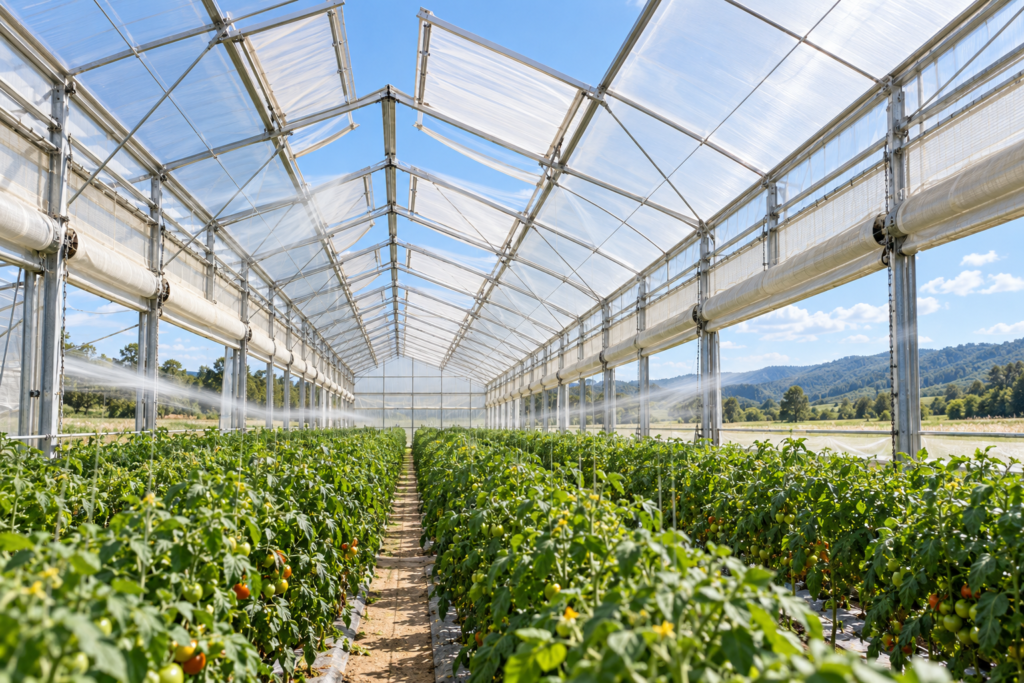
Temperature.
Staged: shade, then vents, then fans and cooling. In cold weather, vents close and heating comes on.
Humidity.
Ventilation and heating release moisture. Dehumidification can be added.
Light.
Shading or lighting adjusts to the daily light the crop has received.
Irrigation.
Triggered by light, time or moisture, with EC and pH monitored.
Records, reliability and training
Why records matter
A system that logs temperature, humidity, light and equipment use shows what happened. You can find why a house overheated, compare crops and seasons, and prove conditions to a buyer.
Reliability and remote access
The controller should run the greenhouse locally even if the internet drops, with remote access as an extra. Alarms should reach the right people by message, and access should be protected with proper passwords and permissions.
Commissioning, tuning and training
After installation, the system is tested, setpoints are set for your crop and settings are tuned as the crop grows. Your staff should be trained to read the screens, respond to alarms and adjust settings safely.
Common control mistakes
Placing sensors where they give a misleading reading
Setpoints that fight each other, such as heating and cooling points too close
No alarms
Controls added after the equipment is bought, with no way to connect it
Never reviewing the settings as the crop grows
Common questions
Straight answers. If yours is not here, ask us.
It is an automated platform that reads sensors and operates vents, fans, cooling, heating, lighting and irrigation to hold your setpoints.
Combine ventilation, evaporative cooling and external shading, all run automatically from temperature readings.
Yes. Remote access through mobile or desktop is available. Tell us what you want to monitor.
It depends on the size of the site, the number of systems it runs and how much remote access you want. We confirm it per project.
Often yes, if the equipment can be connected and the sensors and wiring were planned. It is easier to plan it from the start.
The controller should run the greenhouse on its own. A connection is only needed for remote monitoring and changing settings from afar.
You do, with our help. The targets depend on your crop and variety, and we configure the controller to them.
Yes. A full controller can run ventilation, cooling, heating, shading, lighting, irrigation and CO2 together.
Explore other systems
Plan your climate control
Send your greenhouse type, crop and equipment list. We reply within 24 hours.
Consultation and project proposals are free.
What to include
- Location
- Crop
- Greenhouse size

-1024x461.webp)