Table of Contents
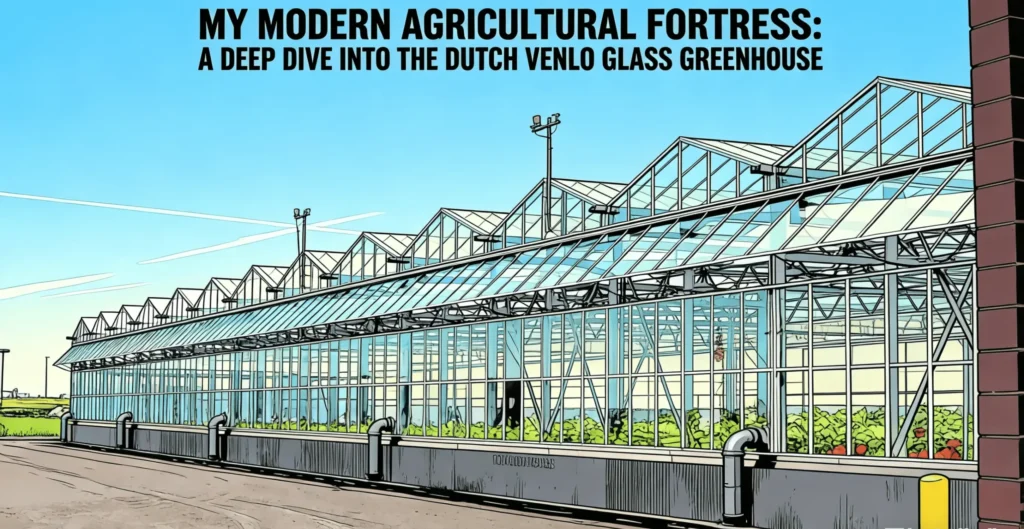
In the world of modern controlled-environment agriculture, few greenhouse structures have stood the test of time like the Dutch Venlo glass greenhouse. Originating in the Netherlands, the Venlo system has become the global benchmark for commercial glass greenhouses, widely adopted across Europe, North America, the Middle East, and Asia.
A Venlo greenhouse is not simply a glass-covered growing space. It is a highly engineered agricultural system that integrates structural design, light optimization, climate control, and automation into a single, reliable framework. For professional growers, it represents long-term stability rather than short-term shelter.
Why Venlo Became the Industry Standard
The success of the Venlo greenhouse is not driven by trend or aesthetics. It is driven by performance. Over decades of commercial use, this structure has proven its ability to deliver consistent yields, predictable climate behavior, and scalable expansion across different regions and crop types.
Growers choose Venlo because it reduces uncertainty. It offers a stable environment where light, airflow, temperature, and humidity can be managed precisely, season after season. In many ways, selecting a Venlo greenhouse is choosing a system that has already been tested at scale.
A Solid Backbone: Structural Design and Safety
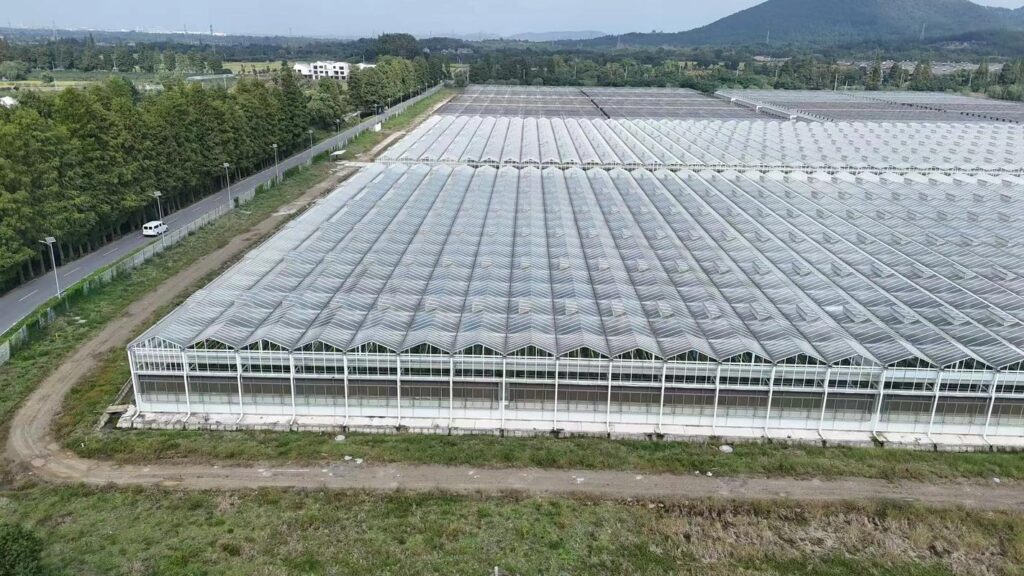
At its core, the Venlo greenhouse is built around modular construction. Standardized spans and bay sizes allow the structure to be adapted to local climate conditions, crop requirements, and operational scale. From medium-sized facilities to large multi-hectare projects, the same structural logic applies.
The main framework is typically made of high-strength aluminum profiles or hot-dip galvanized steel, offering excellent resistance to corrosion, wind loads, and snow loads. Structural calculations are usually performed using professional engineering software to ensure compliance with local building codes and long-term safety standards.
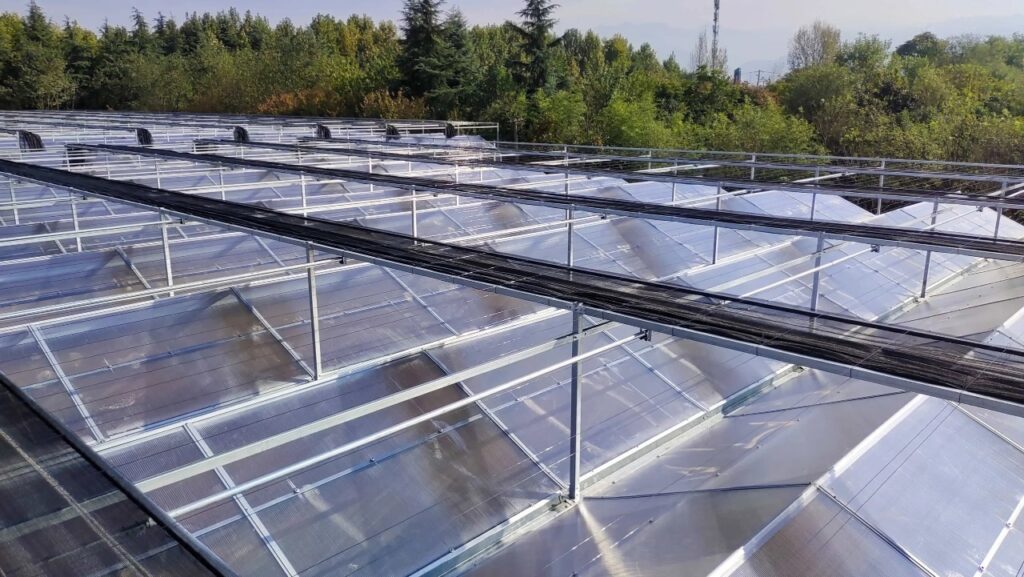
One of the defining features of the Venlo design is its multiple ridge-and-furrow roof system. This layout minimizes unnecessary joints, reduces leak points, and creates a highly stable roof structure while maximizing internal growing space.
Light as a Production Tool: Exceptional Transparency
Venlo greenhouses are designed with one priority in mind: maximum effective light transmission. Compared to plastic film or polycarbonate structures, glass greenhouses provide superior and more stable light performance over time.
Modern Venlo systems use specialized greenhouse glass that allows high levels of solar transmission while reducing energy loss. Reinforced aluminum roof profiles and a reduced number of vertical supports further minimize shading, ensuring crops receive uniform and sufficient light throughout the day.
This focus on light efficiency directly translates into improved photosynthesis, stronger plant development, and more consistent crop quality.
Airflow and Climate Stability
Efficient ventilation is one of the strongest advantages of the Venlo greenhouse. Large roof vents, arranged along each ridge, create a high vent-to-floor ratio. This allows warm and humid air to escape quickly while fresh air is drawn in naturally.
The result is stable air circulation and reduced heat stress, even during warm seasons. Higher gutter heights also contribute to better air mixing, creating a more uniform climate throughout the greenhouse.
In advanced designs, Venlo greenhouses may include a climate-controlled corridor. This semi-closed buffer zone helps stabilize temperature, humidity, and CO₂ levels while creating slight positive pressure to reduce pest entry.
Integrated Systems: The Intelligence Behind the Glass
A Venlo greenhouse is not just a structure. It is a platform for integration. Modern systems are designed to support a wide range of equipment, including heating systems, LED or HPS lighting, irrigation and fertigation, shading screens, insect nets, and climate control computers.
Centralized climate control systems act as the “brain” of the greenhouse, coordinating all components to maintain optimal growing conditions throughout the year. This level of integration is essential for high-density planting, year-round production, and consistent quality output.
Economic Efficiency and Long-Term Value
Although a Venlo glass greenhouse represents a higher initial investment compared to simple film structures, its cost per square meter over its lifespan is often lower. Durability, energy efficiency, and reduced maintenance contribute to a strong long-term return on investment.
The modular design also allows for phased expansion, enabling growers to scale operations as demand grows without redesigning the entire system.
FANGCHENG and Venlo Greenhouse Solutions
For growers seeking a professional Venlo greenhouse solution, FANGCHENG provides comprehensive services covering design, supply, and construction of Venlo-type glass greenhouses. From structural engineering and material selection to system integration and on-site installation, FANGCHENG supports projects tailored to different climates, crops, and operational goals.
By combining proven Venlo standards with localized engineering and practical construction experience, FANGCHENG helps growers turn greenhouse infrastructure into a reliable production asset.
Please leave your contact email, and one of our professional greenhouse engineers will reach out to you within 24 hours.
Conclusion: A Timeless Design for Future Agriculture
The Venlo greenhouse has endured not because it is complex, but because it is balanced. It balances strength with flexibility, transparency with protection, and technology with practicality.
As agriculture continues to move toward higher efficiency and controlled environments, the Venlo glass greenhouse remains a timeless solution—one that adapts to new technologies while maintaining the structural principles that made it successful in the first place.
For growers planning long-term, professional operations, the Venlo greenhouse is not just a structure. It is a foundation.