跳至内容
跳至内容 
Table of Contents

In modern agriculture, High Tunnels and Greenhouses are often discussed together.
They look similar at first glance. Both protect crops from weather. But in reality, they serve very different goals.
Choosing the wrong structure can limit your production.
Choosing the right one can greatly improve farm profitability and stability.
This article explains the key differences between High Tunnels and Greenhouses, and helps you decide which option fits your operation best.
What Is a High Tunnel?
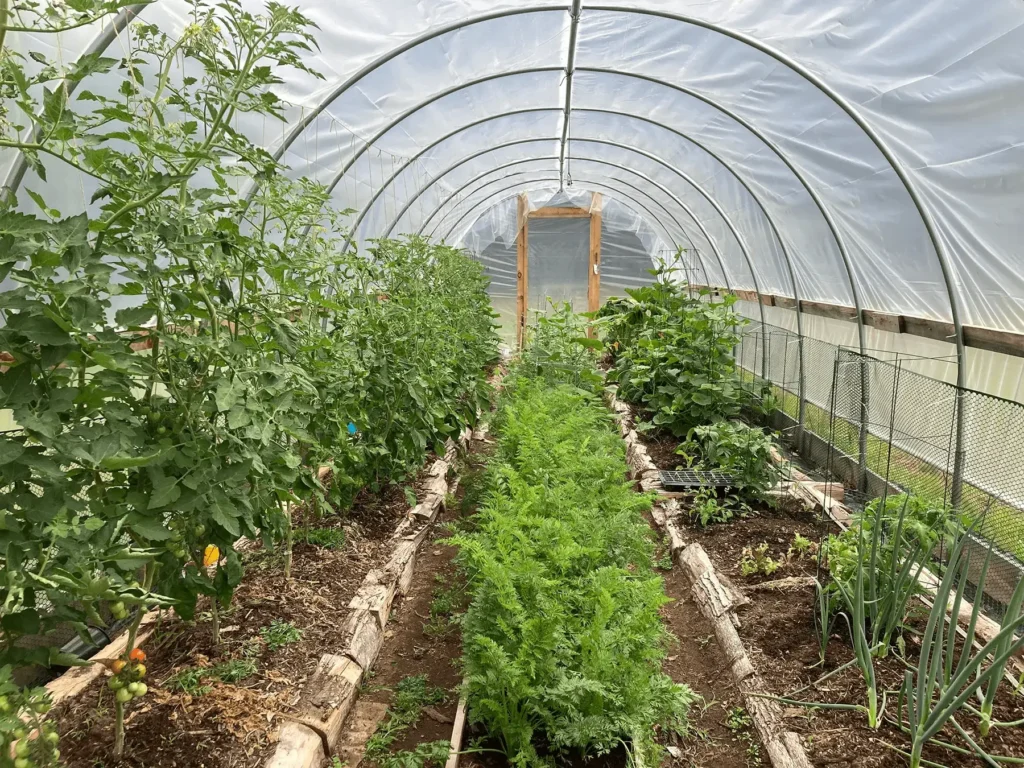
A High Tunnel, also called a Hoop House, is a simple protective growing structure.
It is usually built with metal hoops and covered with polyethylene film.
Most High Tunnels are unheated and rely on solar energy and natural airflow for temperature control.
Typical High Tunnel Features
Lightweight structure
Fast and low-cost installation
Roll-up sidewalls for natural ventilation
Crops are usually grown directly in soil
The main purpose of a High Tunnel is simple:
extend the growing season at a very low cost.
What Is a Greenhouse?
A Greenhouse is a fully controlled growing environment.
Unlike High Tunnels, greenhouses use active systems to manage temperature, humidity, airflow, and sometimes lighting.
Modern commercial greenhouses are often part of Controlled Environment Agriculture (CEA).
Typical Greenhouse Features
Strong and permanent structure
Heating and ventilation systems
Automated climate controls
Suitable for year-round production
A greenhouse does not just extend the season.
It removes seasonal limits altogether.

Cost and Return on Investment
High Tunnel: Low Cost, Fast Payback
High Tunnels are much cheaper to build than greenhouses.
Many designs do not require concrete foundations and use ground anchors or screw piles instead.
In many cases, growers recover their investment within two to three years.
High Tunnels work best for:
Small to medium farms
First-time protected agriculture users
Growers focused on quick cash flow
Greenhouse: Higher Cost, Long-Term Stability
Greenhouses require a higher initial investment.
However, they support year-round production and higher yields per square meter.
For commercial growers, greenhouses often provide more predictable long-term returns.
Production Capacity and Crop Flexibility
High Tunnels act as an upgrade to open-field farming.
They allow:
Earlier spring planting
Later fall harvesting
Better protection from wind, rain, and light frost
But in extreme climates, High Tunnels have clear limits.
Greenhouses offer much more control.
With proper systems, they can:
Operate all year
Handle extreme weather
Support high-value or climate-sensitive crops
Management and Operation Complexity
High Tunnel: Simple Management
High Tunnels are easy to manage.
Daily work focuses on irrigation, ventilation, and basic maintenance.
They rely more on experience than technology.
Greenhouse: System-Driven Management
Greenhouses operate more like industrial systems.
Climate data, equipment, and crop conditions are carefully monitored.
This increases complexity but also improves consistency and scalability.
How to Choose the Right Option
Ask yourself these questions:
Choose a High Tunnel if you:
Have a limited budget
Want to extend the growing season
Grow vegetables or hardy crops
Need fast investment recovery
Choose a Greenhouse if you:
Want year-round production
Target commercial or export markets
Grow high-value or sensitive crops
Plan long-term expansion
Final Thoughts: The Right Tool for the Right Stage
High Tunnels and Greenhouses are not competitors.
They are tools for different stages of farm development.
High Tunnels offer a low-risk entry into protected farming.
Greenhouses support scale, consistency, and full climate control.
Before deciding, define your budget, crop strategy, and long-term goals.
That decision will shape your farm’s future more than the structure itself.