跳至内容
跳至内容 
Winter greenhouse growing is challenging but entirely achievable with the right heating and insulation strategies. This guide covers practical, proven methods to keep your greenhouse productive through the coldest months. For an overview of greenhouse climate control systems, see our greenhouse environmental control guide.
The Winter Challenge
On a cold winter night, a greenhouse without proper heating can lose 3-5°C per hour, potentially dropping below freezing within hours. The key to successful winter growing lies in a three-pronged approach: reduce heat loss, generate heat efficiently, and capture passive solar energy during daylight hours.
The US Department of Energy estimates that greenhouses with proper insulation and thermal curtains use 40-60% less heating energy than uninsulated structures, making energy efficiency the most cost-effective first step.
Thermal Curtains: The #1 Energy Saver
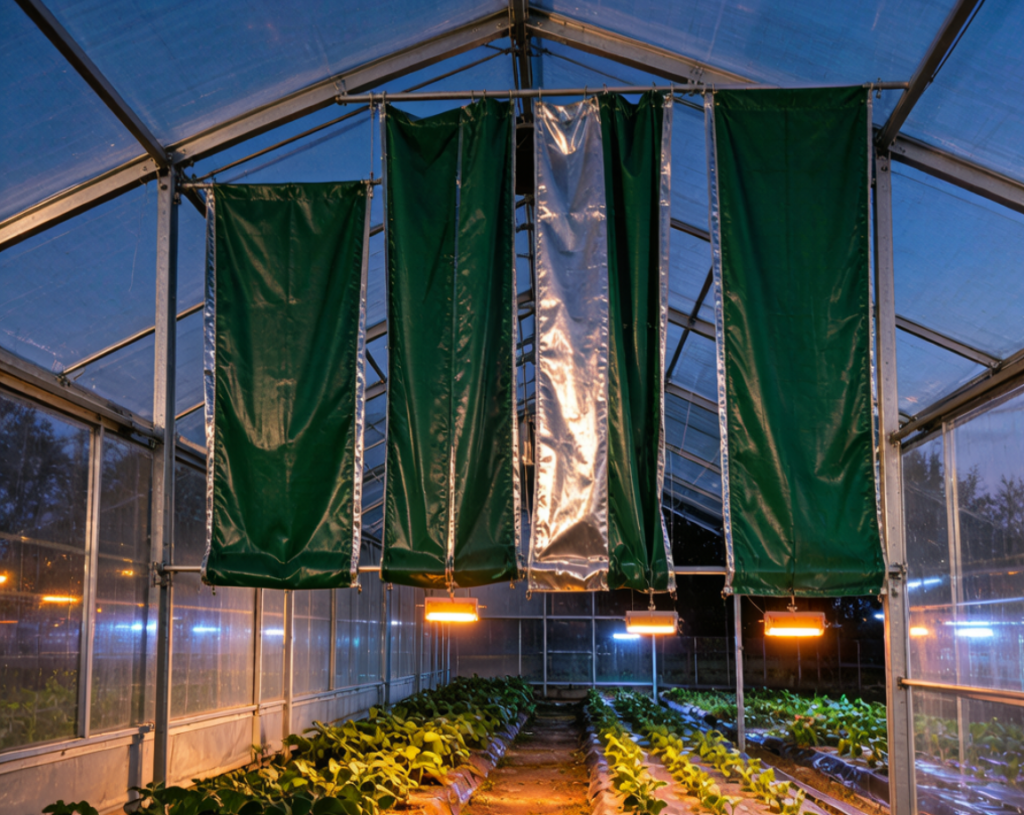
Thermal curtains (energy curtains) are the single most effective investment for winter greenhouse growing: Installed at the gutter level or above the crop canopy, they create a dead air space that reduces night heat loss by 40-60%. Aluminized fabrics reflect radiant heat back toward the plants while blocking heat loss through the glazing. Payback period is typically 1-3 heating seasons. Automated systems can deploy and retract curtains based on light levels and temperature.
Heating System Options
Several heating system types are suitable for greenhouses. Unit heaters (gas or propane) are the most common and cost-effective for most operations, costing $3-8 per sq ft installed. Boiler systems with radiant floor tubing provide the most even heat distribution at higher upfront cost ($8-15 per sq ft). Geothermal ground source heat pumps offer the lowest operating cost but require significant upfront investment ($15-30 per sq ft). For smaller greenhouses, electric heaters are simple to install but have the highest operating cost.
Sizing Your Heating System
| Factor | Formula / Standard | Example (20x100ft GH) |
|---|---|---|
| Surface area heat loss | Total glazing area x U-value x delta T | Calculate per ASABE EP406.4 |
| Air infiltration loss | 0.5-2 air changes per hour x volume x delta T | 2,000 sq ft x 12 ft height = 24,000 CF |
| Total heat requirement | Surface loss + infiltration loss | ~200,000-400,000 BTU/hour |
| Safety factor | Add 25% margin | Size for 250,000-500,000 BTU |
Passive Solar Techniques
Every free BTU from the sun reduces your heating bill. Orient the greenhouse ridge east-west for maximum south-facing glazing area. Use thermal mass (water barrels, concrete floor, or phase-change materials) to absorb heat during the day and release it at night. A well-designed passive solar greenhouse with 5-10 gallons of water per square foot of south glazing can maintain temperatures 10-15°F above outside ambient without active heating on sunny winter days.
Insulation Strategies
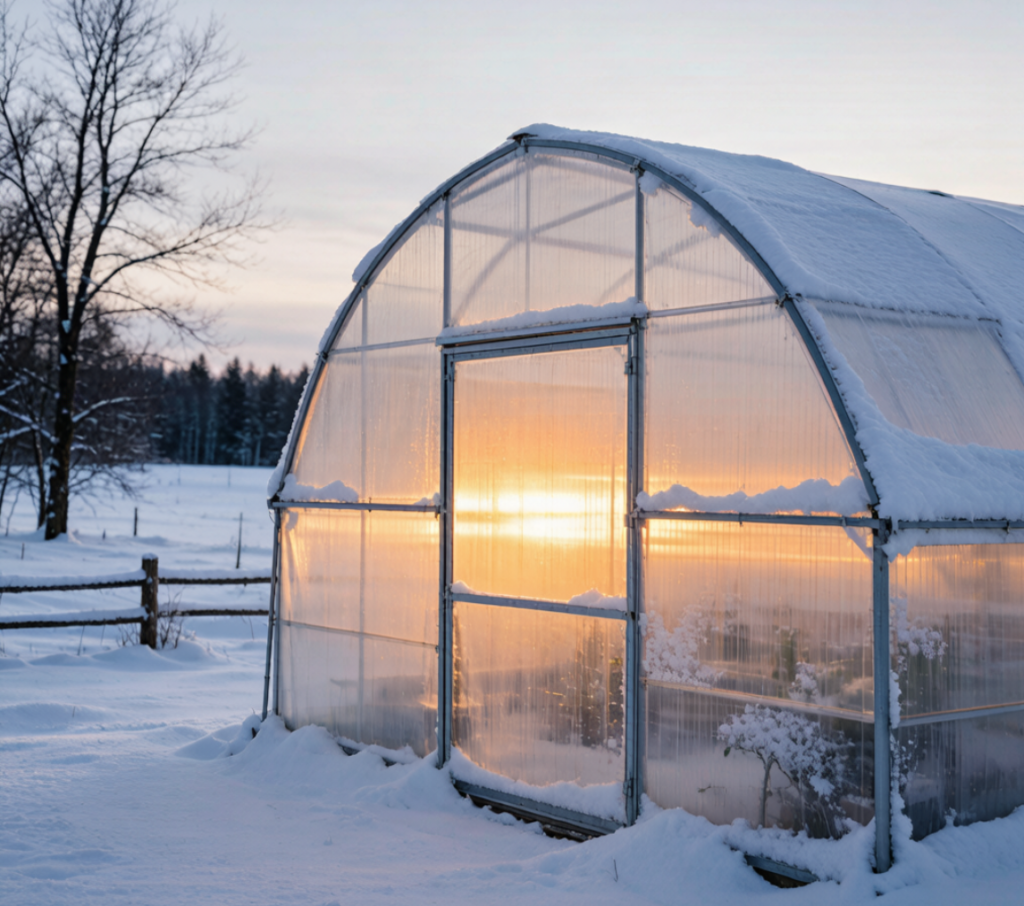
The north wall of a greenhouse receives no direct sunlight but loses heat continuously. Insulating the north wall to R-20 or higher can reduce total heating needs by 15-25%. Perimeter insulation (R-10 to R-20 extending 2-4 ft below grade) prevents heat loss through the foundation. Double-wall polycarbonate glazing provides R-2 to R-4 insulation compared to R-1 for single glass. Sealing all gaps around vents, fans, and door frames with weatherstripping prevents cold air infiltration. The ASABE EP406.4 standard provides detailed guidelines for greenhouse heat loss calculations.
Cost-Saving Tips
- Use thermal curtains \u2014 the fastest payback of any greenhouse investment
- Lower temperature setpoints by 2-3°F at night (most crops tolerate cooler night temperatures)
- Zone heating \u2014 only heat the areas where crops are growing
- Install programmable thermostats to optimize heating schedules
- Use row covers inside the greenhouse for an extra layer of protection
- Maintain heating equipment annually for peak efficiency
FANGCHENG Winter Greenhouse Solutions
Prepare your greenhouse for winter with FANGCHENG. We design and supply thermal curtain systems, heating equipment, and insulation solutions for greenhouses of all sizes. Our team can help you calculate your heating requirements and select the most cost-effective system for your climate and crops.
Explore FANGCHENG Greenhouse Structures → | Request a Winterization Assessment
FAQ
What is the most cost-effective way to heat a greenhouse in winter?
Thermal curtains are the best first investment \u2014 cutting heat loss by 40-60% with payback in 1-3 seasons. Combine with a properly sized gas unit heater for efficient supplemental heat.
How do I calculate greenhouse heating needs?
Calculate total surface area, determine U-value for each surface type, factor in air infiltration rate (0.5-2 air changes per hour), and multiply by the temperature difference between desired inside temp and coldest outside temp. Add 25% safety margin.
How much can thermal curtains reduce heating costs?
40-60% reduction in night heat loss. Aluminized fabrics reflect radiant heat back to plants while blocking heat loss through glazing.
Can I grow in a greenhouse without heat in winter?
In temperate zones (USDA zones 7+), cold-hardy crops like kale, spinach, and mache can survive in an unheated greenhouse. For tomatoes, peppers, and cucumbers, supplemental heat is essential.
What is the best greenhouse glazing for winter?
Double-wall polycarbonate provides the best insulation (R-2 to R-4) while transmitting 75-85% of available light. It significantly outperforms single glass or film in winter conditions.
Conclusion
Successful winter greenhouse growing combines three strategies: reducing heat loss through thermal curtains and insulation, generating heat efficiently with properly sized equipment, and maximizing passive solar gain through orientation and thermal mass. The upfront investment in winterization \u2014 particularly thermal curtains \u2014 typically pays for itself within 1-3 heating seasons through reduced energy costs and the ability to grow year-round.