跳至内容
跳至内容 
Table of Contents

Part 1: Introduction – The “Why”
A greenhouse is more than a structure that blocks wind and rain. It is a controlled ecosystem that requires careful management.
While a greenhouse creates a protected space, the internal climate is a delicate balancing act. Temperature and humidity constantly interact, and small changes can quickly affect plant health.
Humidity is often overlooked, yet it plays a direct role in transpiration, nutrient uptake, and overall plant growth. When humidity is not properly managed, risks increase.
If humidity is too high, fungal diseases such as powdery mildew and botrytis can spread rapidly. If humidity is too low, plants lose water too quickly, growth slows, and some pests become more active.
Understanding this balance is the foundation of successful greenhouse growing.
Part 2: Understanding the Core Concepts – The Science
Before adjusting anything, it is important to understand how temperature and humidity are connected.
Relative Humidity (RH) describes how much water vapor is in the air compared to the maximum amount the air can hold at a given temperature. Warm air can hold more moisture than cold air.
This explains why heating a greenhouse often makes the air feel drier. As temperature rises, the air’s moisture capacity increases, and relative humidity drops unless moisture is added.
Another key concept is the dew point. When air temperature falls to the dew point, water vapor condenses into liquid water. In a greenhouse, this often happens on leaf surfaces at night. Condensation creates ideal conditions for disease development.
Part 3: The Gold Standard – Ideal Growing Conditions
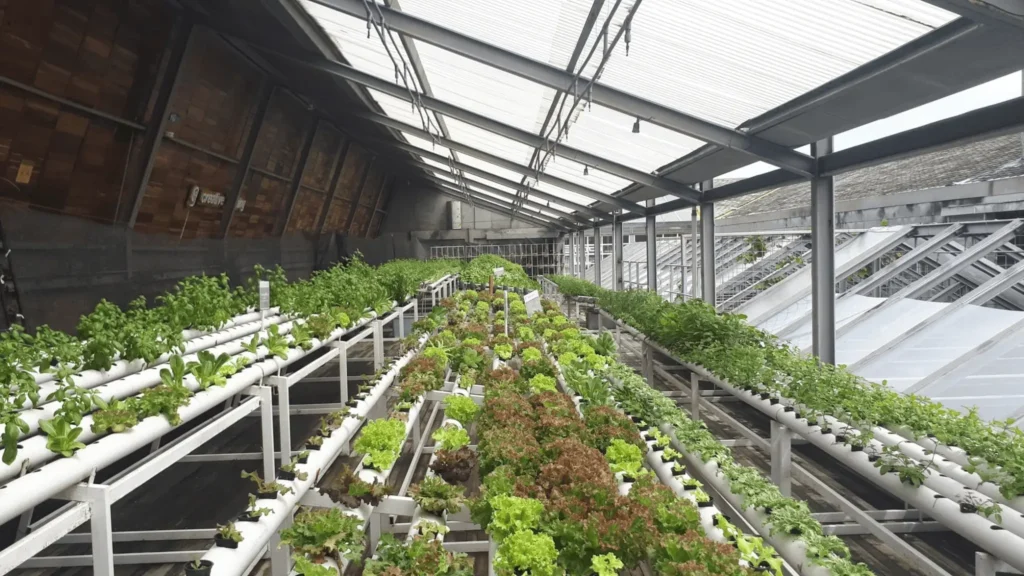
Clear targets help growers make better decisions.
For most greenhouse crops, the ideal temperature range is 64°F to 75°F (18°C to 24°C). This range supports steady growth and efficient nutrient uptake.
Ideal humidity levels are usually around 80%, with some variation. Nighttime humidity is typically kept lower, around 65–75%, while daytime humidity may rise closer to 80%.
Certain growth stages require special attention. Seedlings and cuttings need higher humidity before roots are fully developed. This helps prevent dehydration, but soil should not remain overly wet.
Plant type also matters. Tropical plants prefer warmer and more humid environments, while succulents and drought-tolerant species require lower humidity.
Part 4: Practical Strategies – How to Control Temperature and Humidity
This is where theory turns into action.
1. How to Increase Humidity
Professional solutions include industrial humidifiers and high-pressure fogging systems. High-pressure systems produce extremely fine droplets that raise humidity without wetting leaves or soil, reducing disease risk.
Dynamic solutions often combine fogging systems with circulation fans to distribute moisture evenly throughout the greenhouse.
Low-cost methods can also help. Wetting greenhouse floors, placing water trays, or using shallow containers allows water to evaporate naturally and raise humidity.
2. How to Reduce Humidity and Temperature
Ventilation is the most effective tool. Intake vents and exhaust fans exchange moist internal air with drier outside air and help remove excess heat.
During colder seasons, ventilation may waste heat. In these cases, mechanical dehumidifiers or desiccant systems provide humidity control without large heat loss.
Crop management also plays a role. Watering should be done in the morning so moisture can evaporate before nightfall. Drip irrigation reduces surface evaporation compared to overhead watering. Proper plant spacing prevents stagnant air pockets.
Part 5: Monitoring and Automation
Relying on intuition is not enough.
Visual signs provide early warnings. Wilting or browning leaves often indicate air that is too dry. A heavy, stagnant atmosphere or water droplets on leaves usually means humidity is too high.
Accurate control requires sensors. Temperature sensors, such as RTDs, and humidity sensors provide real-time data. Many systems allow alerts to be sent to a phone when values move outside set limits.
Automation takes control further. Fans, heaters, and humidifiers can be connected to climate controllers to maintain stable conditions automatically.
Part 6: Equipment Maintenance
Climate control systems must remain reliable.
Humidifiers and spray nozzles should be checked regularly to prevent clogging or uneven output. Poor maintenance can cause sudden environmental shifts.
Although industrial-grade equipment costs more initially, it usually offers better durability, lower long-term maintenance costs, and more stable performance.
Conclusion
Climate control systems must remain reliable.
Humidifiers and spray nozzles should be checked regularly to prevent clogging or uneven output. Poor maintenance can cause sudden environmental shifts.
Although industrial-grade equipment costs more initially, it usually offers better durability, lower long-term maintenance costs, and more stable performance.